


 Deutsch
 English
 Español
 Français
 Nederlands
 Português


 Share
Share




Coal Phase Out Financial Support Package: Navigating Transition Funding, Timelines & Community Compensation
The coal phase out financial support package represents a critical framework for communities and workers navigating the energy transition, with comprehensive funding mechanisms, structured timelines, and targeted compensation programs emerging as essential components of a just transition. As nations accelerate their shift away from fossil fuels, these support packages have become increasingly sophisticated, addressing not only environmental imperatives but also the socioeconomic realities of coal-dependent regions. The 2025-2026 period marks a significant acceleration in both coal plant retirements and corresponding support mechanisms, with U.S. electricity generators planning to retire 12.3 gigawatts of capacity in 2025 alone—a 65% increase compared to 2024's retirements—and coal-fired capacity accounting for the largest share at 66% (8.1 GW).
What is a Coal Phase Out Financial Support Package?
A coal phase out financial support package is a comprehensive set of funding mechanisms, policy instruments, and programmatic interventions designed to facilitate the transition away from coal-based energy production while supporting affected workers, communities, and local economies. These packages typically include grants for economic diversification, workforce retraining programs, community compensation funds, infrastructure investments, and technical assistance initiatives. The fundamental goal is to ensure that the transition to cleaner energy sources doesn't leave behind the regions and workers who have historically depended on the coal industry, addressing both immediate economic impacts and long-term sustainable development needs.
Key Components of Modern Transition Funding
Contemporary coal transition support packages have evolved beyond simple compensation to include multi-faceted approaches that address the complex challenges of industrial transformation. The Just Transition Fund offers several innovative programs, including the Local Economy Lab which provides one-year flexible grants of $250,000–$500,000 with technical assistance to scale community-led economic development projects. Similarly, the Coal Communities Get Ready! Challenge supports early-stage projects with $250,000 grants and customized technical assistance, having launched its inaugural cohort of 12 organizations in 2024.
Major Funding Mechanisms
Several key funding streams have emerged as central to effective transition support:
- Grants for Economic Diversification: Direct funding for community-led projects that create alternative economic opportunities, such as Colorado's recent $1,151,000 in Coal Transition Community Assistance grants to Moffat and Rio Blanco Counties
- Workforce Retraining Programs: Comprehensive job training initiatives like the EPA's brownfields job training programs funded through the Bipartisan Infrastructure Law, providing environmental job training for dislocated workers
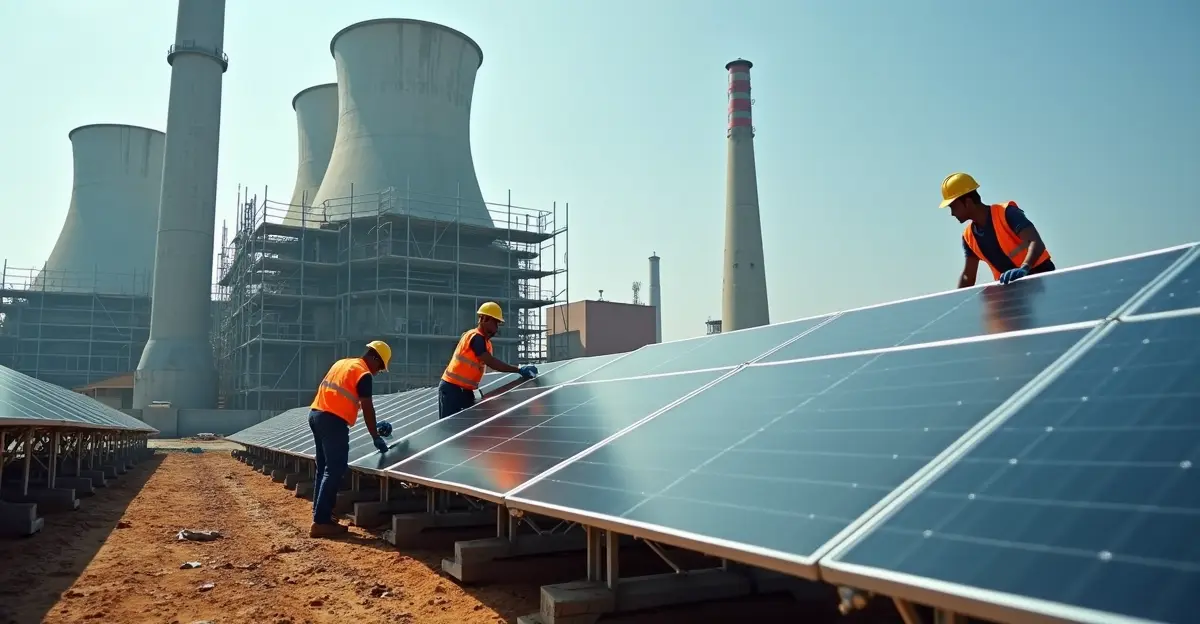
- Infrastructure Investment: Funding for physical infrastructure that supports new economic activities, including business parks, transportation improvements, and renewable energy facilities
- Technical Assistance: Support for grant applications, feasibility studies, and strategic planning to help communities navigate complex funding landscapes
Transition Timelines and Implementation Schedules
The acceleration of coal plant retirements has created urgent timelines for transition support implementation. According to the U.S. Energy Information Administration, 2025 will see 12.3 gigawatts of capacity retirement, with coal accounting for 8.1 GW of that total—representing 4.7% of the entire U.S. coal fleet. The largest planned coal retirement is the 1,800-megawatt Intermountain Power Project in Utah, though emergency orders have delayed some retirements due to grid reliability concerns.
State-Level Phaseout Schedules
Different states have established varying timelines for coal phaseouts, creating a patchwork of transition schedules:
| State | Phaseout Deadline | Key Support Programs |
|---|---|---|
| Washington | 2025 | Coal transition workforce programs |
| Oregon | 2030 | Economic diversification grants |
| Colorado | 2040 | Just Transition Office initiatives |
| Minnesota | 2040 | Renewable energy transition funds |
| Maine | 2050 | Community compensation packages |
These varying timelines require tailored support packages that align with local retirement schedules while addressing immediate community needs. The EU carbon border tax has also influenced global transition timelines, creating additional economic pressures that must be addressed through comprehensive support mechanisms.
Community Compensation and Economic Revitalization
Community compensation represents one of the most critical aspects of coal transition support, addressing both immediate economic losses and long-term development needs. Colorado's SB25-037, which became law on June 3, 2025, provides a model for structured community support, requiring the Office of Just Transition to prioritize funding for tier one and tier two coal transition communities experiencing socioeconomic impacts from coal closures. The legislation includes investment flexibility for settlements related to coal closures and allows up to 70% of local government severance tax funds to be directed to just transition communities for three years starting January 1, 2026.
Successful Compensation Models
Several compensation approaches have demonstrated effectiveness in supporting communities through transition:
- Property Acquisition and Development: The City of Craig, Colorado received $1,051,000 to purchase property for a new business and industrial park with rail access, complemented by $2.5 million in federal infrastructure funding
- Environmental and Economic Studies: Rio Blanco Water Conservancy District was awarded $100,000 to study the potential impacts of the proposed Wolf Creek Reservoir on agriculture, recreation, and water supply
- Direct Community Investment: Flexible funding that allows communities to address their most pressing needs, whether workforce development, small business support, or infrastructure improvements
Job Retraining and Workforce Development Programs
Workforce retraining represents the human dimension of the energy transition, with comprehensive programs emerging to help coal workers transition to new employment opportunities. The U.S. Environmental Protection Agency's brownfields job training initiative, funded through the Bipartisan Infrastructure Law, provides a model for effective workforce development. Key programs include Virginia Tech receiving $403,018 to train 35 students in coal-impacted areas, the Center for Nonprofit Advancement in Washington D.C. getting $500,000 to train 100 students, and St. Louis University obtaining $500,000 to train 86 students in hazardous waste management and environmental remediation.
Training Program Components
Effective job retraining programs typically include several key elements:
- Industry-Recognized Certifications: Training that leads to federal certifications in areas like HAZWOPER, asbestos abatement, lead remediation, and OSHA safety standards
- Placement Support: Strong job placement records in environmental and clean energy sectors, with many programs achieving placement rates above 80%
- Targeted Populations: Focus on dislocated workers, veterans, and underserved communities affected by industrial decline
- Sector-Specific Training: Preparation for growing industries including renewable energy installation, environmental remediation, and sustainable infrastructure development
The 2025 economic crisis has added urgency to these workforce development initiatives, as communities face compounded economic challenges during the energy transition.
The Coal Transition Finance Facility: A New Funding Model
A significant development in transition financing is the launch of the Coal Transition Finance Facility (CTFF), a comprehensive funding mechanism that addresses both environmental and social dimensions of the energy transition. The CTFF operates through multiple funding streams including grants, concessional loans, and innovative transition credits, supporting early retirement of coal-fired power plants, workforce retraining programs, community economic diversification, and renewable energy infrastructure investments. Building on existing frameworks like the $2.2 billion Accelerating Coal Transition program, the CTFF expands with more flexible funding options and broader eligibility, already developing a robust project pipeline across Southeast Asia, Eastern Europe, and North America.
Technical Tools and Implementation Support
The CTFF includes technical tools like the ReACT Tool to help identify suitable coal plants for retirement and evaluate repurposing options such as solar installations and green hydrogen production. This represents a shift toward more data-driven, strategic approaches to transition planning, complementing the financial support with technical expertise and implementation guidance.
Future Outlook and Emerging Trends
Looking toward 2026 and beyond, several trends are shaping the evolution of coal phase out financial support packages. Seven more coal units totaling nearly 5 GW are scheduled for retirement in 2026, though emergency orders may delay some closures due to grid reliability concerns and increasing data center demand. The growing recognition of just transition financing needs is reflected in initiatives like the EU's Just Transition Mechanism aiming to mobilize €100 billion and other programs bringing together coal producers and financial stakeholders.
Experts in artificial intelligence regulation note that technological advancements will increasingly influence transition planning, with data analytics helping to optimize support allocation and monitor program effectiveness. The integration of environmental justice principles into transition funding represents another important trend, ensuring that historically marginalized communities receive adequate support during the energy transition.
Frequently Asked Questions
What is the timeline for coal plant retirements in the United States?
U.S. electricity generators plan to retire 12.3 gigawatts of capacity in 2025, with coal accounting for 8.1 GW of that total. Looking ahead to 2026, seven more coal units totaling nearly 5 GW are scheduled for retirement, though emergency orders may delay some closures due to grid reliability concerns.
How much funding is available for coal transition communities?
Funding varies by program and region, but significant resources are becoming available. Colorado's recent grants totaled $1,151,000 for two communities, while the Coal Transition Finance Facility represents a major new funding mechanism with multiple streams including grants, concessional loans, and transition credits.
What types of job training are available for displaced coal workers?
Comprehensive training programs provide federal certifications in areas like HAZWOPER, asbestos abatement, lead remediation, and OSHA safety standards, with strong placement records in environmental and clean energy jobs. Programs specifically target dislocated workers, veterans, and underserved communities.
How do communities apply for transition funding?
Application processes vary by program, but typically involve demonstrating socioeconomic impacts from coal closures, developing comprehensive transition plans, and engaging in community consultation processes. Technical assistance is often available to help communities navigate application requirements.
What happens if coal plant retirements are delayed?
Emergency orders have delayed some retirements due to grid reliability concerns, creating challenges for transition planning. However, support packages are increasingly designed to be flexible, with funding mechanisms that can adapt to changing timelines while continuing to support community preparation for eventual transitions.




Follow Discussion