Deutsch
 English
 Español
 Français
 Nederlands
 Português






Green Hydrogen Financing Window Closing as Projects Secure Critical Funding
The race to finance green hydrogen projects is intensifying as developers secure crucial industrial offtaker agreements and finalize electrolyser capacity plans. With key investment windows closing in 2025, particularly in the United States where Inflation Reduction Act incentives require projects to commence construction by December, the green hydrogen sector is witnessing a surge in finalized deals that could shape the industry's future.
Major Projects Securing Long-Term Offtake Agreements
One of the most significant developments comes from Germany, where RWE and TotalEnergies have signed a groundbreaking 15-year agreement for green hydrogen supply, marking the largest such contract in Germany. Starting in 2030, RWE will supply approximately 30,000 metric tons of green hydrogen annually to TotalEnergies' refinery in Leuna, Saxony-Anhalt until 2044. This represents the largest quantity of climate-neutral hydrogen ever contracted from a German electrolyzer.
The hydrogen will be produced at RWE's 300-megawatt electrolysis plant in Lingen, scheduled for operation by 2027, using renewable electricity sources. 'This partnership strengthens Germany's hydrogen economy development and provides an important anchor customer for RWE's electrolysis infrastructure,' said a company spokesperson. The agreement supports decarbonization efforts, with the green hydrogen expected to save 300,000 metric tons of CO2 annually - equivalent to emissions from 140,000 cars.
Electrolyser Capacity Expansion Driving Investment
According to Wikipedia, green hydrogen is produced by the electrolysis of water using renewable electricity and accounts for less than 0.04% of total hydrogen production as of 2021. However, the business consortium Hydrogen Council reported that as of December 2023, manufacturers are preparing for a green hydrogen expansion by building out the electrolyzer pipeline by 35 percent to meet the needs of more than 1,400 announced projects.
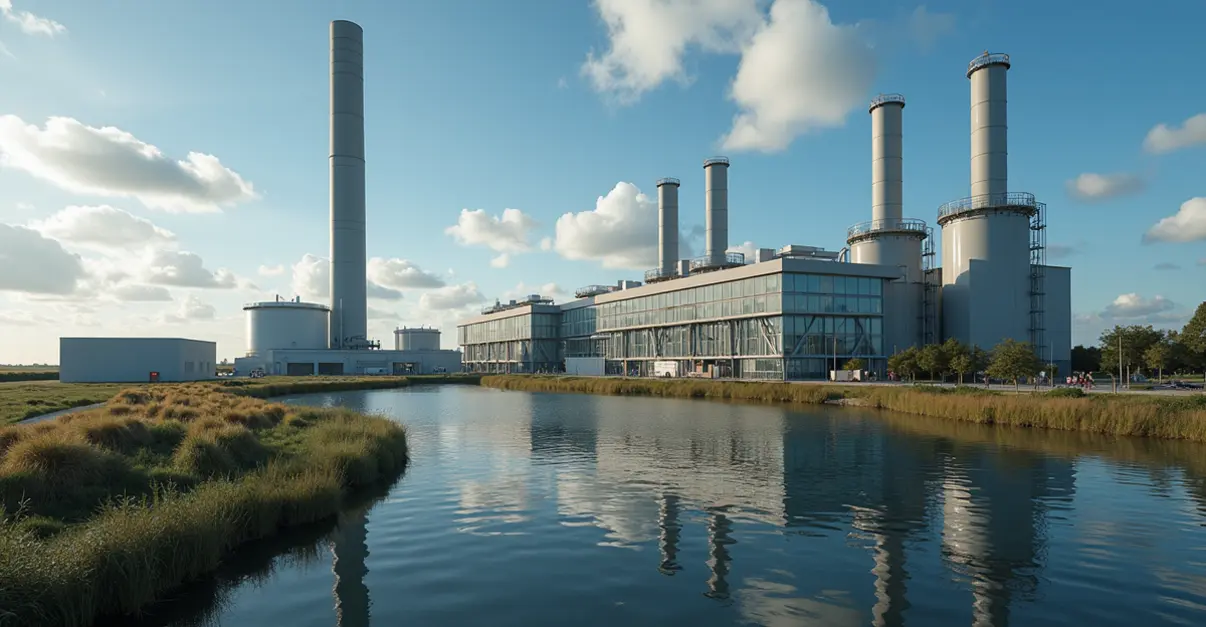
RWE has begun commissioning Europe's largest green hydrogen facility in Lingen, Germany, featuring a 100 MW electrolyser as the first phase of a planned 300 MW project. 'Despite the project's scale, production costs remain high at €7.54 per kg, highlighting the economic challenges facing Europe's hydrogen scale-up,' noted industry analysts. The facility positions Germany as a cornerstone of Europe's hydrogen strategy, testing whether large-scale green hydrogen can achieve commercial viability while competing with lower-cost developments in other regions.
Financing Structures and Investment Returns
The financing landscape for green hydrogen projects is becoming increasingly sophisticated. Analysis from the EFI Foundation shows substantial positive returns for clean hydrogen investments. Key legislation includes the 2021 Bipartisan Infrastructure Law ($8 billion funding) and 2022 Inflation Reduction Act (tax credits). The analysis shows every $1 in 45V tax credits generates $7 in GDP over four years while supporting 22,000 jobs annually.
The return on investment for the H2Hub program is projected at more than 10:1 from 2026-2029 ($10 GDP per $1 invested) and over 6:1 from 2026-2035 ($6 GDP per $1 invested), supporting an average of 80,000 jobs. Private sector commitments reach $50 billion from 469 companies, with over 200 low-carbon hydrogen projects across 35 states.
Industrial Offtake Agreements as Financing Cornerstone
Perhaps the most critical development in green hydrogen financing has been the emergence of long-term industrial offtake agreements. These contracts establish terms between hydrogen producers and buyers, covering key aspects such as pricing mechanisms, volume commitments, delivery schedules, quality specifications, and risk allocation.
H2 Green Steel (H2GS) has demonstrated this model's effectiveness, securing funding for the world's first green steel mega-project in Boden, Sweden. 'Key to financing success was securing seven-year take-or-pay steel offtake contracts with major manufacturers paying a 20-30% premium for green steel,' explained project financiers. The €6+ billion project will produce 2.5 million tons per year initially, expanding to 5 mtpa by 2030, cutting steel production emissions by up to 95%.
Several offtakers including Schaeffler, Scania, Mercedes-Benz, Bilstein and Marcegaglia also became equity investors, providing lenders additional comfort. The project demonstrates how green hydrogen initiatives can secure financing through strong offtake agreements and multi-sourced funding structures.
Closing Investment Windows and Future Outlook
The US green hydrogen investment window is rapidly closing by December 2025, driven by critical federal incentives from the Inflation Reduction Act. Key incentives include production tax credits up to $3 per kilogram for clean hydrogen and investment tax credits for manufacturing facilities. The December 2025 deadline is crucial because projects must commence construction or meet specific criteria before this date to qualify for the most advantageous federal support.
Green hydrogen projects require substantial capital investments, with electrolyzer costs ranging $400,000-$800,000 per megawatt and total facility costs reaching $2,500-$4,000 per kilogram daily production capacity. Project economics depend on low-cost renewable electricity (often under $30/MWh) to achieve competitiveness with traditional methods.
As the financing window closes, industry experts emphasize that early movers will gain competitive advantages in market share, supply chain development, and operational experience while benefiting from current generous incentives that may not be available later. The combination of industrial offtaker agreements, expanding electrolyser capacity, and strategic financing structures is creating a viable pathway for green hydrogen's commercial scale-up.