


 Deutsch
 English
 Español
 Français
 Nederlands
 Português


 Share
Share




Major Hydrogen Hub Project Secures Crucial Financing
A landmark hydrogen hub project has successfully secured major financing, marking a significant step forward in Europe's green energy transition. The project, which involves substantial electrolyser capacity and strategic offtake agreements, has attracted investment from both public and private stakeholders, positioning it as a key player in the emerging hydrogen economy.
Electrolyser Capacity and Technical Specifications
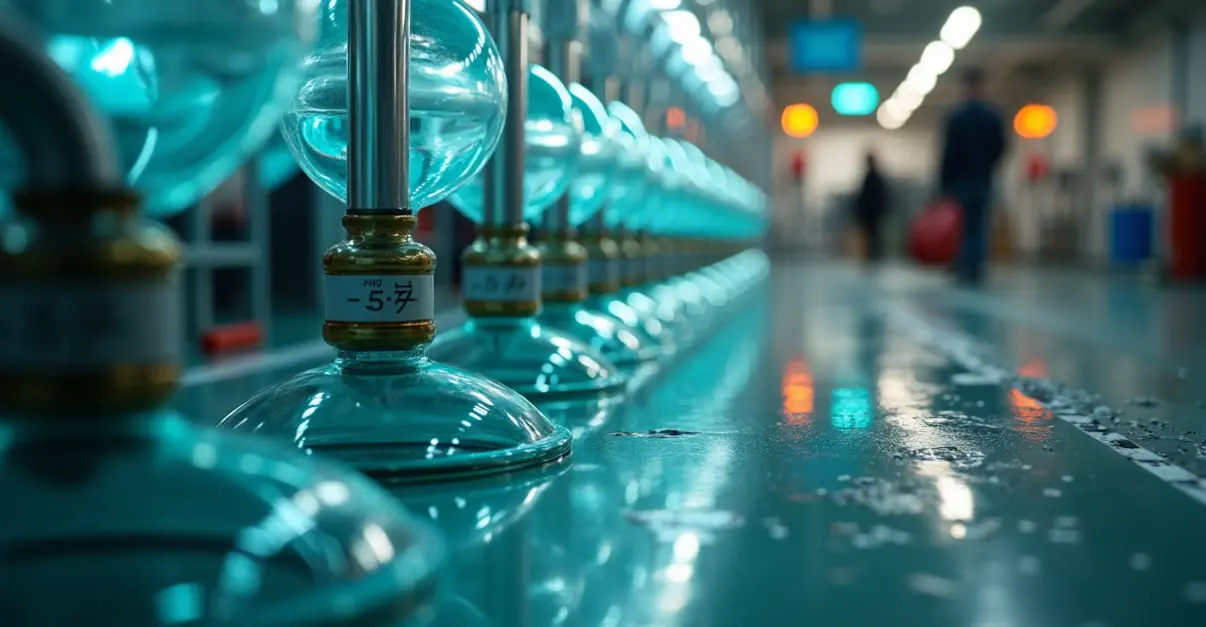
The hub will feature a 300-megawatt electrolysis plant, one of the largest in Europe, capable of producing approximately 30,000 metric tons of green hydrogen annually. This production will utilize advanced Proton Exchange Membrane (PEM) electrolyzer technology, known for its responsiveness to fluctuating renewable energy sources like wind and solar. 'This scale of electrolyser capacity represents a quantum leap for green hydrogen production in the region,' said Dr. Elena Schmidt, a renewable energy analyst at the International Energy Agency. 'It demonstrates that industrial-scale hydrogen production is becoming commercially viable.'
The electrolysis process will require around nine litres of water per kilogram of hydrogen produced, with the facility designed to operate at 70-80% efficiency. The project's location was strategically chosen to leverage existing renewable energy infrastructure and water resources, minimizing both operational costs and environmental impact.
Strategic Offtake Agreements Secure Market
Critical to securing the financing were long-term offtake agreements with major industrial partners. The most significant is a groundbreaking 15-year agreement with TotalEnergies, which will purchase approximately 30,000 metric tons of green hydrogen annually for its refinery in Leuna, Saxony-Anhalt, starting in 2030 and continuing until 2044. This contract alone represents the largest green hydrogen supply agreement in Germany to date.
'These offtake agreements provide the revenue certainty that investors need,' explained financial analyst Michael Chen from Oxford Energy. 'Without binding commitments from buyers, large-scale hydrogen projects struggle to secure financing. This deal shows how strategic partnerships can unlock investment.'
Additional agreements are in negotiation with steel manufacturers and chemical producers, who view green hydrogen as essential for decarbonizing their industrial processes. The Oxford Institute for Energy Studies recent report highlights how such agreements are becoming increasingly sophisticated, addressing complex issues like pricing mechanisms, volume commitments, and risk allocation.
Financing Structure and Stakeholders
The financing package combines public funding from European Union green transition programs with private investment from energy companies, infrastructure funds, and institutional investors. According to the International Energy Agency's 2024 Global Hydrogen Review, global investment in hydrogen supply projects reached $3.5 billion in 2023, with 80% directed toward electrolysis facilities - a 350% increase from 2022.
'What makes this financing package innovative is its blended structure,' noted project finance specialist Sarah Johnson. 'Public funds de-risk the initial phase, while private capital provides scalability. This model could become a blueprint for future hydrogen infrastructure projects across Europe.'
Key stakeholders include energy utilities, industrial consumers, technology providers, and government agencies coordinating through the European Hydrogen Bank initiative. The project has also attracted interest from Asian investors looking to secure future hydrogen supplies for their domestic markets.
Timeline to Operation and Challenges
The project timeline calls for final investment decision in late 2025, with construction beginning in early 2026. The electrolysis plant is scheduled to commence operations by 2027, reaching full capacity by 2028. This accelerated timeline reflects both technological maturity and growing market demand for green hydrogen.
However, challenges remain. 'Hydrogen projects face unique economic pressures,' cautioned industry observer Klaus Weber, referencing recent project cancellations in Austria and Germany. 'Despite the financing success, we must remain realistic about cost structures and policy support requirements.' A September 2025 report highlighted how some European green hydrogen projects have been canceled due to economic viability concerns.
The project developers have addressed these challenges through a combination of long-term power purchase agreements for renewable electricity, strategic partnerships with industrial offtakers, and phased implementation that allows for technology optimization and cost reduction over time.
Environmental Impact and Future Outlook
Once operational, the hydrogen hub is expected to reduce CO2 emissions by approximately 300,000 metric tons annually - equivalent to removing 140,000 cars from the road. The green hydrogen produced will primarily replace grey hydrogen in industrial processes, significantly lowering the carbon footprint of key manufacturing sectors.
'This project represents more than just energy infrastructure,' said environmental policy expert Maria Rodriguez. 'It's a demonstration that industrial decarbonization can be achieved through market-based solutions when the right financing structures and commercial agreements are in place.'
As global hydrogen investment is projected to jump 70% in 2025 to nearly $8 billion according to IEA estimates, this successful financing round signals growing confidence in hydrogen's role in the energy transition. The project's success could catalyze similar developments across Europe, accelerating the continent's progress toward its 2050 climate neutrality goals.



Follow Discussion