
 Deutsch
 English
 Español
 Français
 Nederlands
 Português

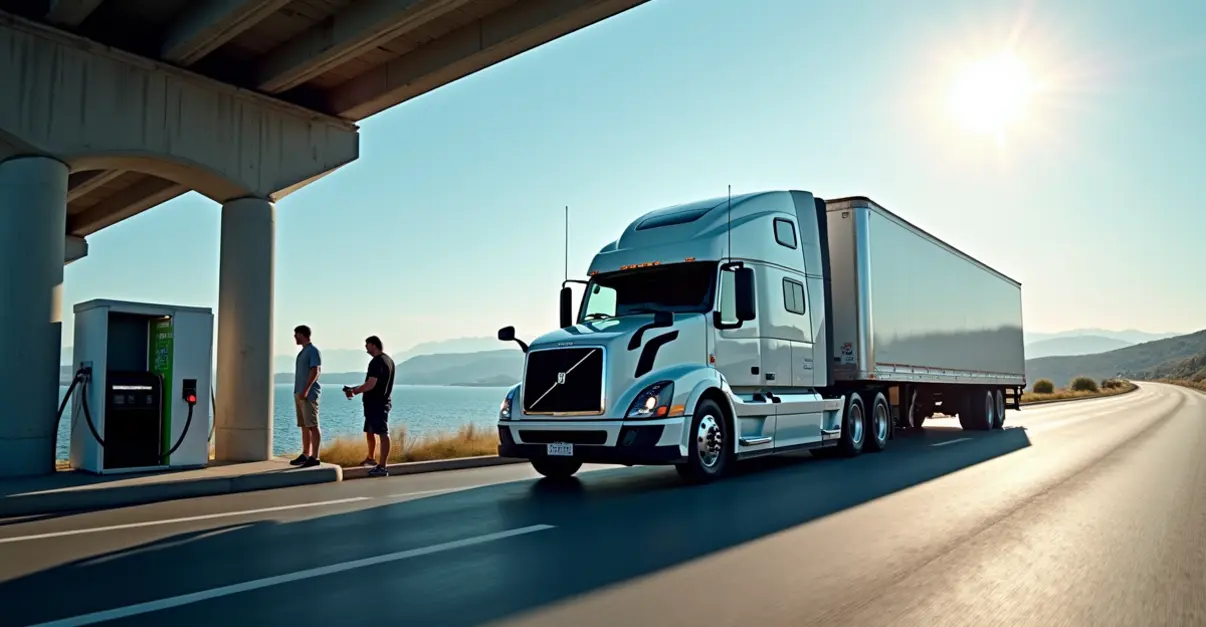





Hydrogen Infrastructure Expansion Supports Zero-Emission Trucking
A major expansion of hydrogen refueling stations along key highway corridors is underway in 2025, supporting growing pilot programs for fuel cell electric trucks (FCETs) in long-haul transportation. This infrastructure development represents a crucial step toward decarbonizing the heavy-duty trucking sector, which accounts for approximately 25% of transport CO₂ emissions globally.
California Leads the Charge
California continues to be the epicenter of hydrogen infrastructure development in the United States, with strategic station deployments along critical freight corridors like I-5 and I-10. 'We're seeing real momentum in hydrogen infrastructure development, particularly along the I-5 corridor where freight traffic is heaviest,' says transportation analyst Mark Johnson. The state currently hosts 50 of the nation's 52 operational hydrogen stations, with several new high-capacity stations specifically designed for heavy-duty trucks coming online this year.
The NorCAL Zero project at the Port of Oakland demonstrates the viability of hydrogen trucking, deploying 30 Hyundai Xcient Class 8 FCETs alongside the world's first public high-capacity liquid hydrogen station capable of fueling over 200 trucks daily. Industry experts note that these stations are strategically located to serve major logistics hubs and port facilities.
Major Industry Players Driving Adoption
Leading manufacturers are making significant investments in hydrogen truck technology and supporting infrastructure. Toyota recently announced plans to introduce hydrogen-powered Class 8 trucks to its North American Parts Center California fleet, replacing diesel trucks on routes from the Port of Long Beach to Ontario and San Diego. 'Our commitment to hydrogen technology extends beyond vehicles to the necessary infrastructure that makes zero-emission trucking possible,' stated Toyota's Chief Technology Officer.
Cummins Inc. and Navistar International Corporation have launched a groundbreaking Class 8 hydrogen fuel cell truck pilot program in Southern California. Their prototype, built on an International RH Series chassis and powered by Cummins' HyPM HD90 fuel cell system, will undergo a year-long field test with Werner Enterprises in Fontana. The collaboration aims to achieve over 300 miles per hydrogen fill with better fuel efficiency than diesel trucks.
European Infrastructure Development
Europe is also making significant strides in hydrogen infrastructure, though the approach varies by country. The European Union recently approved over €600 million in funding through the Alternative Fuels Infrastructure Facility (AFIF) to accelerate clean mobility infrastructure across Europe. This investment will support 42 projects across 26 EU Member States, including the construction of 38 new hydrogen refueling stations for cars, trucks, and buses.
'Spain is emerging as a hydrogen leader in Europe, securing roughly 80% of the EU's recent hydrogen station funding,' notes European energy analyst Maria Rodriguez. This expansion comes as hydrogen networks across other European countries face challenges, with Austria shutting down its remaining stations and Germany closing stations due to low usage.
Technical Advancements and Challenges
The latest generation of hydrogen fuel cell systems shows significant improvements in efficiency and durability. Toyota's next-generation Gen 3 FC system, debuted in North America this year, is expected to be 20% more efficient and 20% more powerful than current systems. For heavy truck applications, the Gen 3 system is anticipated to last over 600,000 miles without major service.
However, challenges remain. Hydrogen prices currently range from €8-10/kg in Europe and $32-36/kg in California, well above the target of €5/kg needed for widespread adoption. Station reliability also remains a concern, with frequent outages and partial fills reported at some locations. 'We're working to address these reliability issues through improved station design and better supply chain coordination,' explains a hydrogen infrastructure developer.
Future Outlook and Policy Support
The success of hydrogen trucking depends heavily on continued policy support and infrastructure investment. The H2Accelerate consortium and ACEA are pushing for 1,000-3,600 high-capacity hydrogen refueling stations across key European logistics corridors to support 70,000 fuel cell trucks by 2030. Replacing this many diesel trucks could cut approximately 4.5 million tonnes of CO₂ annually.
In the United States, strategic federal investment in hydrogen infrastructure along major freight corridors is essential. California's HVIP program offers up to $240,000 per FCET, providing crucial financial incentives for fleet operators. As one industry leader stated, 'The pieces are coming together - we have the technology, we're building the infrastructure, and now we need the policy framework to scale nationally.'
The expansion of hydrogen refueling stations along major highways represents a critical milestone in the transition to zero-emission freight transportation. While challenges remain, the growing number of successful pilot programs and increasing industry investment suggest that hydrogen-powered long-haul trucking is moving from concept to commercial reality.




Follow Discussion