


 Deutsch
 English
 Español
 Français
 Nederlands
 Português


 Share
Share




What is the Financial Markets Peace Advance Phenomenon?
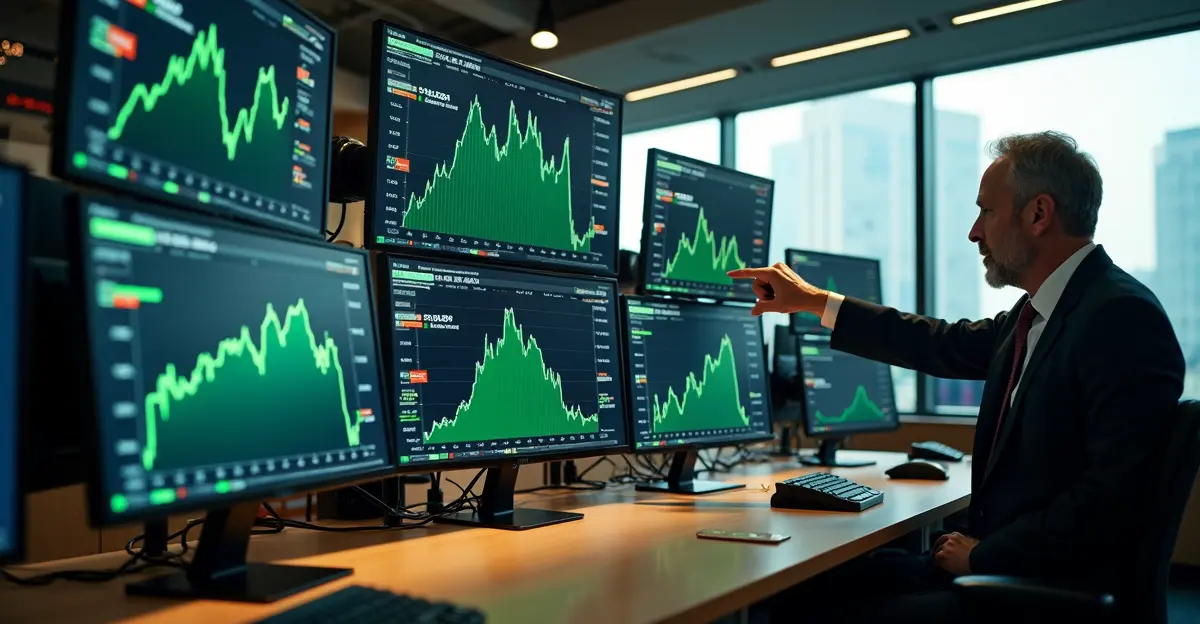
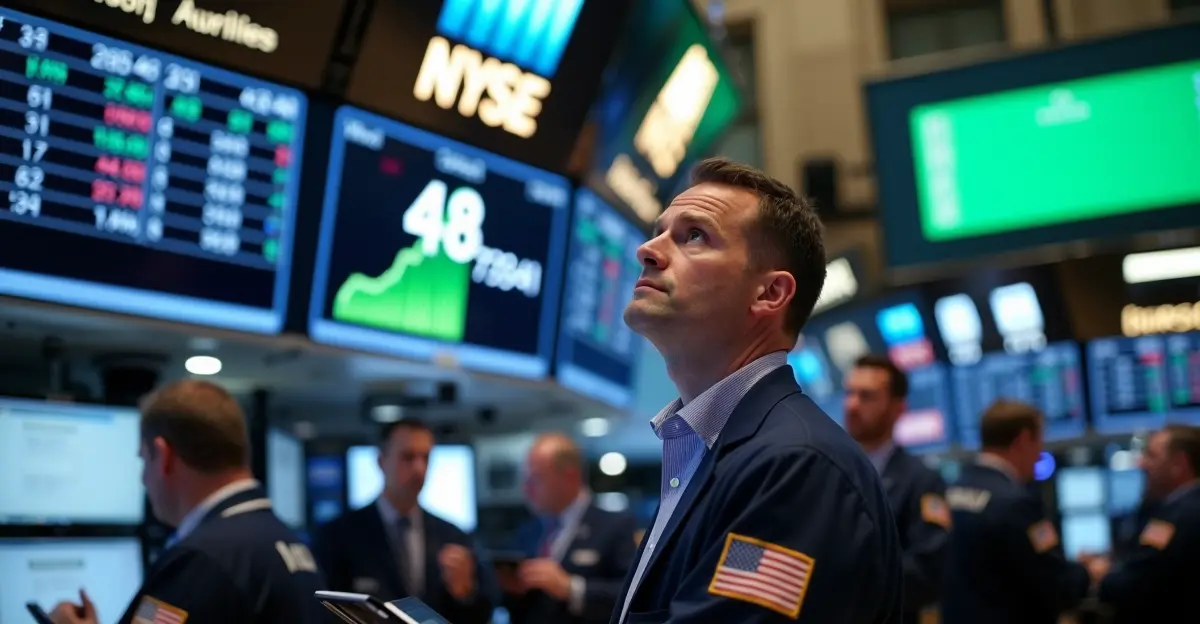
Financial markets are experiencing a remarkable phenomenon where stock indices are surging to record highs in anticipation of peace, even before actual conflict resolution occurs. On April 15, 2026, the S&P 500 reached its highest level since January, while Amsterdam's AEX index hovered just above the 1,000-point threshold, demonstrating what market analysts call a 'record recovery' from recent geopolitical tensions. This financial markets peace advance represents a significant shift in investor sentiment, with markets pricing in potential diplomatic breakthroughs before they materialize.
Market Performance and Record Highs
The S&P 500, which tracks 500 leading U.S. companies with a combined market capitalization exceeding $61 trillion, surged to new heights despite ongoing Middle East tensions. According to Eva Schram, financial markets editor at Het Financieele Dagblad, this represents a 'record recovery' that defies conventional market logic. The AEX index, which first broke through the 1,000-point barrier in January 2026, maintained its position above this psychological threshold, supported by strong performances from technology stocks like ASML and financial institutions including ING.
Key Market Indicators
- S&P 500: Reached record high on April 15, 2026, recovering all losses since conflict began
- AEX Index: Maintained position above 1,000 points despite geopolitical uncertainty
- Oil Prices: West Texas Intermediate crude retreated 7% to around $91 per barrel
- Market Volatility: VIX index dropped from above 30 to below 20 in eight trading sessions
Investor Sentiment and Geopolitical Context
Investors appear to be betting on a swift resolution to the Middle East conflict that began on February 28, 2026. President Donald Trump's statement that the Iran war is 'very close to over' has fueled optimism, despite the International Monetary Fund's warning about potential global recession risks. Mary Pieterse-Bloem, Chief Investment Officer at Rabobank, noted that 'Trump barks but doesn't bite,' suggesting that markets have learned to discount some geopolitical rhetoric. This sentiment contrasts sharply with the IMF's recent forecast of the worst year for the global economy since the COVID-19 crisis, highlighting a disconnect between economic fundamentals and market psychology.
The financial markets peace advance phenomenon reflects what analysts call 'forward-looking pricing,' where markets anticipate outcomes rather than reacting to current events. This approach has been particularly evident in the global energy markets, where oil prices have retreated significantly despite ongoing tensions in the Strait of Hormuz. The potential for a 'Peace Dividend' – the reallocation of trillions from defense spending to infrastructure and technology investments – has further buoyed investor confidence.
Economic Fundamentals vs. Market Optimism
Despite the IMF's downgraded global growth outlook for 2026 to 3.1% (down 0.2 percentage points from January), financial markets continue to rally. The IMF has presented three scenarios: a reference scenario (3.1% growth), an adverse scenario (2.5% growth), and a severe scenario (2.0% growth) that would mean a close call for global recession. Yet investors seem focused on potential positive outcomes rather than these warnings.
Several factors explain this divergence:
- Strong Corporate Earnings: Major banks including JPMorgan Chase, BlackRock, Wells Fargo, and Citigroup reported better-than-expected results, with JPMorgan showing a 13% profit rise
- Capital Inflows: According to Schram, capital continued flowing toward stocks and ETFs throughout the conflict period
- Limited Withdrawals: Rabobank's investment team observed few withdrawals since the conflict began
- Technical Factors: The earnings season has begun with encouraging early results from U.S. companies
Implications for Global Economy
The financial markets peace advance has significant implications for the global economic landscape. If sustained, this market optimism could create a self-fulfilling prophecy, boosting consumer and business confidence. However, risks remain substantial, particularly if diplomatic efforts falter. The IMF warns that if the Middle East conflict worsens and oil prices remain above $100 per barrel, global inflation could reach 6%, forcing central banks to tighten monetary policy.
For investors, the current situation presents both opportunities and challenges. The technology sector has been a primary beneficiary of the rally, with companies like NVIDIA and Apple seeing significant gains. Conversely, defense contractors and traditional energy companies face headwinds as markets price in reduced geopolitical tensions. The situation remains fluid, with negotiations expected to continue in Pakistan and other regional capitals.
Frequently Asked Questions
What is the financial markets peace advance?
The financial markets peace advance refers to stock markets reaching record highs in anticipation of conflict resolution before actual peace agreements are signed. This phenomenon reflects forward-looking investor behavior that prices in potential positive outcomes.
Why are markets rallying despite IMF warnings?
Markets are focusing on strong corporate earnings, capital inflows, and potential diplomatic breakthroughs rather than macroeconomic warnings. Investors appear to believe the conflict will be temporary and are positioning for a post-conflict recovery.
How has the S&P 500 performed during this period?
The S&P 500 reached a record high on April 15, 2026, effectively wiping out all losses accumulated since the Middle East conflict began in February. The index has shown remarkable resilience despite geopolitical uncertainty.
What are the risks of this market optimism?
If diplomatic efforts fail or the conflict escalates, markets could experience sharp corrections. The IMF warns of potential global recession if oil prices remain elevated and tensions worsen.
How are European markets responding?
European markets, particularly the Amsterdam AEX index, have shown strong performance, maintaining positions above key psychological levels despite the eurozone facing significant economic challenges according to IMF forecasts.



Follow Discussion