


 Deutsch
 English
 Español
 Français
 Nederlands
 Português


 Share
Share




China's Economic Divide Explained: Export Boom vs Budget Noodles Reality
As China's National People's Congress convenes in March 2026 to unveil the country's 15th Five-Year Plan, a stark economic divide has emerged between booming export sectors and struggling domestic consumers who increasingly rely on budget noodle restaurants for survival. While China's export growth continues at a remarkable 8% annually and technology sectors flourish, many ordinary Chinese citizens face economic hardship, with budget restaurants like the 'Six Renminbi Noodle King' becoming symbols of the nation's domestic consumption crisis.
What is China's Economic Divide?
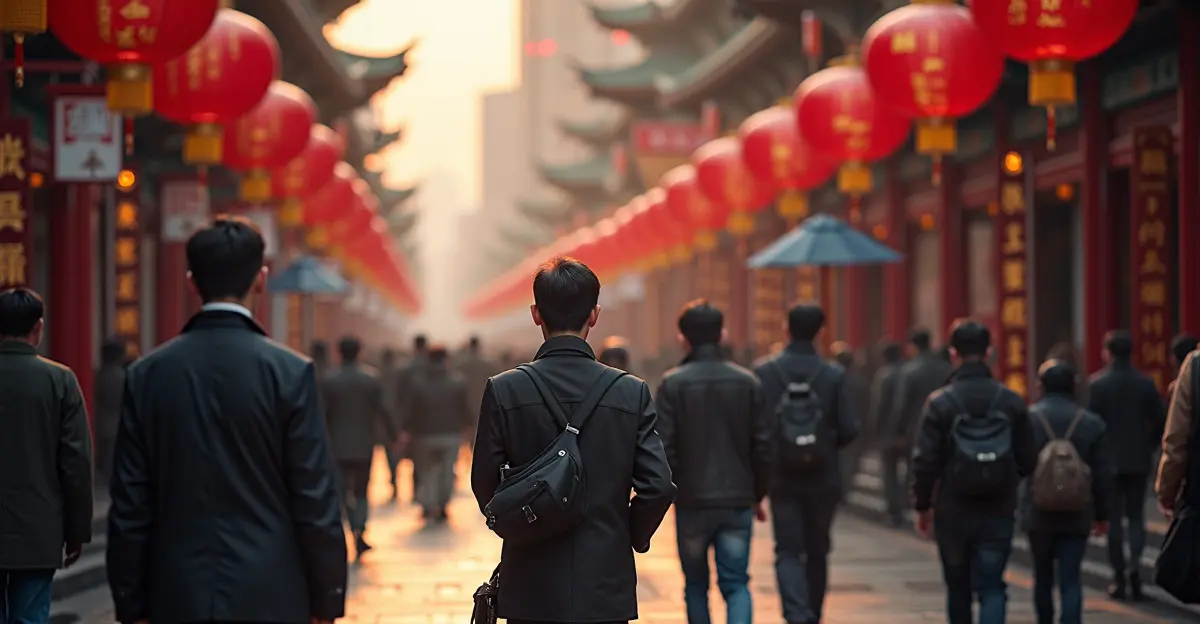
China's current economic landscape presents a paradox of simultaneous strength and weakness. On one hand, export sectors show remarkable resilience with 8% real growth in 2025, while on the other, domestic consumption remains weak with many Chinese citizens struggling to make ends meet. This divide is most visible in Beijing, where luxury business districts contrast sharply with budget noodle restaurants catering to delivery drivers, taxi operators, and manual laborers earning just 25-35 euros per day.
The Export and Technology Boom
China's export sector continues to defy global economic headwinds, with Goldman Sachs Research forecasting real GDP growth of 4.8% in 2026, above consensus estimates of 4.5%. The country's current account surplus is expected to rise to 4.2% of GDP from 3.6% in 2025, driven by strong performance in high-tech manufacturing, electric vehicles, and semiconductor industries. 'We see already a certain return and are in a positive spiral,' says Song, who works at a tech investment fund in Beijing's business district.
The new Five-Year Plan is expected to double down on technological self-sufficiency, with Industrial Policy 2.0 focusing on renewables, aerospace, artificial intelligence, and biomanufacturing. This strategic direction aligns with China's 2035 development goals and represents a continuation of the country's shift toward high-value manufacturing and innovation-driven growth.
The Domestic Consumption Crisis
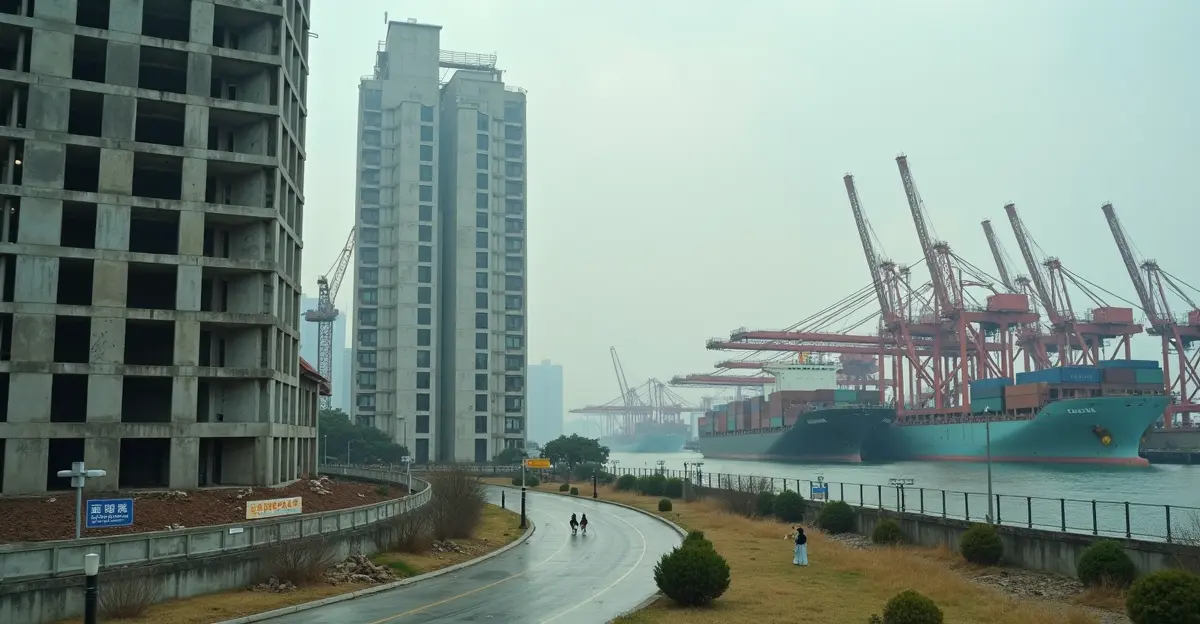
While export sectors thrive, domestic consumption faces multiple challenges. The property sector, which once drove China's economic growth, remains in a prolonged slump with housing indicators down 50-80% from 2020-2021 peaks. This has created a significant drag on GDP growth, estimated at about 2 percentage points in 2024-2025.
The rise of budget restaurants like the 'Six Renminbi Noodle King' illustrates the economic pressures facing ordinary Chinese. For just 80 eurocents per meal (compared to the average Beijing price of 2-3 euros), these establishments cater to a growing population of gig economy workers and those displaced from traditional employment. 'We save on everything, from labor costs and ingredients to rent, and don't spend money on renovation,' explains owner Cai, whose business model relies on 'small profits but large volumes.'
Labor Market Pressures and Demographic Challenges
China's labor market reveals deeper structural issues contributing to the economic divide. Delivery driver Hu Zhu, who lost his office job two years ago, represents a common story: 'Companies prefer young people who just graduated from university, not someone over thirty,' he explains. This age discrimination reflects broader challenges in China's employment landscape, where two-thirds of Chinese lack a high school diploma, limiting their access to high-tech sectors.
The Chinese property market crisis has exacerbated these issues, reducing construction jobs and related employment. Meanwhile, automation in manufacturing continues to displace low-skilled workers, creating a mismatch between available jobs and workforce capabilities.
Policy Responses and Five-Year Plan Priorities
As China unveils its 15th Five-Year Plan, policymakers face the delicate task of balancing export-driven growth with domestic economic stabilization. The government is expected to maintain expansionary fiscal policy with deficits around 4% of GDP, directing spending toward healthcare, childcare, education, and eldercare to boost productivity and consumption.
Key economic targets for 2026 include:
- GDP growth target: 4.5-5% (potentially the first time below 5%)
- Inflation target: 2% (serving as a ceiling rather than achievement goal)
- Budget deficit: 4% (matching last year's record high)
- Current account surplus: 4.2% of GDP (up from 3.6% in 2025)
The critical question facing policymakers is whether to prioritize strengthening already successful sectors or implement broader measures to revive domestic consumption. The US-China trade tensions have complicated this calculus, pushing China toward greater self-sufficiency while maintaining export competitiveness.
Impact on Chinese Society and Future Outlook
The economic divide has tangible social consequences. In Beijing's business districts, tech workers and finance professionals remain optimistic about China's economic direction. Yet just kilometers away, budget noodle restaurants serve a growing clientele of economically vulnerable workers. This spatial segregation mirrors the broader economic stratification affecting Chinese society.
Looking forward, China's economic trajectory depends on several factors:
- Success in transitioning to consumption-driven growth
- Management of the ongoing property sector downturn
- Effectiveness of technological innovation policies
- Ability to address labor market mismatches
- Response to global economic uncertainties
The Asian economic recovery patterns suggest that China's approach will influence regional economic dynamics for years to come. With the 15th Five-Year Plan setting the course until 2030, the decisions made in March 2026 will determine whether China can bridge its economic divide or see it widen further.
Frequently Asked Questions
What is China's economic growth target for 2026?
China is expected to set a GDP growth target of 4.5-5% for 2026, which would be the first time below 5% if the lower end of the range is adopted. This reflects both global economic uncertainties and domestic challenges.
Why are budget noodle restaurants becoming popular in China?
Budget noodle restaurants like 'Six Renminbi Noodle King' cater to economically vulnerable workers in China's gig economy, offering meals for just 80 eurocents compared to average Beijing prices of 2-3 euros. They symbolize the domestic consumption crisis amid export sector strength.
What is China's 15th Five-Year Plan?
China's 15th Five-Year Plan (2026-2030) is a comprehensive economic and social development blueprint that will guide national policy priorities. It emphasizes technological self-sufficiency, innovation-driven growth, and addresses the transition toward more balanced economic development.
How does China's export sector perform compared to domestic economy?
China's export sector shows strong 8% real growth in 2025, while the domestic economy faces multiple challenges including weak consumption, property sector downturn, and labor market pressures. This creates a significant economic divide within the country.
What are the main challenges facing China's economy?
Key challenges include weak household consumption, prolonged property sector slump, labor market pressures (particularly for workers over 30), technological transition requirements, and the need to balance export growth with domestic economic stability.



Follow Discussion