


 Deutsch
 English
 Español
 Français
 Nederlands
 Português


 Share
Share




How Dangerous Is Wildfire Smoke for Your Health?
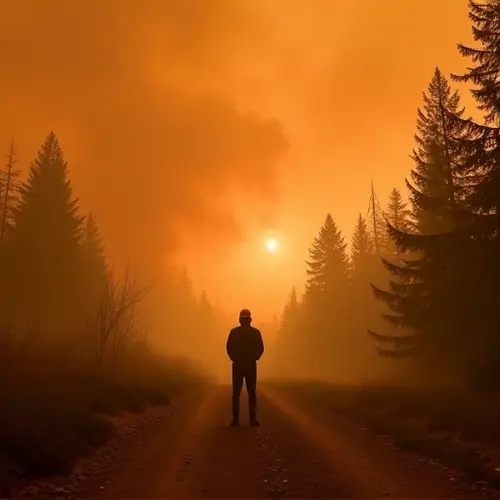
As massive wildfires continue to rage across southern France and Spain in July 2026, forcing tens of thousands to evacuate, health experts are raising urgent alarms about the dangers of wildfire smoke. The smoke from these natural disasters contains fine particulate matter (PM2.5) and toxic chemicals that can travel hundreds of kilometers, posing serious health risks even to people far from the flames. Understanding the health effects of wildfire smoke and knowing how to protect yourself has never been more critical.
Wildfire smoke is a complex mixture of gases and fine particles produced when wood, vegetation, and sometimes buildings burn. The primary health concern is PM2.5 — particles smaller than 2.5 micrometers that can penetrate deep into the lungs and enter the bloodstream. According to a 2024 Lancet report, wildfire smoke contributed to approximately 154,000 deaths worldwide in 2025 alone.
What Makes Wildfire Smoke So Dangerous?
Chemical Composition of Smoke
Wildfire smoke contains a cocktail of hazardous substances. Beyond PM2.5, it includes carbon monoxide, volatile organic compounds like benzene, formaldehyde, and acrolein, as well as polycyclic aromatic hydrocarbons (PAHs). When fires burn through urban areas — known as Wildland-Urban Interface (WUI) fires — the smoke becomes even more toxic. The EPA has found that lead levels can be over 40 times higher on smoke-impacted days during WUI fires, and emission factors for toxic PAHs can be 5 to 2,500 times greater than for natural fuel fires.
Short-Term Health Effects
Exposure to wildfire smoke can cause immediate irritation to the eyes, nose, and throat. People may experience coughing, wheezing, shortness of breath, and chest tightness. Long doctor Sander de Hosson of the Wilhelmina Ziekenhuis Assen warns: 'Niemand, en zeker mensen met luchtwegziekten niet, moeten zich in die lucht begeven, ook bij rook moet je al weggaan als dat kan.' (No one, especially people with respiratory diseases, should be in that air; even with smoke you should leave if possible.)
Even healthy individuals can suffer from smoke exposure. A 2026 study found that asthma emergency visits rise by 17% above normal during major smoke events. The health effects of wildfire smoke can manifest within hours of exposure.
Long-Term Health Consequences
The long-term effects of wildfire smoke exposure are increasingly well-documented. A major study published in Science Advances (February 2026) found that long-term exposure to wildfire smoke PM2.5 significantly increases mortality risk, with approximately 24,100 all-cause deaths per year nationally attributed to wildfire smoke in the United States alone. The study showed a monotonic increase in risk with no evidence of a safe threshold.
Neurological disease mortality showed the greatest increase per 0.1-µg/m³ rise in smoke PM2.5 exposure. Another nationwide study of 25 million Medicare beneficiaries (aged 65+) found that chronic wildfire smoke exposure increased stroke risk by 1.3% per 1 µg/m³ increase in 3-year average smoke PM2.5. Crucially, wildfire-derived PM2.5 showed greater toxicity per unit exposure compared to non-smoke PM2.5.
Who Is Most at Risk?
Certain populations face elevated risks from wildfire smoke:
- People with respiratory conditions: Those with asthma, COPD, or other lung diseases are most vulnerable. De Hosson notes: 'Bij hen kan de blootstelling aan het fijnstof die vrijkomt hun klachten verergeren en leiden tot longaanvallen of zelfs ziekenhuisopname.' (In them, exposure to the fine particles can worsen their symptoms and lead to lung attacks or even hospitalization.)
- Pregnant women: A landmark University of Washington study published in The Lancet Planetary Health (November 2025) found that for every 1 µg/m³ increase in wildfire-related PM2.5 exposure during pregnancy, the risk of preterm birth rose by approximately 7%. The second trimester showed the strongest association, as particles may interfere with placental development.
- Children and the elderly: Both groups have weaker immune systems and are more susceptible to respiratory and cardiovascular effects.
- People with cardiovascular disease: PM2.5 can trigger inflammation, plaque development, and clotting, with cardiac deaths increasing 1–3 days after peak smoke exposure.
- Firefighters and first responders: Those on the front lines face the highest occupational risk due to concentrated exposures far exceeding community levels.
How to Protect Yourself from Wildfire Smoke
Health authorities recommend the following measures when wildfire smoke affects your area:
Indoor Protection
- Keep windows and doors closed
- Turn off ventilation systems that draw in outdoor air
- Use air purifiers with true HEPA filters (e.g., Coway Airmega AP-1512HH or Austin Air HealthMate HM400)
- A DIY Corsi-Rosenthal box fan with MERV-13 filters is an effective budget option
- Avoid burning candles, using gas stoves, or smoking indoors
Outdoor Protection
- Limit time outdoors, especially during peak smoke hours
- Avoid strenuous physical activity outside
- Wear NIOSH-approved respirators: N95 masks (e.g., 3M Aura 9205+) filter fine particles, but P100 masks (e.g., 3M 6200 half-mask) offer 99.97% filtration efficiency
- For heavy or prolonged exposure, use a full-face respirator with combined particulate-and-gas filters to also block toxic gases like benzene and formaldehyde
- Cloth and surgical masks provide little to no protection against PM2.5
Medication and Health Management
- People with asthma or COPD should keep rescue inhalers and medications readily available
- Monitor local air quality indexes (AQI) and follow public health advisories
- Seek medical attention if you experience difficulty breathing, chest pain, or severe coughing
As climate change drives more frequent and intense wildfires, the impact of climate change on wildfires is expected to expand fire-prone conditions northward, making smoke exposure a growing concern even for regions not traditionally affected by wildfires.
Wildfire Smoke vs. Industrial Air Pollution
Research increasingly shows that wildfire smoke may be more toxic than other forms of air pollution. A 2021 study published in Nature Communications found that during wildfires in southern California, there were more hospital admissions for respiratory problems compared to periods with non-wildfire PM2.5. Early studies suggest wildfire smoke may be up to ten times more toxic than vehicle exhaust. The difference between wildfire smoke and industrial pollution lies in the chemical composition and particle characteristics.
FAQ: Wildfire Smoke and Health
Can wildfire smoke cause long-term lung damage?
Yes. Long-term exposure to wildfire smoke PM2.5 is associated with increased risks of lung cancer, COPD exacerbation, and reduced lung function. A 2026 study presented at the American Association for Cancer Research found elevated rates of lung, colorectal, breast, bladder, and blood cancers linked to smoke exposure.
How far can wildfire smoke travel?
Wildfire smoke can travel thousands of kilometers. Smoke from fires in Canada has reached Europe, and smoke from California fires has affected the East Coast of the United States. Three-quarters of smoke-related mortality occurs outside fire-origin states due to long-range transport.
Is it safe to exercise outdoors when there is wildfire smoke?
No. Strenuous outdoor activity increases your breathing rate and the amount of smoke you inhale. Experts recommend avoiding heavy exertion outdoors when AQI levels are unhealthy, and staying indoors as much as possible.
Do air purifiers help with wildfire smoke?
Yes. True HEPA air purifiers can effectively remove PM2.5 particles from indoor air. Look for purifiers with a Clean Air Delivery Rate (CADR) appropriate for your room size. The EPA recommends creating a 'cleaner air room' with a portable air cleaner during smoke events.
What should I do if I cannot evacuate?
If evacuation is not possible or safe, create a sealed clean room: close all windows and doors, seal gaps with wet towels or tape, turn off ventilation systems, and use an air purifier. Wear an N95 or P100 respirator if you must go outside. Keep emergency supplies including medication, food, and water for at least 72 hours.

Follow Discussion