


 Deutsch
 English
 Español
 Français
 Nederlands
 Português


 Share
Share




Record Evacuations Force Policy Rethink Across Western States
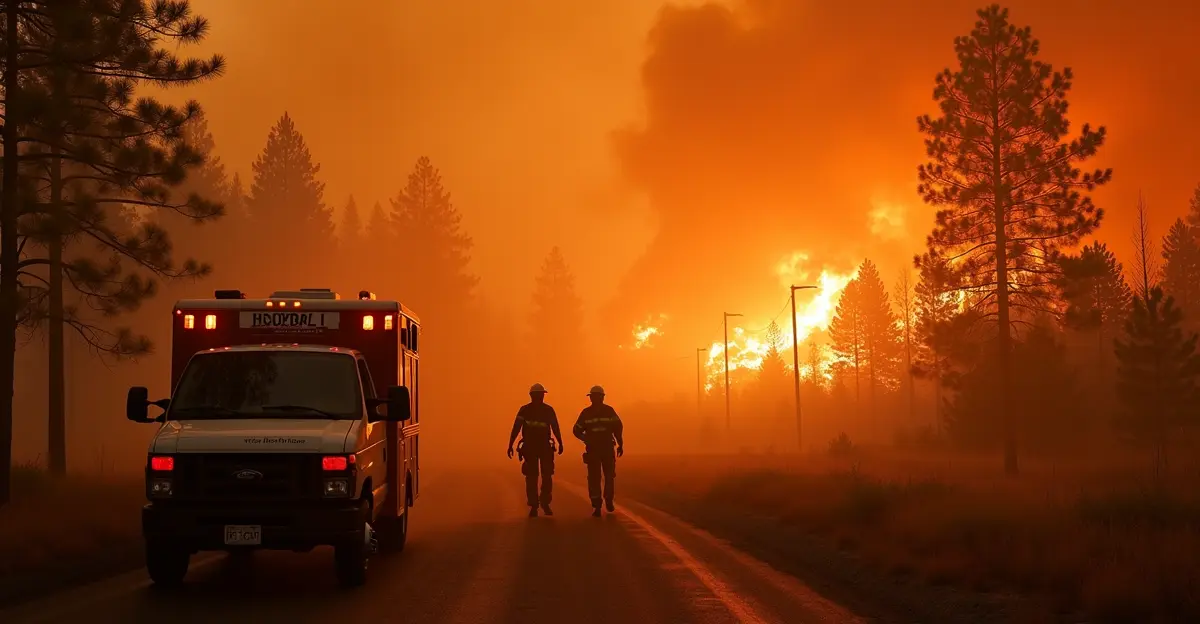
The 2025 wildfire season has triggered unprecedented evacuation orders across the Western United States, forcing communities to confront not just immediate danger but long-term economic consequences that are reshaping insurance markets and housing policies. With over 2.6 million homes now facing moderate or greater wildfire risk according to the 2025 Cotality Wildfire Risk Report, the scale of displacement is creating ripple effects throughout regional economies.
Insurance Markets in Turmoil
The devastating January 2025 southern California wildfires, which caused over $30 billion in insured losses, have fundamentally altered the insurance landscape. Major carriers like State Farm and Allstate are requesting 30-34% premium increases, while seven top California insurers have halted new policies or limited renewals in high-risk areas. 'We're seeing a market transformation unlike anything in recent memory,' says insurance analyst Mark Thompson. 'The January fires weren't just another disaster—they were a market reset event.'
According to industry analysis, the California FAIR Plan—the state's insurer of last resort—is struggling to meet high-value property needs, contributing to a $10 billion underwriting loss in California over the past decade. The situation has become so dire that some carriers are exiting the market entirely, leaving homeowners with fewer options and higher costs.
Community Displacement and Economic Impact
The Internal Displacement Monitoring Centre's August 2025 report warns that wildfire displacement is rising dramatically, with 2025 serving as a clear warning about the growing scale of internal displacement. 'What we're witnessing isn't temporary evacuation—it's permanent community disruption,' notes Xiao-Fen Hernan, author of the IDMC analysis. 'Families who evacuate often don't return, creating ghost towns in fire-prone regions.'
The economic impact extends beyond immediate property damage. The Stanford Climate and Energy Policy Program's inaugural annual report, 'California Wildfire 2025: Emerging Trends & Policy Insights', examines how wildfire crises affect electricity costs, insurance premiums, and overall economic stability. With reconstruction costs for at-risk homes valued at $1.3 trillion, the financial burden is staggering.
Policy Responses and Mitigation Strategies
States are responding with new regulatory frameworks. California now allows insurers to use forward-looking wildfire models and include reinsurance costs in rate filings—a significant shift from previous restrictions. Oregon and Washington are developing similar approaches while investing in community hardening programs.
A USDA Forest Service research paper published in 2025 examines whether homeowners who implement wildfire risk mitigation measures are better prepared for evacuation. The findings suggest that proactive measures—like installing fire-resistant roofing, clearing vegetation, and using monitoring systems—not only improve safety but also affect insurance eligibility and costs.
'Mitigation is becoming the new currency in wildfire-prone areas,' explains fire safety expert Dr. Elena Rodriguez. 'Homeowners who invest in protection measures are finding they have more insurance options and better evacuation outcomes. It's creating a two-tier system where prepared communities fare better than unprepared ones.'
Looking Ahead: A New Normal
With wildfires now considered a year-round threat rather than a seasonal concern, communities across the West are adapting to what experts call 'the new abnormal.' The National Interagency Fire Center reports over 72,000 wildfire incidents in 2025 alone, burning more than 5 million acres.
The trend toward 'defensible space' requirements, mandatory evacuation planning, and insurance-based incentives for fire-resistant construction is accelerating. Some communities are even considering managed retreat from the most vulnerable areas—a controversial but increasingly discussed option.
'We're at an inflection point,' says policy analyst Sarah Chen. 'The 2025 evacuation reports aren't just about responding to fires—they're about reimagining how we live with fire. Markets are adjusting, policies are evolving, and communities are learning that resilience requires more than just emergency response.'
As climate change extends fire seasons and intensifies drought conditions, the lessons from 2025's evacuation crises will likely shape Western development patterns for decades to come. The question is no longer whether communities will face wildfire threats, but how they'll adapt to an increasingly fiery future.

Follow Discussion