Nederlands
 English
 Deutsch
 Français
New 2025 wildfire preparedness tools from NIST and NLC provide science-backed evacuation guidance and community resilience strategies, incorporating lessons from recent disasters like Hawaii and LA fires.
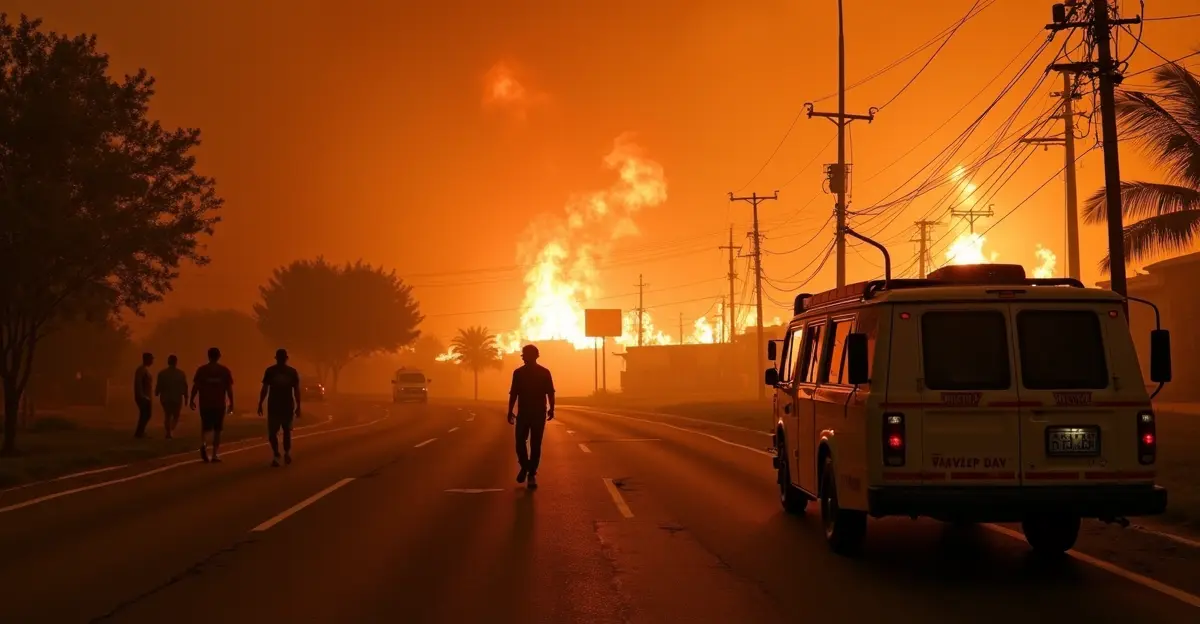
Wildfire Preparedness and Evacuation Reviews: Building Community Resilience
As wildfires become more frequent and intense across North America, communities are learning hard lessons about evacuation planning and resource allocation. The devastating 2023 Hawaii wildfires, which killed at least 102 people and caused $5.5 billion in damage, exposed critical gaps in preparedness that emergency managers are now working to address. 'We cannot afford to repeat the mistakes of the past,' says Raj Deshmukh, a disaster preparedness expert. 'Every wildfire season teaches us something new about how to protect lives and property.'
New Science-Backed Evacuation Guidance
In April 2025, the National Institute of Standards and Technology (NIST) released an updated version of its critical wildfire evacuation and sheltering guidance called ESCAPE (Wildland-Urban Interface Fire Evacuation and Sheltering Considerations: Assessment, Planning, and Execution). This science-backed guidance is crucial for the estimated 115 million Americans living in high wildfire risk areas. The 2025 update incorporates lessons from recent wildfires and community feedback, with three major improvements: introducing pre-designated Temporary Fire Refuge Areas (TFRAs) for when evacuation becomes impossible, emphasizing planning for 'no-notice' evacuations with limited warning time, and creating more flexible 'Decision Zones' that adapt evacuation strategies based on fire proximity.
'Traditional evacuation approaches simply don't work when fires move faster than people can escape,' explains Dr. Emily Chen, a wildfire researcher at NIST. 'Our new guidance provides emergency managers with tools to save lives during fast-moving wildfires that can outrun traditional evacuation approaches.' The report includes new interactive online tools and fact sheets to make the information more accessible to communities.
Community Resilience Toolkits and Resource Allocation
In October 2025, the National League of Cities (NLC) and ICF released a comprehensive toolkit to help local governments build resilience against increasing wildfire threats. The toolkit provides practical, cost-effective strategies for communities facing growing wildfire risks exacerbated by drought and extreme heat. Key components include risk assessment to identify vulnerabilities, preparedness planning through updated building codes and community protection plans, vegetation management for defensible space, and community education.
The guide also covers emergency response protocols, recovery actions including mental health support and infrastructure restoration, and financing options like grants and innovative insurance tools. 'Local governments need actionable, tailored approaches that work within their resource limitations,' says Maria Rodriguez of the NLC. 'This toolkit emphasizes nature-based solutions and long-term resilience planning that communities can implement immediately.'
Lessons from Recent Wildfire Disasters
The 2025 Los Angeles wildfires, including the devastating Palisades and Eaton fires, caused catastrophic damage with 28 fatalities and economic losses estimated between $52-275 billion. These fires highlight critical lessons for business continuity planning in high-risk wildfire areas across the U.S. Key impacts included widespread property destruction, business interruptions, supply chain disruptions, and workforce displacement affecting thousands.
A systematic review published in 2025 analyzed community resilience to wildfires, examining 30 studies from a pool of 272 articles. Key findings show wildfires cause persistent mental health issues, economic disruption, and social fragmentation. The study identifies social cohesion, emergency planning, and mutual support as critical factors strengthening community resilience. Evacuation plans and local leadership emerge as key indicators promoting adaptive resilience.
'What we're seeing is that communities with strong social networks and clear evacuation plans fare much better during wildfires,' notes Professor James Wilson, lead author of the systematic review. 'The research emphasizes integrating technical and local knowledge to enhance disaster preparedness, response, and recovery.'
Moving Forward: Integrated Approaches
Major barriers to effective wildfire preparedness include inadequate disaster risk governance, limited local capacities, and weakened community cohesion. Recommendations from recent studies emphasize holistic, multilevel approaches aligned with the Sendai Framework for Disaster Risk Reduction, highlighting the need to connect community initiatives with institutional frameworks for effective wildfire risk management.
Recovery efforts from recent fires include a $2.5 billion relief package and various assistance programs, though access challenges persist. The article emphasizes the importance of heeding early warning signs, adequate resource allocation, and implementing robust disaster preparedness strategies for communities operating in wildfire-prone regions.
'The key is not just responding to fires, but building communities that can withstand them,' concludes Deshmukh. 'That means better land management, smarter building codes, and most importantly, communities that look out for each other when disaster strikes.'