


 Deutsch
 English
 Español
 Français
 Nederlands
 Português


 Share
Share




Canary Islands boat tragedy: what happened?
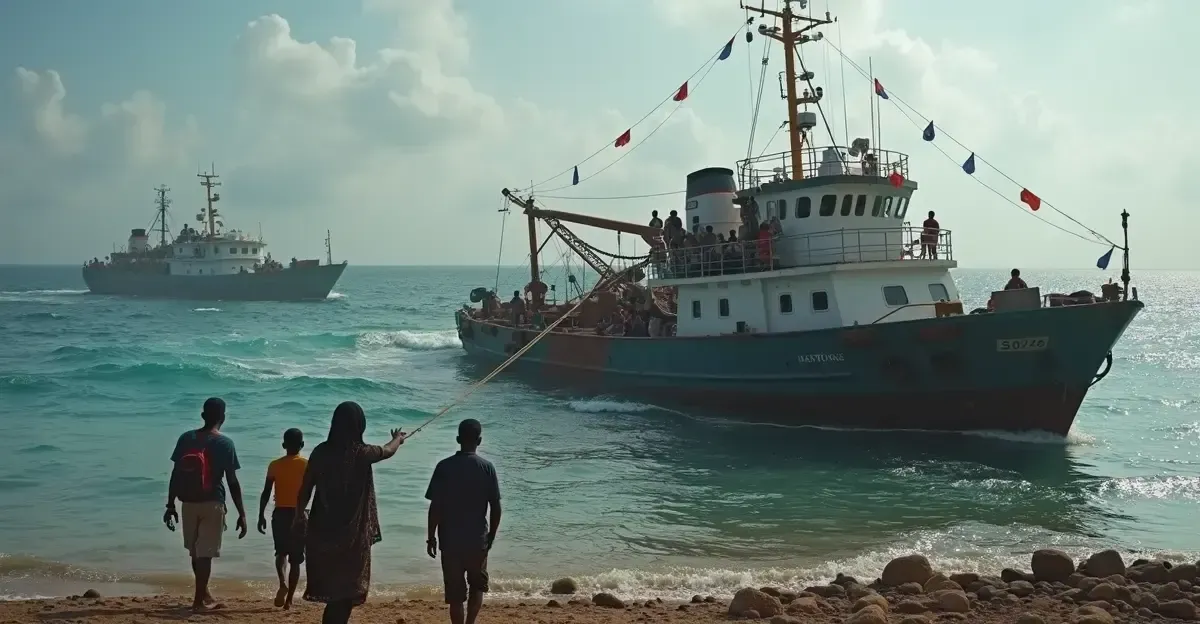
More than 80 migrants are feared dead after a wooden boat that departed Gambia nearly a month ago was found drifting off the Canary Islands on Thursday, 3 September 2026. Spanish maritime rescue service Salvamento Marítimo located the overcrowded cayuco about 120 kilometres south of Gran Canaria and brought 45 survivors ashore, along with five bodies. Survivors told rescuers the journey began with 128 people, meaning roughly 80 others died during the 27-day Atlantic crossing.
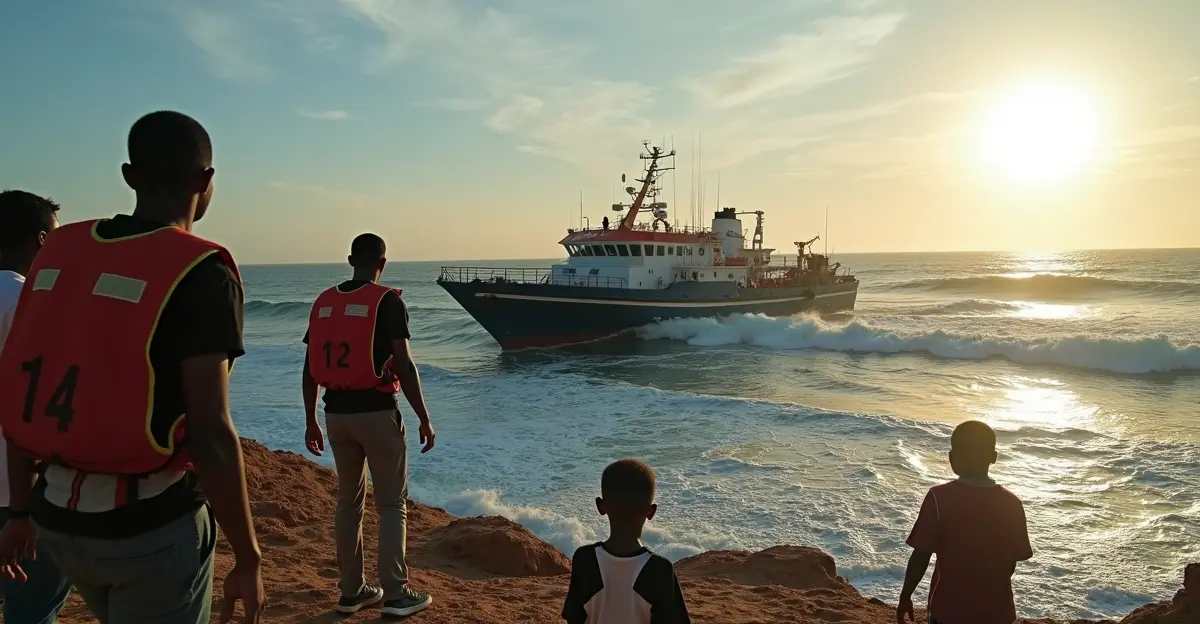
The vessel was discovered early Thursday morning in rough seas with strong winds and metre-high waves. Spanish rescue workers were unable to recover all five bodies from the deck because of the dangerous conditions. Three survivors were airlifted to hospital in critical condition, while the remaining migrants were taken to Arguineguín port and cared for by the Red Cross.
Survivors describe 27 days without food or water
Those rescued said the boat left Gambia in early August, more than 1,600 kilometres from Gran Canaria. Over the following weeks, food and drinking water ran out. We had no food or water left; people drank seawater and fell sick, one survivor told rescuers, according to Spanish media. Bodies were reportedly thrown overboard as people died, and among the dead were women and mothers with babies.
All the migrants are believed to be from Sub-Saharan Africa. Early reports cited by Spanish news agency EFE described survivors from Mali and Senegal, while some accounts also mention Gambia. The tragedy is the latest in a long series of Atlantic migration disasters off Spain's coast.
The deadliest Atlantic migration route in 2026
The West Africa to Canary Islands migration route has become one of the world's most dangerous sea corridors. According to the UN migration agency IOM, at least 1,214 people died or went missing on this route in 2025. The real figure is likely much higher because many boats are never found. In the first five months of 2026 alone, the Spanish NGO Caminando Fronteras recorded more than 1,300 deaths on migration routes to Spain.
Caminando Fronteras put the death toll from this single incident at 83 people, including three women and a baby, based on a boat carrying 127 passengers. Official rescue figures confirmed five bodies recovered and 45 survivors brought ashore, leaving dozens still unaccounted for. The discrepancy reflects how difficult it is to verify losses when bodies are thrown into the open ocean.
Rescue operation and death toll
- 45 migrants rescued alive
- 5 bodies found on board
- 80 or more feared dead or missing
- 3 survivors hospitalised in critical condition
- 5 bodies left on deck due to rough seas
Why is the West Africa–Canary Islands route so dangerous?
Migrants departing from Gambia, Senegal, Mauritania and other West African countries travel in overcrowded wooden cayucos that are not designed for ocean crossings. The Atlantic route is longer and more exposed than the Mediterranean, with strong currents, sudden storms and extreme temperatures. Survivors often face dehydration, starvation and illness after drinking seawater. Search-and-rescue capacity is limited across such a vast area, and many vessels drift for weeks before being found or disappearing entirely.
A Spanish human rights organisation said authorities had already been warned when the boat left Gambia last month, raising questions about whether an earlier alert could have saved lives. The incident has renewed pressure on Spanish migration policy and on European Union border management.
What officials and rights groups say
Canary Islands leader Fernando Clavijo called the loss unbearable and urged a stronger state migration response. Helena Maleno of Caminando Fronteras, who tracks deaths on the route, said the boat had been adrift for 27 days and that 83 of 127 passengers died. The Atlantic does not wait, she warned, repeating calls for coordinated search-and-rescue missions rather than border control alone.
The IOM has also warned that official death tolls underestimate the true scale of the crisis because many shipwrecks are never reported. In 2025, at least 2,185 people died or went missing in the Mediterranean, while 1,214 were recorded on the Western Africa/Atlantic route toward the Canary Islands.
FAQ: Canary Islands migrant boat tragedy
How many migrants died in the Canary Islands boat tragedy?
At least five bodies were found on board, but survivors said the boat left with 128 people and only 45 were rescued, meaning around 80 are feared dead. NGO Caminando Fronteras put the toll at 83.
Where did the migrant boat depart from?
The boat is believed to have departed from Gambia in early August 2026, about 1,600 kilometres from Gran Canaria, and spent 27 days at sea.
Why couldn't rescuers recover all the bodies?
Rough seas, strong winds and metre-high waves made it too dangerous to bring all five bodies ashore during the initial rescue operation.
How dangerous is the West Africa–Canary Islands migration route?
The route is considered one of the deadliest in the world. The IOM recorded 1,214 deaths on the route in 2025, and Caminando Fronteras reported more than 1,300 deaths on routes to Spain in the first five months of 2026.
What is Spain doing about migration to the Canary Islands?
Spanish authorities operate maritime rescue services and have called for stronger European coordination, but rights groups argue the focus remains on border control rather than proactive search and rescue.

Follow Discussion