


 Deutsch
 English
 Español
 Français
 Nederlands
 Português


 Share
Share




Ceuta crisis protests swept across Spain on Wednesday, September 2, 2026, as hundreds of thousands of Spaniards took to the streets to demand stronger action from Prime Minister Pedro Sánchez's left-wing government. In Madrid alone, at least 50,000 people gathered near the national parliament, with organizers claiming up to 150,000 participants, marking one of the largest anti-government mobilizations in recent Spanish history.
What is the Ceuta crisis?
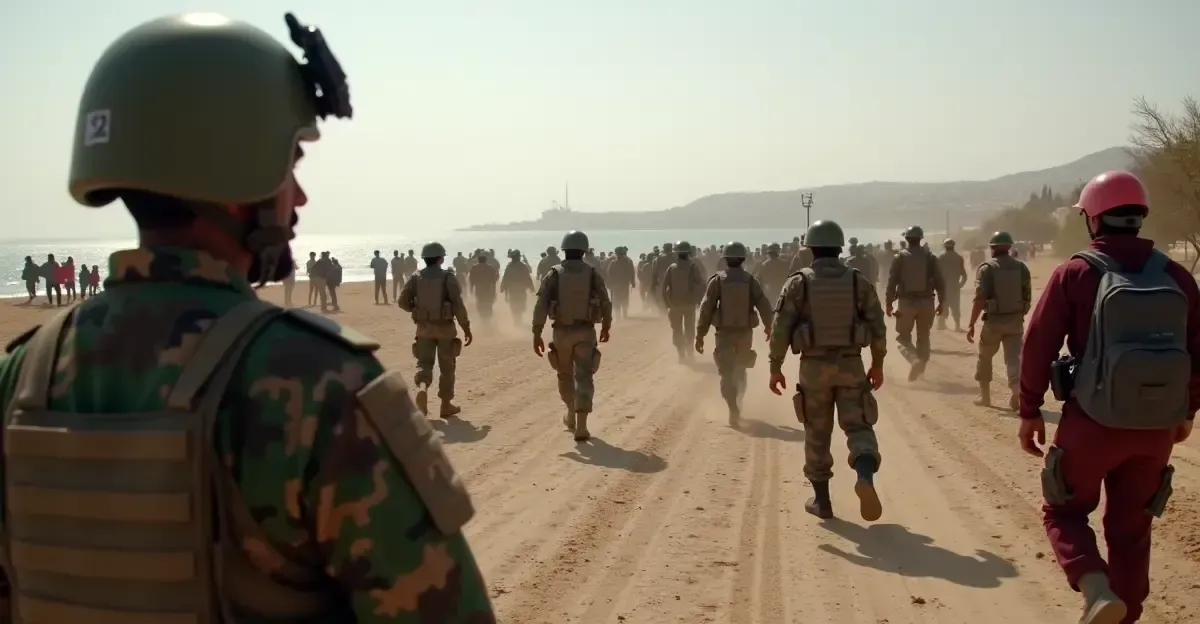
Ceuta, a Spanish exclave on Morocco's northern coast, has been gripped by instability since late July 2026, when more than 70,000 migrants rushed the border fence from Morocco. At least 90 people died during the mass crossing, and more than a month later, roughly 5,000 migrants — including about 1,200 unaccompanied minors — remain stranded in the city. Residents report aggression, street fights, sexual assault, and stoning of military patrols, fueling widespread fear and frustration. The situation has become a flashpoint in European border security debates and has deeply divided Spanish politics.
How many people protested across Spain?
The demonstrations were originally planned to show solidarity with Ceuta residents, but anger quickly turned against the Sánchez government. According to the Associated Press, more than 200 protests took place nationwide. Besides Madrid, large rallies were reported in Seville and Málaga, each drawing around 40,000 people. In other southern Spanish cities — Córdoba, Granada and Almería — more than 10,000 demonstrators joined. Opposition leader Alberto Núñez Feijóo of the conservative Popular Party attended the Madrid protest and told crowds: 'The prime minister is betraying the people of Ceuta.' Demonstrators chanted for Sánchez to resign, and near the parliament building police deployed tear gas and rubber bullets to disperse far-right groups, according to El País.
Counter-protests and political divide
At the same time, counter-demonstrations were held in several cities. Left-wing parties, trade unions and civil society organizations called on people to protest against racism and xenophobia. The split reflects a broader Spanish political crisis over migration, with the government accusing opposition parties of exploiting the Ceuta situation for electoral gain. The crisis has intensified pressure on Sánchez, whose minority coalition faces growing challenges from both the right and far-left.
What is the government doing about Ceuta?
In response to the unrest, the Spanish government approved an emergency aid package worth 309 million euros. The funds will support migrant reception facilities and invest in services for Ceuta residents. Madrid has also formally requested assistance from the European border agency Frontex. Sánchez has blamed a misread court ruling and online disinformation for amplifying the crisis, alleging that accounts linked to Russia and Israel spread false narratives — claims both countries deny.
Impact and what happens next
The Ceuta crisis has exposed deep fractures in Spain's political landscape and raised urgent questions about the country's migration and border policies. Regional leader Juan Jesús Vivas described the situation as a 'violation of Spain's territorial integrity,' while national officials accused the opposition of politicizing a humanitarian emergency. With thousands of migrants still sleeping on beaches and tensions simmering, the crisis is unlikely to subside quickly. Analysts warn that the protests could reshape the political agenda ahead of upcoming regional and national votes. Observers are also watching how the European migrant crisis response evolves, as Frontex involvement may set a precedent for other EU border areas.
Frequently Asked Questions
Why are people protesting in Spain?
Spaniards are protesting the government's handling of the Ceuta migrant crisis, accusing Prime Minister Pedro Sánchez of failing to protect residents after a deadly border surge in July 2026.
How many people protested in Madrid?
The Spanish government said about 50,000 people demonstrated in Madrid, while the city administration put the figure at 150,000.
What caused the Ceuta crisis?
In late July 2026, more than 70,000 migrants rushed the border fence from Morocco into Ceuta. At least 90 people died, and thousands remain stranded in the exclave.
How is the Spanish government responding?
The government approved a 309-million-euro aid package for Ceuta and requested help from the EU border agency Frontex. It also accused foreign-linked accounts of spreading disinformation.
Which cities saw the largest protests?
Madrid, Seville and Málaga saw the largest rallies, with 50,000 and 40,000 participants respectively, while more than 200 demonstrations were reported nationwide.




Follow Discussion