


 Deutsch
 English
 Español
 Français
 Nederlands
 Português


 Share
Share




Deadly Channel Crossing Claims Two Lives
Two women from Sudan, believed to be in their early 20s, died overnight while attempting to cross the English Channel from France to the United Kingdom in an overcrowded migrant boat. The vessel, carrying 82 people, suffered engine failure shortly after departing from the beach at Hardelot, south of Boulogne-sur-Mer. French maritime police rescued 17 people at sea, but the remaining 65 ran aground on the beach, where the two victims were found dead, likely crushed or asphyxiated due to extreme overcrowding, according to local authorities.
The tragedy marks the latest loss of life in the Channel, where at least 29 people died in 2025 and more than 130 have perished since 2018, according to official data. The incident underscores the ongoing humanitarian crisis as thousands continue to risk the dangerous crossing despite increased enforcement and bilateral agreements between France and the UK.
Details of the Incident
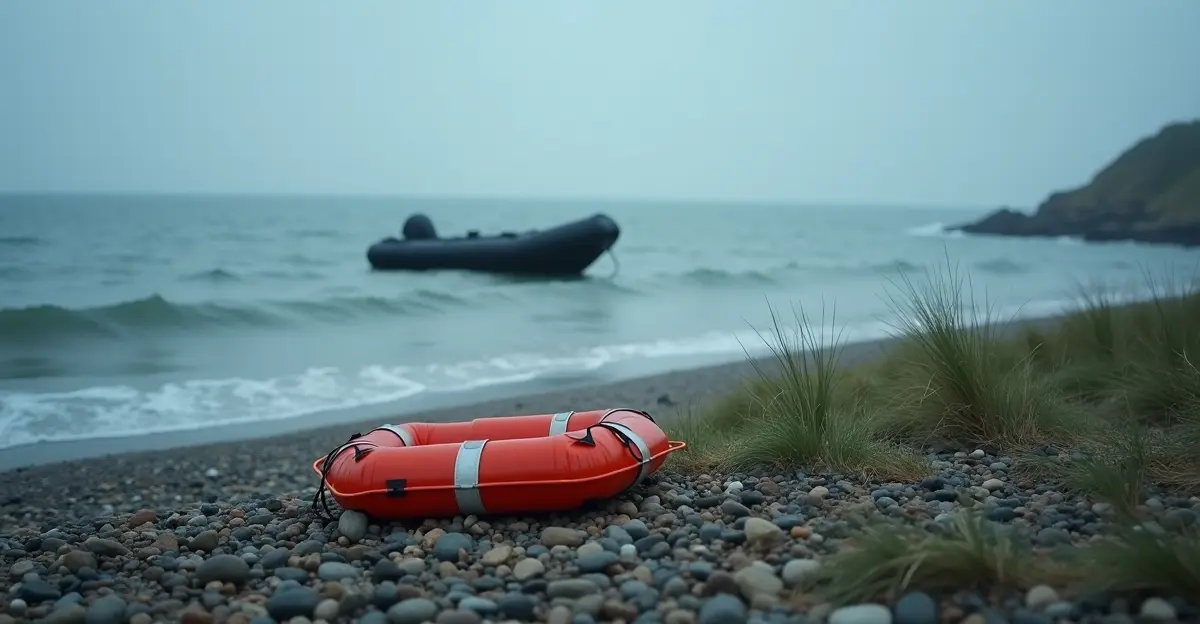
The boat departed late Saturday night from the beach at Hardelot, a small village in the Pas-de-Calais region. Shortly after launch, the engine failed, leaving the vessel adrift in the dark. French maritime authorities launched a rescue operation, bringing 17 people to Boulogne-sur-Mer. The boat itself drifted back to shore near Neufchâtel-Hardelot, where the remaining 65 occupants were found. Among them, two women were discovered dead inside the vessel.
Three survivors suffered serious burns from fuel that leaked from the engine and mixed with seawater at the bottom of the boat. Another 13 people sustained moderate injuries. The victims are believed to be Sudanese women in their 20s. An investigation has been opened by the public prosecutor's office in Boulogne-sur-Mer.
Similar to the 2025 Channel migrant deaths, this incident involved an overcrowded, unseaworthy vessel operated by smuggling networks that continue to exploit vulnerable people.
Rising Death Toll and Ongoing Crisis
The English Channel remains one of the world's busiest shipping lanes, and the crossing from France to the UK is approximately 32 kilometers (20 miles) at its narrowest point. Since 2018, more than 199,000 migrants have crossed the Channel in small boats, according to UK Home Office data as of May 2026. The number of deaths has steadily risen, with 2025 recording at least 29 fatalities.
Experts in migrant smuggling networks note that criminal gangs are increasingly using dangerous tactics, including overcrowded vessels and night departures, to evade law enforcement. The use of flimsy dinghies and small boats has made the crossing particularly lethal.
UK-France Cooperation Under Strain
The UK and France recently signed a new agreement to curb Channel crossings, with the UK committing £662 million (approximately $895 million) over three years to fund increased patrols, surveillance drones, and a new specialized unit. However, the deal has faced criticism after a temporary stopgap arrangement was needed in March 2026 when negotiations stalled. France has resisted UK demands for more aggressive interception of loaded boats at sea, citing safety concerns.
French junior minister Xavier Ducept stated: "The guiding principle remains assisting anyone in danger at sea. We will not make funding conditional on efficiency targets that could prove dangerous for migrants and rescue services."
The UK-France migrant deal includes provisions for 1,392 personnel patrolling French beaches, up from 907, and a new detention center in Dunkirk. However, critics argue that these measures have not stemmed the flow of migrants or prevented deaths.
Belgium Emerges as New Launch Point
In a worrying development, smuggling networks are increasingly shifting operations to Belgium to avoid French enforcement. In recent weeks, hundreds of migrants have launched from Belgian beaches in Flanders, with at least 25 boats departing from Belgian shores in 2026 alone. A bus carrying migrants crashed in Belgium overnight, injuring eight people, two critically, after the driver fled a police check.
West Flanders Governor Carl Decaluwe warned that thousands could follow if the trend continues, and called for a temporary closure of the France-Belgium border. Belgian police arrested 55 migrants in separate operations on Saturday, found hiding in dunes and a van.
FAQ: English Channel Migrant Crossings
Why do migrants risk crossing the English Channel?
Migrants, many fleeing conflict, persecution, or poverty, attempt the crossing to claim asylum in the UK, often because they have family ties, language links, or believe their chances of asylum are higher than in other European countries.
How many people have died crossing the Channel?
More than 130 people have died in the northern French maritime sector since 2018, according to official counts. At least 29 died in 2025, and 2026 has already seen multiple fatalities.
What is the UK-France agreement on Channel crossings?
The UK has agreed to pay France £662 million over three years to fund increased patrols, surveillance technology, and personnel to prevent small boat launches. The deal includes annual performance evaluations.
Is it illegal to cross the English Channel in a small boat?
Yes. Under UK law, entering without permission is a criminal offense. French law also prohibits using dangerous or unregistered vessels. However, international refugee law protects asylum seekers from penalties if they are seeking protection.
What is being done to stop the crossings?
French and British authorities conduct joint patrols, use drones and helicopters, and target smuggling networks. A new specialized unit (SIPAF) of 80 officers has been created, and intelligence units (GAO) have been expanded.


Follow Discussion