


 Deutsch
 English
 Español
 Français
 Nederlands
 Português


 Share
Share




El Salvador Life Sentences for Children 12+: Breaking Human Rights Crisis Explained
El Salvador has enacted one of the world's most controversial juvenile justice reforms, allowing life imprisonment for children as young as 12 years old for crimes including murder, rape, and terrorism. President Nayib Bukele signed the constitutional amendment on April 15, 2026, marking a dramatic escalation in his administration's hardline security policies that have already imprisoned over 90,000 Salvadorans since 2022. The law takes effect on April 26, 2026, and represents a fundamental shift in how the Central American nation treats juvenile offenders.
What is El Salvador's New Juvenile Justice Law?
The new legislation permits life sentences for individuals aged 12 and older convicted of homicide, rape, or terrorism-related offenses. Previously, El Salvador's maximum prison sentence was 60 years for adults, with separate juvenile justice provisions for minors. The constitutional amendment was approved by Bukele's Nuevas Ideas party-controlled legislative assembly in March 2026, following a pattern of authoritarian legal reforms that have consolidated presidential power.
Under the law, children as young as 12 can receive life imprisonment for:
- Homicide or attempted homicide
- Rape or sexual violence
- Terrorism or membership in criminal organizations
- Complicity in any of these crimes
Context: Bukele's State of Emergency and Mass Arrests
This juvenile justice reform represents the latest escalation in President Bukele's security strategy that began with a state of emergency declared in March 2022 following a deadly weekend of gang violence that claimed 87 lives. The emergency measures, extended 48 times as of April 2026, have suspended constitutional rights and led to the arrest of over 91,000 people - approximately 1.4% of El Salvador's population.
Human Rights Watch documented in their 2022 report that security forces conducted arbitrary arrests based on appearance or social background, with officers stating "We can arrest anyone we want." The prison population swelled from 39,000 to 95,000 despite capacity for only 27,000, creating dangerously overcrowded conditions.
Mass Trials and Due Process Violations
The state of emergency has enabled mass trials where dozens of defendants are processed simultaneously, often without adequate legal representation. Access to lawyers has been systematically restricted, and detainees frequently wait years for their cases to begin. According to human rights organization Socorro Jurídico Humanitario, at least 517 Salvadorans have died in state detention since the emergency began, with 94% not being proven gang members.
An investigation by Spanish newspaper El País revealed in March 2026 that at least 33,000 of the 90,000 arrested Salvadorans were not registered as gang members at the time of their detention, suggesting widespread arbitrary arrests. The report contradicted government claims of a 1% error margin in arrests.
International Law and Human Rights Concerns
The United Nations Children's Fund (UNICEF) has expressed deep concern about El Salvador's new juvenile sentencing policy. "Life sentences for children contradict the Convention on the Rights of the Child and could have severe long-term developmental consequences," stated UNICEF representatives. The Convention, ratified by El Salvador in 1990, establishes that detention of children should be a measure of last resort and for the shortest appropriate period.
Key international law violations include:
| International Standard | El Salvador's Policy | Conflict |
|---|---|---|
| UN Convention on Rights of Child | Life sentences for children 12+ | Direct violation of rehabilitation principle |
| International Covenant on Civil & Political Rights | Mass arbitrary detentions | Violates due process protections |
| UN Standard Minimum Rules for Juvenile Justice | Adult sentencing for minors | Contradicts specialized juvenile justice systems |
Political Context: Bukele's Consolidation of Power
President Bukele has systematically dismantled democratic checks and balances since taking office in 2019. In 2021, his legislative allies replaced all five justices of the Constitutional Chamber of the Supreme Court with loyalists, paving the way for constitutional reforms. The most significant previous reform occurred in 2025 when the legislature abolished presidential term limits, extended terms from five to six years, and eliminated the two-round electoral system - effectively allowing Bukele indefinite rule.
Bukele's popularity remains exceptionally high, with approval ratings consistently above 90% among Salvadorans who credit his policies with dramatically reducing homicide rates from 38 per 100,000 in 2019 to 1.9 per 100,000 in 2024. However, this popularity comes alongside significant democratic backsliding: El Salvador fell 61 places in the World Press Freedom Index from 2019 to 2025 and 24 places in the Economist Intelligence Unit's Democracy Index, now classified as a hybrid regime.
Impact and Implications
The introduction of life sentences for children represents a watershed moment in Latin American security policies. While supporters argue tough measures are necessary to combat gang violence that has plagued El Salvador for decades, human rights advocates warn of creating a lost generation of incarcerated youth.
The policy's implementation raises several critical questions:
- How will the justice system determine which 12-year-olds receive life sentences?
- What rehabilitation programs will be available for juvenile lifers?
- How will this affect El Salvador's international standing and foreign relations?
- What precedent does this set for other nations grappling with youth crime?
Experts in juvenile justice reform suggest that evidence-based approaches focusing on prevention, rehabilitation, and community-based alternatives have proven more effective than punitive measures in reducing youth crime long-term.
Frequently Asked Questions
What crimes can get a 12-year-old life imprisonment in El Salvador?
Children aged 12 and older can receive life sentences for homicide, rape, terrorism, or membership in criminal organizations under the new law effective April 26, 2026.
How does this violate international law?
The policy contradicts the UN Convention on the Rights of the Child, which establishes that detention of children should be a last resort and emphasizes rehabilitation over punishment.
What has been the international response?
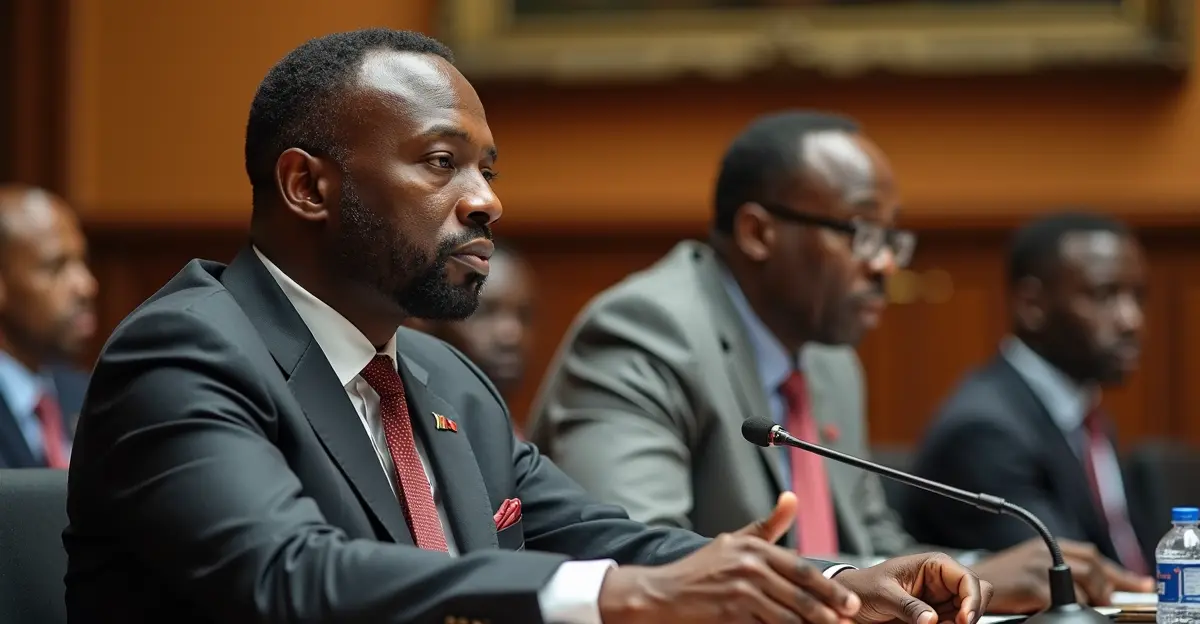
UNICEF has expressed deep concern, human rights organizations have condemned the measure, and the U.S. House Human Rights Commission held hearings on April 16, 2026, examining the human rights impact of El Salvador's policies.
Why is President Bukele so popular despite these policies?
Bukele maintains over 90% approval ratings due to dramatically reduced homicide rates and the perception that his tough policies have made streets safer after decades of gang violence.
How many people has El Salvador imprisoned since 2022?
Over 91,000 people have been arrested under the state of emergency declared in March 2022, representing approximately 1.4% of the population - one of the highest incarceration rates globally.



Follow Discussion