


 Deutsch
 English
 Español
 Français
 Nederlands
 Português


 Share
Share




China Blocks Meta's $2 Billion Acquisition of AI Startup Manus
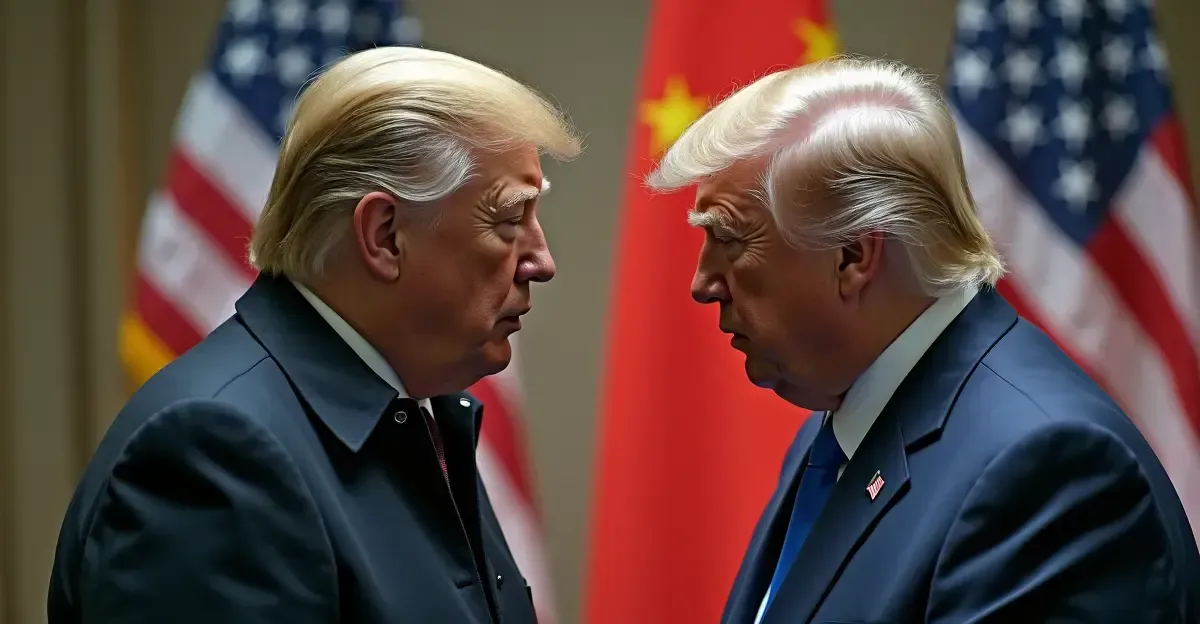
China has formally blocked Meta Platforms' $2 billion acquisition of Manus, a Singapore-based AI startup with Chinese roots, in a move that underscores the escalating technology war between Washington and Beijing. The National Development and Reform Commission (NDRC) in Beijing ordered both parties to unwind the deal, citing foreign investment regulations without providing a specific rationale. The decision comes just weeks before a planned summit between U.S. President Donald Trump and Chinese President Xi Jinping in Beijing, scheduled for mid-May 2026.
Background: The Manus Deal
Manus, founded in 2022 by Chinese engineers Xiao Hong and Ji Yichao, developed a general-purpose AI agent capable of autonomously performing complex tasks such as reviewing resumes, planning vacations, and analyzing stocks. The startup was originally based in Beijing but relocated its headquarters to Singapore in July 2025, a move some analysts have described as Singapore-washing AI companies to avoid regulatory scrutiny from both Chinese and U.S. authorities.
In December 2025, Meta announced it would acquire Manus for an estimated $2 billion, aiming to integrate the startup's technology into its Meta AI chatbot and other products across WhatsApp, Instagram, and Facebook. The deal was already partially executed: approximately 100 Manus employees had relocated to Meta's offices in Singapore, and investors including Tencent Holdings, ZhenFund, and Hongshan Capital had reportedly received their payouts.
China's Regulatory Intervention
The NDRC launched a probe into the acquisition in January 2026, examining whether Manus's AI technologies—developed while the company was still based in China—fell under national security or technology export regulations. On April 27, 2026, the commission issued a formal order blocking the deal, stating it "prohibits the foreign investment in the acquisition of the Manus project" and "requires the parties involved to withdraw the acquisition transaction."
Chinese authorities had previously imposed exit bans on Manus's co-founders, preventing Xiao Hong and Ji Yichao from leaving mainland China. The bans remain in effect, further complicating the deal's unwinding.
Meta's Response
Meta issued a statement asserting that the transaction "complied fully with applicable law" and expressed confidence in reaching a resolution with Chinese authorities. However, the company faces significant logistical hurdles: Manus employees have already been integrated into Meta's AI teams, and the financial aspects of the deal—including payments to investors—have reportedly been completed.
Impact on US-China Tech Relations
The blocked acquisition is one of the most significant Chinese interventions in a cross-border technology deal and reflects the accelerating decoupling of the U.S. and Chinese AI ecosystems. The decision comes amid heightened tensions over technology transfer, semiconductor controls, and AI governance, all of which are expected to be key topics at the upcoming Trump-Xi summit.
The White House Office of Science and Technology Policy recently accused China of conducting "industrial-scale" AI technology theft through mass-proxy distillation campaigns, further souring the bilateral technology climate. Meanwhile, China is reportedly considering new rules requiring AI companies to seek government approval before accepting U.S. investment.
"This is a watershed moment for the global AI industry," said a technology policy analyst quoted by Reuters. "China is making it clear that it will not allow its homegrown AI talent and technology to be absorbed by American tech giants, even if those companies have physically relocated."
What Is Manus AI?
Manus—Latin for "hand"—is an autonomous AI agent developed by Butterfly Effect, the parent company behind the startup. Launched in March 2025, Manus gained rapid traction for its ability to independently execute multi-step tasks without human intervention. Within eight months of launch, the platform achieved $100 million in annual recurring revenue, making it one of the fastest-growing AI startups in the world.
The AI agent's capabilities include:
- Autonomous task execution (e.g., screening job candidates, planning travel itineraries)
- Stock market analysis and financial research
- Integration with third-party tools and APIs
- Continuous learning and adaptation to user preferences
Implications for the AI Industry
The blocked deal has sent shockwaves through China's AI startup ecosystem. Many founders who had pursued overseas expansion for AI startups now face a stark choice: remain in China and lose access to U.S. funding and advanced chips, or relocate abroad and risk regulatory retaliation from Beijing.
Investors are also reassessing cross-border AI deals. Tencent, which backed Manus, now faces uncertainty over its investment returns. The episode may accelerate the trend of "tech bifurcation," where U.S. and Chinese AI ecosystems develop increasingly separate supply chains, talent pools, and regulatory frameworks.
Frequently Asked Questions
Why did China block Meta's acquisition of Manus?
China's NDRC blocked the deal citing foreign investment regulations, but analysts believe the primary reasons are preventing the transfer of sensitive AI technology to a U.S. company and asserting regulatory control over Chinese-founded tech startups.
How much was the Manus deal worth?
The acquisition was valued at approximately $2 billion, though some reports suggest the figure could be as high as $3 billion.
Can Meta still complete the acquisition?
Meta has stated the deal complied with applicable law and expects a resolution, but the NDRC's order is legally binding in China. The unwinding process is complicated by the fact that Manus employees and assets have already been integrated into Meta's operations.
What is Manus AI?
Manus is an autonomous AI agent developed by Butterfly Effect, capable of independently performing complex tasks such as data analysis, travel planning, and financial research. It launched in March 2025 and quickly gained significant market traction.
How does this affect the US-China tech war?
The blocked deal represents a major escalation in technology decoupling between the U.S. and China, signaling that Beijing will aggressively protect its AI talent and intellectual property from being absorbed by American companies.





Follow Discussion