


 Deutsch
 English
 Español
 Français
 Nederlands
 Português


 Share
Share




AI Education Guide: Estonia's ChatGPT Leap Explained | Breaking 2026 Update
Estonia has launched a groundbreaking nationwide AI education program called 'AI Leap' that integrates a specially modified version of ChatGPT into all upper secondary schools, positioning the Baltic nation as a global leader in educational technology innovation. This ambitious initiative, which began in August 2025 and involves approximately 20,000 students and 4,900 teachers across 154 schools, represents what President Alar Karis called 'a new chapter in the development of our education and digital society.' Unlike standard AI tools that provide direct answers, Estonia's educational ChatGPT variant is designed to guide students toward solutions through questioning and critical thinking exercises.
What is Estonia's AI Leap Program?
The AI Leap (TI Hüpe) program is Estonia's €4 million national educational innovation initiative that brings artificial intelligence directly into classrooms. Developed in collaboration with OpenAI and Estonian researchers, this special ChatGPT version operates differently from commercial AI tools. 'AI has imposed itself on our education,' says Ivar Visak of the AI Leap Foundation. 'We're looking for ways so it can help students, and not have a net negative effect.' The program addresses concerns that widespread use of commercial AI tools (with 64-90% of students already using them) could hinder critical thinking development and widen educational gaps.
How the Special ChatGPT Version Works
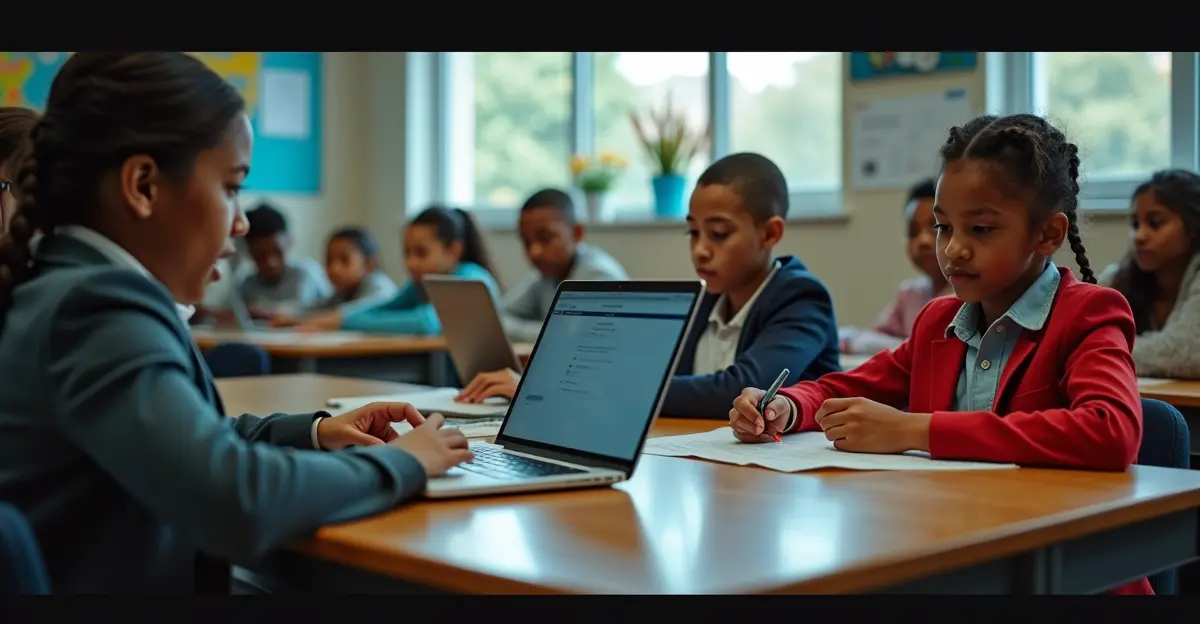
At Mustamäe Gymnasium in Tallinn, students are experiencing this new approach firsthand. 'We thought AI would do the work for us,' says 16-year-old Richard, 'but it actually asks questions and then we have to find the answers. It makes the assignment easier, but it doesn't do the work for us.' The AI tool follows Estonian communication norms and answers only in Estonian except in language classes, creating a culturally appropriate learning environment.
Key Features of Estonia's Educational AI
- Question-Based Learning: Instead of providing answers, the AI asks guiding questions
- Critical Thinking Focus: Designed to develop problem-solving skills rather than shortcut solutions
- Cultural Adaptation: Follows Estonian educational norms and communication styles
- Teacher Integration: Includes comprehensive training programs for educators
- Research-Backed Design: Developed with input from University of Tartu researchers
Estonia's Digital Education Legacy
This initiative builds on Estonia's successful Tiger Leap program from 30 years ago that brought computers and internet to schools nationwide. The country has consistently been at the forefront of digital transformation in education, with its e-governance systems serving as models worldwide. 'Adapting to new technologies is a point of national pride for Estonia,' notes education correspondent Christiaan Paauwe. This digital-first approach has made Estonia one of the least corrupt countries in the world and a leader in online public services.
International Context and Comparisons
While many countries approach AI in education with caution, Estonia has embraced it strategically. Unlike the Netherlands' AI grading tools for teachers, Estonia's program focuses directly on student learning. The program represents one of the first nationwide implementations of ChatGPT in an educational system globally. OpenAI's Vice President of Education has praised Estonia as one of the first countries to fully integrate AI into its education system.
| Feature | Estonia's AI Leap | Standard ChatGPT |
|---|---|---|
| Purpose | Educational guidance | General assistance |
| Response Style | Question-based learning | Direct answers |
| Language | Primarily Estonian | Multiple languages |
| Target Users | Students & teachers | General public |
| Cost | Free for schools | Subscription-based |
Early Results and Research
Initial data shows promising engagement, with 47% of the 7,700 activated student accounts using the application weekly. The University of Tartu, in collaboration with Stanford University and OpenAI, is conducting a large-scale impact study with results expected in autumn 2026. Tech expert Emma Sinitamm, responsible for program guidance at Mustamäe Gymnasium, notes that while students find working with AI exciting, 'it also causes considerable stress. The children are used to getting immediate answers. So they get frustrated.'
Future Expansion and Implications
The program plans to expand to vocational schools and new 10th-grade students in 2026, reaching an additional 38,000 students and 2,000 teachers. This expansion reflects Estonia's commitment to preparing all students for the AI age. The initiative also highlights broader questions about European AI sovereignty and dependence on American technology, though program leaders acknowledge there's currently no good European alternative to OpenAI's technology.
Frequently Asked Questions
What makes Estonia's ChatGPT different from the regular version?
Estonia's educational ChatGPT is specially configured to ask questions rather than provide answers, guiding students toward solutions through critical thinking exercises rather than giving them shortcuts.
How many students are using the AI Leap program?
Approximately 20,000 students across 154 upper secondary schools are currently using the program, with plans to expand to 38,000 additional students in 2026.
What are the costs of the AI Leap program?
The €4 million initiative is co-funded by the Estonian Ministry of Education and private sector partners, with all services provided free to schools and students.
How does Estonia's approach compare to other countries?
Estonia is among the first countries to implement nationwide AI integration in education, while many other nations are still experimenting with limited AI tools or approaching the technology with more caution.
What safeguards are in place for student data and privacy?
The program follows Estonian data protection regulations and educational norms, with the AI operating primarily in Estonian and designed specifically for educational contexts.


Follow Discussion