


 Deutsch
 English
 Español
 Français
 Nederlands
 Português


 Share
Share




The Escalating Semiconductor War: How December 2024 Export Controls Redraw Global Tech Boundaries
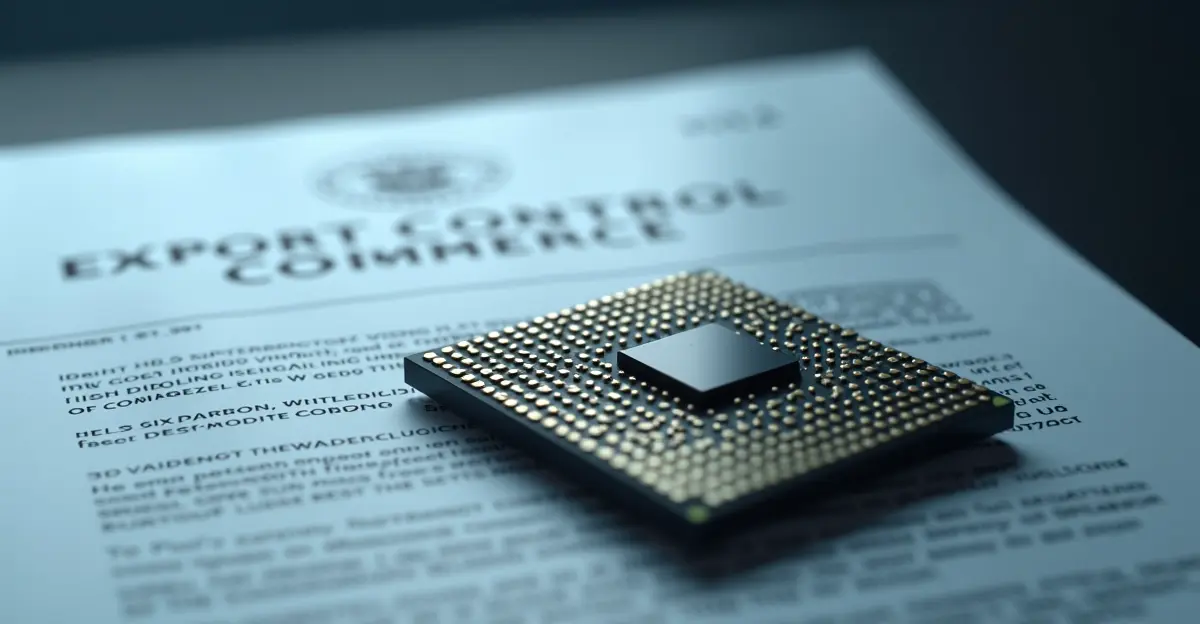
In December 2024, the Biden administration implemented the most comprehensive expansion of semiconductor export controls to date, targeting China's artificial intelligence and advanced computing capabilities through eight major regulatory actions. These measures represent a strategic escalation in the ongoing U.S.-China technology competition, specifically designed to choke off China's access to critical High-Bandwidth Memory (HBM) technology essential for AI development while preventing domestic alternatives from emerging. The controls, announced by the U.S. Department of Commerce's Bureau of Industry and Security (BIS) on December 2, 2024, immediately triggered retaliatory measures from China, setting the stage for a new phase in global technology rivalry that could reshape semiconductor supply chains for years to come.
What Are the December 2024 Semiconductor Export Controls?
The December 2024 export controls represent a significant evolution from previous restrictions implemented in October 2022. According to analysis from the Center for Strategic and International Studies (CSIS), the eight key actions include:
- Expanded HBM Restrictions: Country-wide chip-level restrictions now include High-Bandwidth Memory (HBM), which accounts for roughly half of Nvidia AI chip manufacturing costs and is dominated by just three companies: SK Hynix, Samsung, and Micron.
- Updated Manufacturing Equipment Controls: New restrictions on advanced semiconductor manufacturing equipment, including tools for producing chips at 14nm and below.
- Foreign Direct Product Rule Expansion: Dramatic expansion of the rule's applicability to non-U.S.-made equipment shipments to restricted entities and destinations.
- Entity List Additions: Addition of 140 entities to the Entity List, including affiliates of China's Semiconductor Manufacturing International Corporation (SMIC).
- New Due Diligence Requirements: Enhanced compliance obligations for companies in the semiconductor supply chain.
- Allied Country Exemptions: Provisions for countries aligning with U.S. policy objectives.
- Restricted Fabrication Facility Exceptions: New license exceptions for certain manufacturing facilities.
- Advanced Packaging Technology Controls: Restrictions on chip packaging technologies essential for AI applications.
Why HBM Restrictions Are Critical for AI Development
High-Bandwidth Memory represents the most strategically significant component of the new controls. HBM technology, particularly HBM3 and upcoming HBM4 variants, provides the massive data transfer speeds necessary for training large language models like those powering ChatGPT and other generative AI systems. As noted in analysis from Informed Clearly, "These controls expand beyond previous 2022 restrictions by targeting HBM manufacturing equipment, design tools, advanced packaging technologies, memory controllers, and personnel restrictions." This strategic move exploits China's vulnerability in memory technology, where global production remains concentrated among U.S.-aligned companies.
The Global Supply Chain Impact
The semiconductor industry faces a fundamental transformation as AI applications demand increasingly powerful chips. According to a Wall Street Journal analysis, "The AI-driven transformation is creating new challenges and opportunities for semiconductor companies as they adapt their supply chains to support advanced AI technologies." The December 2024 controls come amid what industry experts call the "AI Supercycle," with AI chip demand projected to generate over $150 billion in sales. However, persistent shortages of specialized components like advanced GPUs and HBM threaten to slow AI innovation and raise technology costs globally.
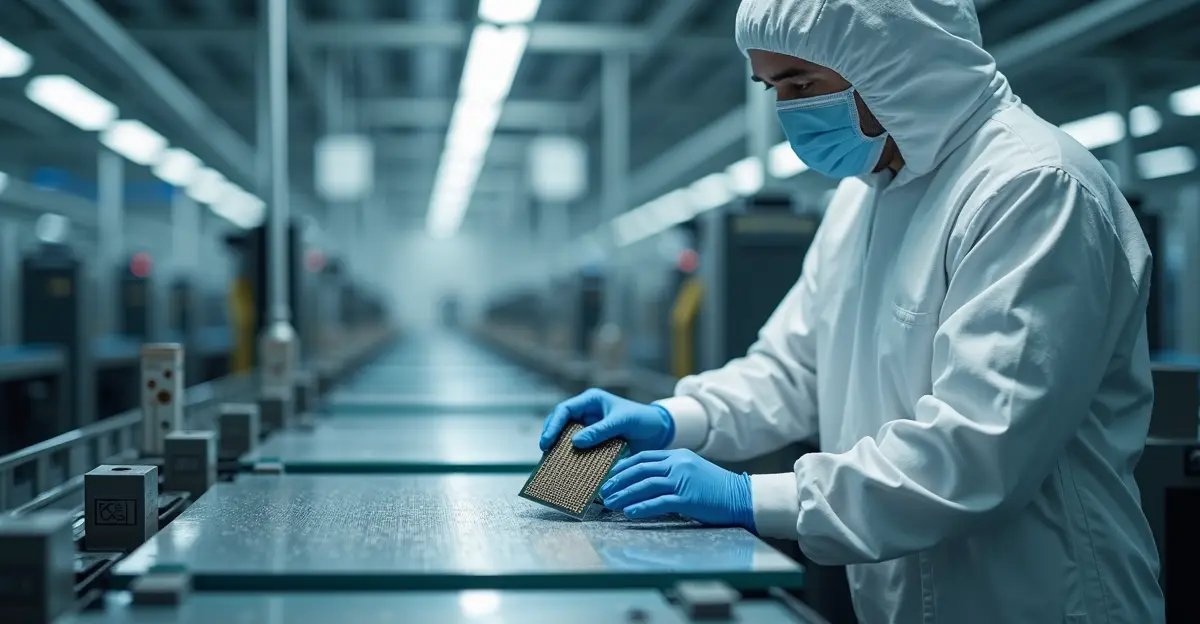
The global semiconductor shortage has fundamentally shifted from a general pandemic-era crisis to a targeted scarcity of advanced AI chips. Key bottlenecks include manufacturing complexities at sub-11nm geometries (7nm, 5nm, 3nm nodes), advanced packaging technologies like Chip-on-Wafer-on-Substrate (CoWoS), and a severe global talent shortage. NVIDIA has secured over 70% of TSMC's CoWoS capacity for its Blackwell GPUs, while TSMC struggles to meet demand despite aggressive expansion plans.
China's Countermeasures and Strategic Response
China responded immediately to the December 2024 controls with its own strategic countermeasures. In December 2024, China imposed export bans on three critical semiconductor materials: gallium, germanium, and antimony. These strategic materials are essential for semiconductor manufacturing, electronics, and various high-tech applications. China dominates global production of these minerals, accounting for 99% of refined gallium, nearly 60% of germanium, and almost half of mined antimony.
However, in a significant de-escalation move in November 2025, China suspended its export ban on these critical minerals to the United States until November 27, 2026. According to Reuters reporting, "The suspension represents a significant development in U.S.-China trade relations, potentially easing supply chain pressures for American technology companies that rely on these rare earth elements." The U.S. Geological Survey estimated the original ban could have resulted in a $3.4 billion hit to the U.S. economy, with half coming from the semiconductor sector.
Will These Controls Accelerate China's Semiconductor Independence?
The fundamental question facing global technology leaders is whether these escalating restrictions will accelerate China's push for semiconductor self-sufficiency or create new vulnerabilities in global technology ecosystems. Historical context provides important insights: following earlier U.S. restrictions on Huawei and ZTE equipment in 2018-2020, Chinese home-grown chip demand skyrocketed. According to Bloomberg data cited in Wikipedia analysis, nineteen of the world's twenty fastest-growing chip industry firms originated in China by 2021, up from just eight Chinese companies in 2020.
China accounted for 35 percent of the global semiconductor market in 2021, taking the spot for the largest single-country market. The December 2024 controls may further incentivize China's massive investments in domestic semiconductor capabilities, potentially leading to a fragmented global technology landscape with competing standards and supply chains.
Industry Confidence Amid Geopolitical Uncertainty
Despite these escalating tensions, the semiconductor industry remains remarkably confident about future growth. According to KPMG's 21st annual Global Semiconductor Outlook, the AI boom has driven semiconductor industry confidence to near-record highs, with 93% of industry leaders expecting revenue growth in 2026. The Semiconductor Industry Confidence Index reached 63, the third-highest score in two decades.
However, this optimism is tempered by significant challenges: for the first time, tariffs and trade policy have surpassed talent risk as the top concern, while supply chain stability and energy security issues intensify. AI leads as the top revenue driver (73%), followed by cloud/data centers (61%). Memory products have surged 18 points year-over-year to tie with microprocessors as the top growth opportunity.
FAQ: December 2024 Semiconductor Export Controls
What is High-Bandwidth Memory (HBM) and why is it restricted?
HBM is advanced memory technology that provides extremely high data transfer speeds essential for AI applications. It's restricted because it represents a critical bottleneck in China's AI development capabilities, with production dominated by U.S.-aligned companies.
How many entities were added to the Entity List in December 2024?
The December 2024 controls added 140 entities to the Entity List, including affiliates of China's Semiconductor Manufacturing International Corporation (SMIC) and other Chinese semiconductor companies.
What were China's countermeasures to the December 2024 controls?
China responded with export bans on critical semiconductor materials including gallium, germanium, and antimony in December 2024, though these were suspended in November 2025 until November 2026.
How do these controls differ from October 2022 restrictions?
The December 2024 controls are more comprehensive, specifically targeting HBM technology, expanding the Foreign Direct Product Rule, and adding more entities to restrictions compared to the 2022 measures.
Will these controls create semiconductor supply chain fragmentation?
Experts warn that prolonged restrictions could lead to competing technology standards and fragmented supply chains, with China accelerating its push for semiconductor independence.



Follow Discussion