


 Deutsch
 English
 Español
 Français
 Nederlands
 Português


 Share





The Federal Aviation Administration (FAA) lifted a nationwide ground stop on November 13, 2026, after a major communication outage forced the cancellation of thousands of flights across the United States. The rare halt—only the third in U.S. aviation history—lasted four hours and 21 minutes, leaving tens of thousands of passengers stranded and disrupting air travel well beyond American borders.
What caused the FAA communication outage?
According to U.S. Transportation Secretary Sean Duffy, switches and routers in the FAA's aging air traffic control network became overloaded by a large volume of data, causing communication systems to fail. The outage affected all Air Route Traffic Control Centers (ARTCCs) that guide flights between airports. Government officials said new technologies added to the legacy system triggered the overload, producing inconsistent information that forced controllers to shut it down.
Duffy could not guarantee that a similar failure would not happen again. “It was a communication issue, and technicians are investigating,” he said. Preliminary findings showed no sign of a “nefarious attack,” according to Homeland Security Secretary Markwayne Mullin.
The incident has renewed debate about aging US air traffic control infrastructure and the need for modernization. The White House and Department of Transportation had requested $30.1 billion for aviation infrastructure just hours before the stop, including $10.1 billion for ATC upgrades.
Timeline of the nationwide ground stop
The FAA issued the ground stop at 3:54 p.m. Eastern Time, first affecting Chicago's O'Hare and Midway airports before expanding nationwide. The agency cited “extraordinary circumstances and for reasons of safety.” Airborne domestic flights were allowed to continue to their destinations, while international arrivals were handled case by case.
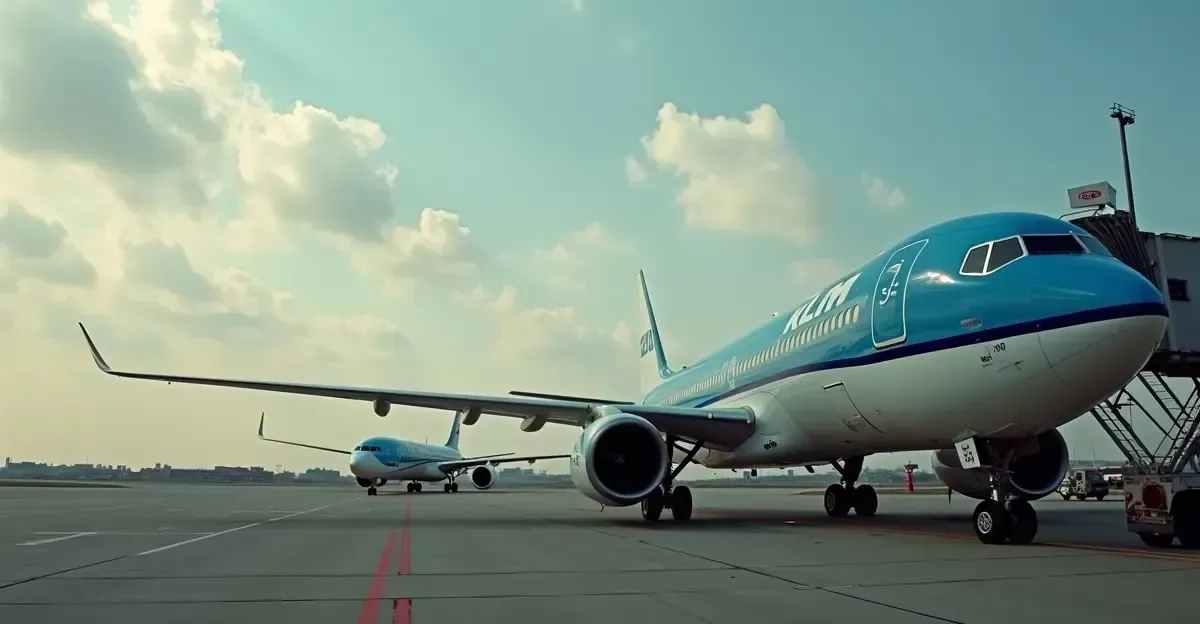
At the request of the FAA, European air traffic control agency Eurocontrol temporarily suspended all departures to the United States from its 42 member countries, including the Netherlands. Amsterdam's Schiphol Airport reported that US-bound flights were delayed by several hours.
The FAA lifted the ground stop at 8:15 p.m. Eastern Time, and airlines including American, Delta, United and Southwest gradually resumed operations. However, officials warned that full recovery could take days.
Impact on passengers and airlines
Flight tracking service FlightAware recorded nearly 8,000 cancellations and more than 10,000 delays by early evening. Transportation Secretary Duffy said tens of thousands of people were stranded, with many forced to spend the night at airports.
Aviation expert Joris Melkert of TU Delft estimated the financial damage could quickly run into the millions. “Certainly thousands of euros per flight,” he said. “Depending on how long it lasts, it rises to tens of thousands of euros when you include compensation for travelers and hotel bookings.”
Melkert added that the disruption affects more than just immediate flights. “Passengers will miss connections, pilots will exceed their hours and need rest. With about 15 million flights per year in the US—more than 40,000 per day—it can take days to clear all backlogs.” Passengers also faced uncertainty over passenger compensation rights under US and EU regulations.
What happens next?
US authorities said they expect the air traffic control system to function normally in time for the busy Thanksgiving travel surge in late November. The FAA has launched a review of the private communications network update that reportedly caused the system reboot and crash. For now, airlines are working to reposition crews and aircraft while passengers rebook cancelled itineraries.
This was only the third full national ground stop in U.S. history, following the September 11, 2001 terrorist attacks and the January 2023 NOTAM system outage. That earlier outage lasted about 90 minutes after critical pilot-notice files were accidentally deleted.
FAQ: US air traffic control outage
Why did the FAA ground all flights?
The FAA halted departures nationwide after overloaded switches and routers caused a communication failure across air traffic control centers, forcing controllers to shut down the system for safety.
How long did the FAA ground stop last?
The nationwide ground stop lasted four hours and 21 minutes, from 3:54 p.m. to 8:15 p.m. Eastern Time on November 13, 2026.
How many flights were affected?
Nearly 8,000 flights were cancelled and more than 10,000 were delayed, stranding tens of thousands of passengers across the United States and internationally.
Was the outage caused by a cyberattack?
No. Homeland Security Secretary Markwayne Mullin said preliminary findings showed no sign of a “nefarious attack,” and officials attributed the failure to overloaded equipment following a network update.
When will flights return to normal?
Airlines resumed flights gradually after the stop was lifted, but officials warned it could take days to clear backlogs and return schedules to normal.




Follow Discussion