Nederlands
 English
 Deutsch
 Français
 Español
 Português
Mexican Navy plane crashes in Galveston Bay during medical mission, killing five including a child. Two survivors rescued, one missing. Dense fog hampered rescue efforts as investigation begins.

Tragic Medical Mission Ends in Disaster
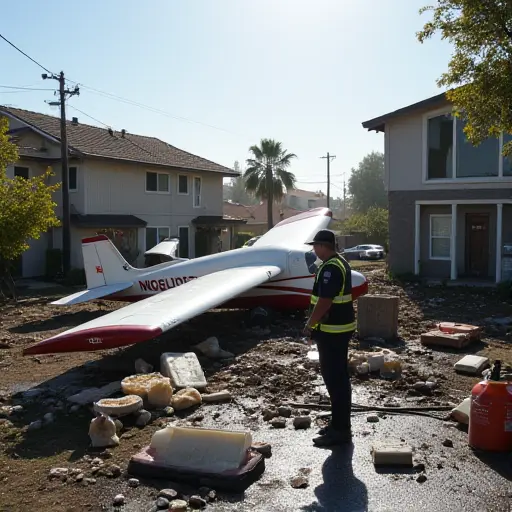
A Mexican Navy aircraft on a humanitarian medical mission crashed into Galveston Bay near Texas on Monday afternoon, December 22, 2025, killing at least five people including a young child. The small plane, carrying eight people total, went down in dense fog conditions while attempting to land at Scholes International Airport in Galveston, approximately 50 miles southeast of Houston.
Humanitarian Mission Turns Deadly
The aircraft was conducting a critical medical transport operation for the Michou y Mau Foundation, a Mexican non-profit organization that arranges specialized medical care for children with severe burns. The plane was transporting a child burn patient to Shriners Children's Hospital in Galveston for treatment, along with medical personnel and Mexican Navy officers.
According to Mexican Navy officials, the aircraft carried four Navy officers and four civilians, including the young patient, medical staff, and family members. The crash occurred around 3:17 p.m. local time near the Galveston Causeway, a bridge connecting Galveston Island to the mainland.
Heroic Rescue Amidst Tragedy
Local yacht captain Sky Decker played a crucial role in the immediate rescue efforts. 'I found a badly injured woman trapped in the wreckage with only inches of air space to breathe,' Decker told reporters. 'The plane was submerged, filled with jet fuel and water. It was a race against time.'
Decker and other civilian boaters responded to the crash scene before official rescue teams could arrive in the challenging fog conditions. They managed to pull several victims from the water, with two survivors being transported to local hospitals. One person remains missing as search operations continue.
Weather Conditions and Investigation
The crash occurred during particularly poor weather conditions. 'Visibility was extremely limited due to dense fog in the area,' stated a spokesperson for the U.S. Coast Guard, which is coordinating search and rescue operations. 'These conditions presented significant challenges for both the flight crew and our rescue teams.'
The Federal Aviation Administration (FAA) and National Transportation Safety Board (NTSB) have launched a joint investigation into the cause of the crash. While weather is considered a likely factor, investigators will examine all possibilities including mechanical issues and pilot error. The aircraft had departed from General Mariano Escobedo International Airport in Mexico before the tragic incident.
International Response and Condolences
Mexican officials have expressed deep sorrow over the tragedy. 'Our hearts go out to the families of the victims,' said a spokesperson for Mexico's Secretariat of the Navy. 'These brave individuals were on a mission of compassion, helping children in need of specialized medical care.'
The Michou y Mau Foundation released a statement expressing their deepest condolences to the families affected by the crash. The organization has been instrumental in providing medical transport for hundreds of Mexican children with severe burns to receive treatment at specialized facilities in the United States.
Galveston's History with Aviation Disasters
This tragic incident adds to Galveston's complex history with disasters. The coastal city, located on Galveston Island in the Gulf of Mexico, is best known for the devastating 1900 hurricane that killed thousands. However, the area has also seen several aviation incidents over the years due to its coastal location and sometimes challenging weather patterns.
Emergency response teams from multiple agencies including the Galveston County Sheriff's Office, Texas Department of Public Safety, and local fire departments continue to work at the scene. Recovery operations are complicated by the submerged wreckage and ongoing poor visibility conditions.
The international nature of this tragedy - involving Mexican military aircraft, American emergency responders, and cross-border humanitarian work - highlights both the cooperation between nations in medical emergencies and the inherent risks of such operations.