Nederlands
 English
 Deutsch
 Français
 Español
 Português
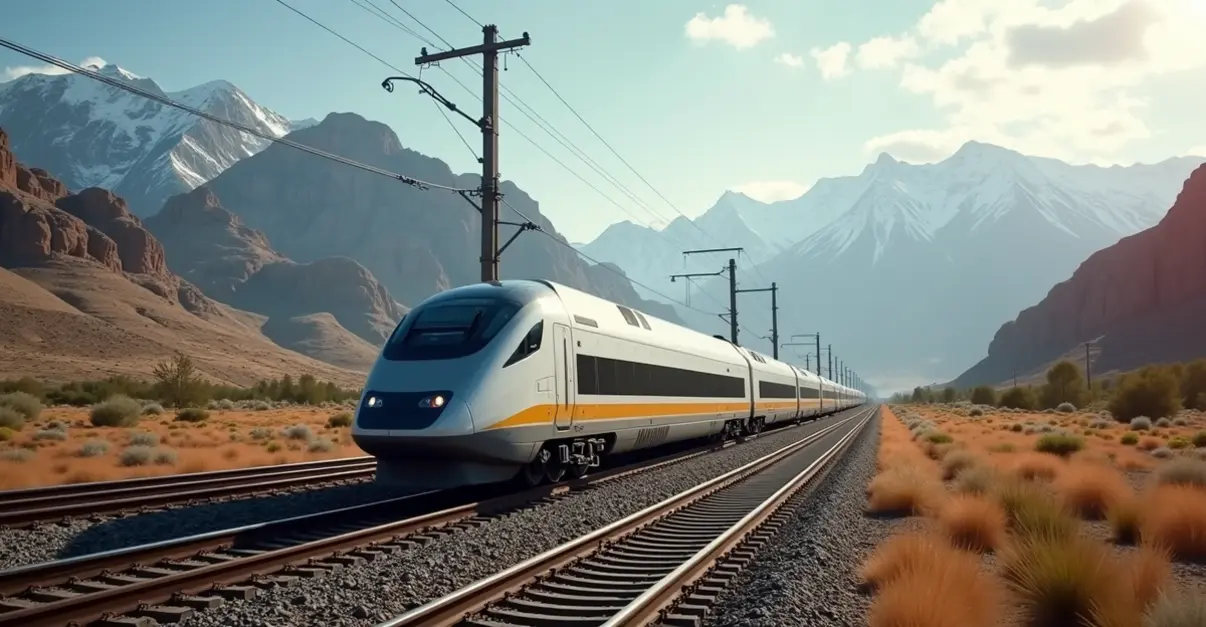





Major Infrastructure Boost: High-Speed Rail Funding Secured
In a landmark decision for regional transportation, significant funding has been approved for a high-speed rail corridor that promises to transform connectivity between major urban centers. The approval comes after extensive planning and represents one of the most substantial infrastructure investments in recent years, with construction set to begin imminently following a comprehensive procurement process.
Construction Timeline and Phased Approach
The project will follow an ambitious but realistic timeline, with initial construction activities scheduled to commence in early 2026. According to project documents, the first phase will focus on the 119-mile Central Valley segment, which is expected to see substantial completion of civil works by 2028. 'We're looking at a phased approach that allows us to build momentum while ensuring quality and safety standards,' explained project director Maria Rodriguez in a recent briefing.
The complete corridor, connecting major population centers, is projected to be operational by the mid-2030s, with intermediate milestones including track laying beginning in 2027 and systems integration starting in 2029. Environmental reviews and right-of-way acquisitions, which are already 99% complete according to the latest project update, have paved the way for accelerated construction timelines.
Economic Benefits and Job Creation
The economic impact of this infrastructure project is expected to be substantial. Current estimates suggest the construction phase alone will create over 15,000 jobs, with thousands more in operations and maintenance once the system is complete. 'This isn't just about transportation—it's about economic revitalization,' noted transportation economist Dr. James Wilson. 'Every dollar invested in high-speed rail generates significant multiplier effects throughout the regional economy.'
According to the Economic and Environmental Potential of High-Speed Rail report, high-speed rail systems typically generate $21.8 billion in economic output during construction phases. The operational phase is projected to serve between 1.6 and 18 million annual passengers depending on the final corridor configuration, with operating surpluses potentially reaching $1.2 billion annually for extended network scenarios.
Innovative Procurement Approach
The project will utilize a hybrid procurement strategy combining design-build contracts with strategic public-private partnerships (PPPs). This approach aims to leverage private sector efficiency while maintaining public oversight and accountability. 'We've learned from both domestic and international experiences,' said procurement specialist Lisa Chen. 'The design-build model allows for faster delivery, while PPPs bring in specialized expertise and risk-sharing.'
The California High-Speed Rail Authority has already received 30 responses from potential private investors, indicating strong market interest. Research from ScienceDirect on European high-speed rail PPPs highlights critical success factors including clear risk allocation, transparent procurement processes, and long-term maintenance considerations that are being incorporated into the current approach.
Environmental and Community Impact
Beyond economic benefits, the project promises significant environmental advantages. High-speed rail produces up to 90% less greenhouse gas emissions per passenger mile compared to air travel and approximately 70% less than automobile travel. The electrified system will also contribute to regional decarbonization goals, with plans to power operations entirely through renewable energy sources.
Community engagement has been a priority throughout the planning process, with extensive public consultations addressing concerns about noise, visual impact, and property acquisitions. 'We're committed to being good neighbors throughout this process,' assured community relations manager David Park. 'The benefits of improved connectivity must be balanced with respect for the communities we're passing through.'
Funding Structure and Long-Term Viability
The approved funding package represents a mix of federal allocations, state contributions, and anticipated private investment. Current estimates place the total capital program between $26.7 and $29.7 billion, with approximately $14.9 billion remaining available through 2030. The project leadership has requested extended funding authority through 2045 to ensure completion of the full corridor.
Financial modeling suggests the system will achieve operational self-sufficiency within a decade of full operation, with Scenario 3 projections from the 2025 Supplemental Project Update indicating potential annual profits of $1.2 billion from serving up to 18 million passengers. This financial sustainability is crucial for attracting continued private investment and ensuring the system's long-term maintenance and expansion.
The approval of this high-speed rail funding marks a turning point in regional transportation planning, promising not just faster travel times but also economic growth, job creation, and environmental benefits for generations to come.