Nederlands
 English
 Deutsch
 Français
 Español
 Português





Even the old Fiat ambulance of the Chartia regiment has a jammer on its roof to disrupt the radio signals of Russian drones. The regiment is stationed in a once-luxurious suburb of Kharkiv, where practically only military personnel remain.
Almost every house here is damaged, from the battles of early 2022 and recent shelling. The Russian border is about 15 kilometers away. Yet it is quiet this morning.
Most military vehicles here drive around with a jammer on the roof, showing how much the threat has increased in a short time. Earlier this year, not all vehicles had 'REB' (radio-electronic warfare), as the Ukrainians call them. They come in all shapes and sizes, often improvised and makeshift.
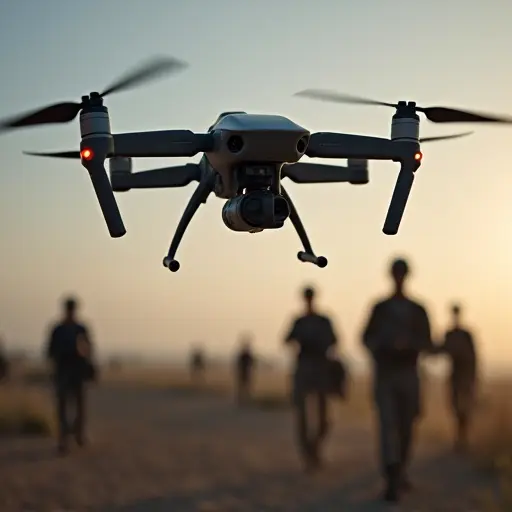
The majority of drones from both sides still rely on radio control. Jammers can disrupt these signals, making them a reasonably effective defense against kamikaze drones, provided the drone's frequency is detected.
Near the medical post, tanks are hidden in a forest. A sergeant, nicknamed 'Buttercup,' is a tank commander. He is 26 and has been a professional soldier since he was 18. He is held in reserve north of Kharkiv. "We spring into action if the Russians break through somewhere," he says.
At the company 3DTEK, located somewhere in Kyiv, the production of fiber optic drones is in full swing. These drones carry their own spool of fiber optic cable, unwinding it as they fly. The thin cables, ranging from 10 to 30 kilometers in length, transmit video footage to the pilot and control signals to the drone.
"The advantage of an optovolokno (fiber optic) is that it is resistant to jammers," says director Oleksii Zjoelinskyi. "The drones keep working even if radio signals are suppressed. Another advantage is that they can fly inside bunkers. They don't need a connection because they are controlled via a cable."
Defending against these drones is challenging. "Kinetic energy," says Zjoelinskyi, or shooting them down, is one option. Nets are another. The Leeuw Kyiv, a Dutch aid organization in Ukraine, has sent over 150 truckloads of discarded Dutch and Danish fishing nets to the front.