


 Deutsch
 English
 Español
 Français
 Nederlands
 Português


 Share
Share




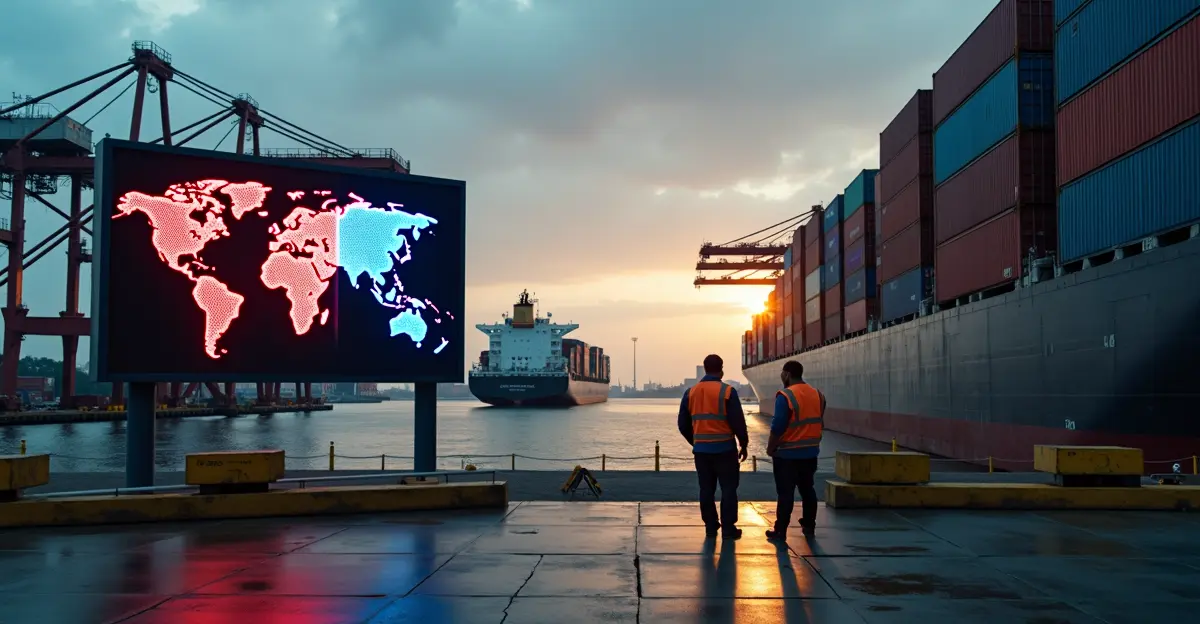
In a historic inflection point for global trade, Mexico has surpassed China as the United States' top trading partner in 2026, with bilateral trade exceeding $820 billion. This landmark shift is the clearest signal yet that friendshoring — the strategic relocation of supply chains to geopolitically aligned nations — has moved from boardroom buzzword to operational reality. Companies are now accepting 15–25% higher costs for politically allied sourcing, fundamentally rewriting the cost-efficiency paradigm that has governed global commerce for decades.
The Great Reconfiguration: From Just-in-Time to Just-in-Case
The pandemic, escalating U.S.-China tensions, and the Ukraine war exposed the fragility of hyper-optimized supply chains. In response, the 'just-in-case' manufacturing model has emerged, prioritizing resilience over minimal inventory. According to a BCG-CNBC survey from March 2026, U.S., EU, and Japanese firms plan to reduce China exposure by 25–45% over the next 36 months. The friendshoring supply chain shift is most pronounced in semiconductors, critical minerals, and automotive sectors, where governments are offering incentives like the CHIPS Act to onshore production.
Mexico's Rise: North American Integration Deepens
Mexican exports to the U.S. reached $475.6 billion in 2025, while China's fell to $427 billion — a 20% decline. Over 80% of Mexican exports enter the U.S. tariff-free under USMCA rules, and Laredo, Texas now handles 55% of cross-border freight. Machinery and computer equipment exports from Mexico surged 84% year-over-year, even as auto parts shipments dipped 6.6%. The USMCA faces a major review in July 2026, and experts warn that sustained tariff increases could trigger inflationary pressures due to deep productive integration. The Mexico USMCA trade review will be a critical test for North American competitiveness.
Section 301 Investigations: A New Tariff Architecture
In March 2026, the USTR launched two sweeping Section 301 investigations targeting over 60 economies. The first (March 11) targets 16 economies — including China, the EU, Japan, India, Mexico, and Vietnam — over structural excess manufacturing capacity in steel, aluminum, automobiles, semiconductors, and solar. The second (March 12) targets 60+ economies for allegedly failing to enforce forced labor import bans. These investigations were designed to replace the IEEPA tariffs struck down by the Supreme Court in February 2026. A temporary 10% Section 122 tariff is in place but expires July 24, 2026. Public hearings begin April 28 (forced labor) and May 5 (excess capacity), with tariff actions expected shortly after. Section 301 tariffs have no statutory rate cap, meaning rates could exceed current levels significantly. The Section 301 tariff impact 2026 will be felt across multiple industries simultaneously.
Supreme Court Ruling Reshapes Trade Enforcement
In a landmark 6-3 ruling, the Supreme Court struck down President Trump's sweeping tariffs imposed under the 1977 International Emergency Economic Powers Act (IEEPA), ruling they exceeded presidential powers. Chief Justice John Roberts wrote that the law's terms cannot authorize tariffs on any country, product, or rate without explicit congressional delegation. The decision forced the administration to pivot to Section 301 and Section 122 authorities, creating a complex, multi-front tariff regime. Importers who paid over $200 billion in tariffs may seek refunds, though the court did not address this directly.
Emerging Manufacturing Hubs: Southeast Asia and Eastern Europe
While Mexico dominates North American reconfiguration, Southeast Asia has emerged as a critical alternative hub. Vietnam, Thailand, and Malaysia are receiving significant investment as companies implement multi-regional sourcing strategies. India is the biggest beneficiary of the 2026 friendshoring wave: Apple moved ~18% of iPhone production there, Samsung doubled India mobile output to 120 million units/year, and 142 new manufacturing projects worth $38 billion were announced in Q1 2026. India's advantages include geopolitical neutrality, English-speaking talent, and labor costs at 20–35% of China.
In Eastern Europe, Poland, the Czech Republic, and Romania have become strategic manufacturing locations for European companies. Poland ranks third globally in nearshoring attractiveness on the Savills Nearshoring Index, with manufacturing contributing 20–25% of GDP. The automotive sector alone employs over 213,000 workers and accounts for roughly 8% of GDP. The Eastern Europe nearshoring manufacturing trend is accelerating as EU firms seek to reduce Asian dependency.
Cost vs. Resilience: The New Corporate Calculus
Companies are now accepting 15–25% higher costs for friendshored supply chains, a premium once considered unthinkable. A 2026 McKinsey analysis found that firms with diversified sourcing experienced 30% fewer disruptions during geopolitical shocks. However, the cost pass-through is contributing to persistent inflationary pressures. The IMF has warned that friendshoring could add 0.5–1.0 percentage points to global inflation over the medium term. Corporate strategy is increasingly driven by geopolitical risk scores, with boards now requiring supply chain resilience metrics alongside traditional financial KPIs. The friendshoring cost inflation impact is a key concern for central banks.
Expert Perspectives
"The shift from just-in-time to just-in-case is the most significant transformation in global supply chains since the containerization revolution," says Dr. Elena Marchetti, trade economist at the Peterson Institute. "Companies are learning that the cheapest source is not always the most profitable when you factor in disruption risk."
"The Supreme Court ruling fundamentally alters the legal landscape for trade enforcement," notes Professor James Liu of Georgetown Law. "The administration's pivot to Section 301 creates a more durable but also more complex tariff regime that will shape trade for the rest of the decade."
Frequently Asked Questions
What is friendshoring?
Friendshoring is the strategic relocation of supply chains to countries that are geopolitically aligned or allied with the home nation, prioritizing resilience and security over pure cost efficiency.
Why did Mexico surpass China as the top U.S. trading partner?
Mexico surpassed China due to escalating U.S.-China tariffs, USMCA trade preferences, nearshoring trends, and companies seeking to reduce geopolitical risk. Bilateral U.S.-Mexico trade exceeded $820 billion in 2025.
What are the new Section 301 investigations in 2026?
In March 2026, the USTR launched two investigations: one targeting 16 economies for excess manufacturing capacity in steel, aluminum, autos, semiconductors, and solar; another targeting 60+ economies for forced labor enforcement failures.
How much more do friendshored supply chains cost?
Companies are accepting 15–25% higher costs for friendshored sourcing, though this premium is expected to narrow as new supply chains achieve scale and efficiency.
What impact will friendshoring have on inflation?
The IMF estimates friendshoring could add 0.5–1.0 percentage points to global inflation over the medium term as higher production costs are passed through to consumers.
Conclusion: A New Trade Order
The friendshoring revolution of 2026 represents a structural break from the globalization model that dominated since the 1990s. With Mexico now the top U.S. partner, Section 301 investigations covering 86 countries, and the Supreme Court reshaping trade enforcement, the era of cost-only optimization is over. The winners will be nations that combine geopolitical alignment with competitive manufacturing ecosystems — Mexico, India, Vietnam, Poland, and others. The losers may be those that remain overly dependent on any single source. For businesses and policymakers alike, the message is clear: resilience is the new efficiency.


Follow Discussion