Nederlands
 English
 Deutsch
 Français
 Español
 Português
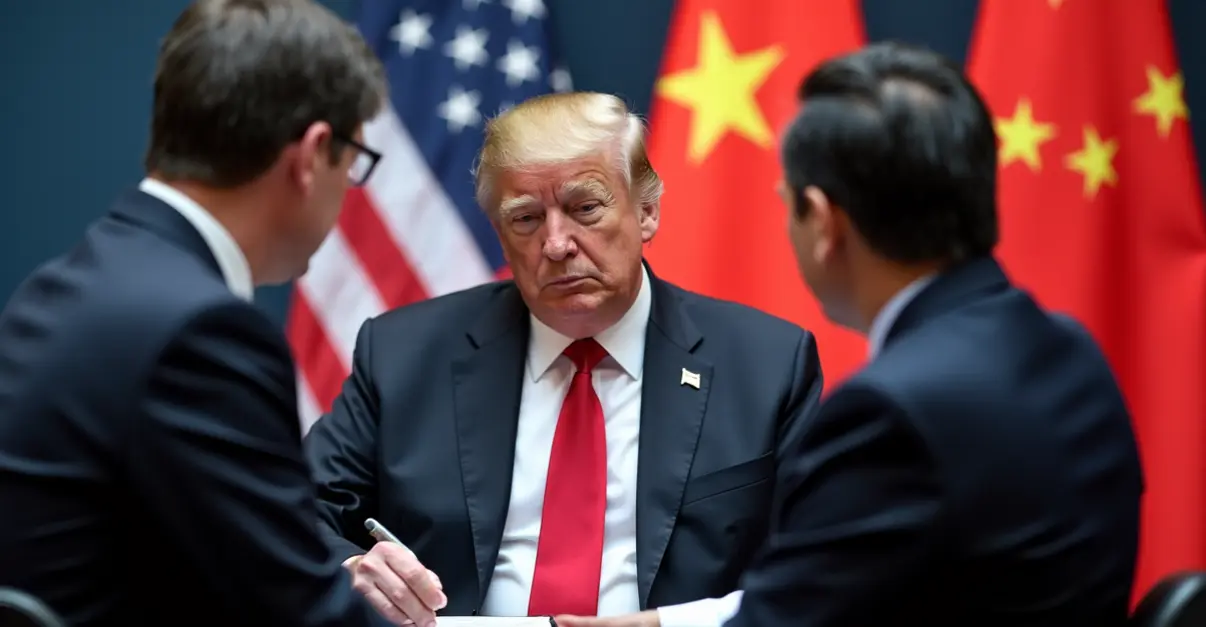





Negotiations Resume Amidst Escalating Trade Tensions
After months of escalating tariffs that threatened to plunge global trade into chaos, U.S. and Chinese negotiators have resumed high-level talks in London, building on a fragile truce reached in Geneva last month. The negotiations come at a critical juncture, with President Trump's July 9 tariff deadline looming and both economies feeling the strain of what has become the most significant trade conflict in modern history.
Sectoral Concessions Take Center Stage
The current round of talks focuses heavily on sectoral concessions, with automotive, agriculture, and technology industries at the forefront of discussions. According to sources close to the negotiations, China is pushing for reduced tariffs on its electric vehicle exports and semiconductor manufacturing equipment, while the U.S. seeks greater access to China's agricultural markets and protection for American intellectual property.
'We're seeing a shift from broad tariff wars to targeted sectoral negotiations,' says Dr. Evelyn Chen, a trade policy analyst at the Peterson Institute for International Economics. 'Both sides recognize that blanket tariffs hurt everyone, but strategic concessions in specific industries could create win-win scenarios.'
Timeline for Resolution Under Pressure
The negotiation agenda includes establishing a clear timeline for resolution, with both sides aiming to reach preliminary agreements before the July 9 deadline. The Geneva agreement last month resulted in a partial tariff rollback, but significant differences remain. According to the World Economic Forum's timeline analysis, the trade dispute escalated dramatically in early 2025 when President Trump returned to office and imposed sweeping tariffs on all Chinese imports.
The Congressional Research Service report 'Presidential 2025 Tariff Actions: Timeline and Status' outlines how U.S. tariff rates rose from 2.5% to an estimated 27%—the highest level in over a century—before settling at 17.9% by September 2025. This volatility has created immense uncertainty for businesses on both sides of the Pacific.
Key Negotiation Points
Several critical issues dominate the London talks:
Rare Earth Elements: China's restrictions on exports of rare-earth elements and critical materials essential for EV batteries and semiconductors remain a major sticking point. The U.S. wants guaranteed access to these materials, while China seeks concessions on technology exports in return.
Digital Trade: Following the precedent set by the Trump-Japan Trade Pact finalized in July 2025, which created a 10% tariff advantage for Japanese automakers, negotiators are discussing digital trade provisions that would benefit tech giants by banning customs duties on digital products.
Agricultural Access: U.S. agribusiness is pushing for greater access to China's protected rice market, with potential for 15% annual export growth according to analysis of recent trade pacts.
Market Reactions and Economic Impact
Financial markets have responded cautiously to the resumed talks. Hong Kong's Hang Seng Index rose 1.4% on news of the London meetings, while U.S. equity futures showed strength. However, the underlying economic damage has been substantial. U.S.-China trade has dropped over 30% year-over-year, and global supply chains remain disrupted.
'The tariffs have fundamentally reshaped global trade patterns,' notes Michael Rodriguez, chief economist at Global Trade Analytics. 'Even if a comprehensive agreement is reached, the structural changes to supply chains will persist for years.'
According to Wikipedia's analysis of tariffs in the second Trump administration, U.S. tariff revenue exceeded $30 billion per month by September 2025, compared to under $10 billion per month in 2024. This massive increase has contributed to downgraded GDP growth projections by the Federal Reserve, OECD, and World Bank.
Legal Challenges and Future Outlook
Complicating the negotiations are ongoing legal challenges to the tariffs. Federal courts have ruled that tariffs imposed under the International Emergency Economic Powers Act (IEEPA) are illegal, though they remained in effect through October 2025 while the case was appealed. The Supreme Court heard oral arguments in the consolidated case of Learning Resources v. Trump on November 5, 2025.
The Trump administration argues that its tariffs promote domestic manufacturing and protect national security, while economists criticize this stance as based on a flawed understanding of trade. According to a December 2025 YouGov poll, 60% of respondents believed that raising tariffs on foreign imports had become associated with the Republican Party and conservatism.
As negotiators work against the clock in London, the world watches closely. The outcome of these talks will not only determine the immediate future of U.S.-China trade relations but could set precedents for how major economies manage trade disputes in an increasingly fragmented global economy.