
 Deutsch
 English
 Español
 Français
 Nederlands
 Português







National Cybersecurity Emergency Declared Amid Unprecedented Threats
The United States is facing what experts are calling a 'National Cybersecurity Emergency' as coordinated attacks on critical infrastructure and government systems reach unprecedented levels in 2025. According to recent data, the global cost of cyber threats has skyrocketed to $10.5 trillion this year, representing a staggering 31% increase from 2024. This emergency situation has triggered sweeping policy changes, market disruptions, and community-wide security concerns that are reshaping the digital landscape.
The Scope of the Crisis
Multiple government agencies, including the Cybersecurity and Infrastructure Security Agency (CISA), have been working around the clock to address what officials describe as 'the most sophisticated and widespread cyber campaign in history.' The emergency declaration comes after a series of coordinated attacks targeting telecommunications firms, financial institutions, and critical infrastructure providers. 'We're seeing threat actors from multiple nation-states working in concert to exploit vulnerabilities across our digital ecosystem,' said Madhu Gottumukkala, Acting Director of CISA. 'This isn't just about data theft anymore—it's about disrupting the fundamental services that keep our society functioning.'
The attacks have been particularly devastating because they've exploited third-party service providers and supply chain vulnerabilities. According to security reports, third-party-related breaches have doubled to 30% of all incidents, while ransomware-linked breaches now account for 44% of all cyber attacks. 'Organizations are discovering they're only as secure as their weakest vendor,' noted cybersecurity analyst Dr. Elena Rodriguez. 'The interconnected nature of modern digital infrastructure means a breach at one point can cascade through entire sectors.'
Policy Response and Executive Action
In response to the escalating crisis, the White House has taken decisive action. On June 6, 2025, President Biden issued an executive order strengthening the nation's cybersecurity by amending Executive Orders 13694 and 14144. The order identifies China as 'the most active and persistent cyber threat to U.S. government, private sector, and critical infrastructure networks,' with significant threats also coming from Russia, Iran, and North Korea.
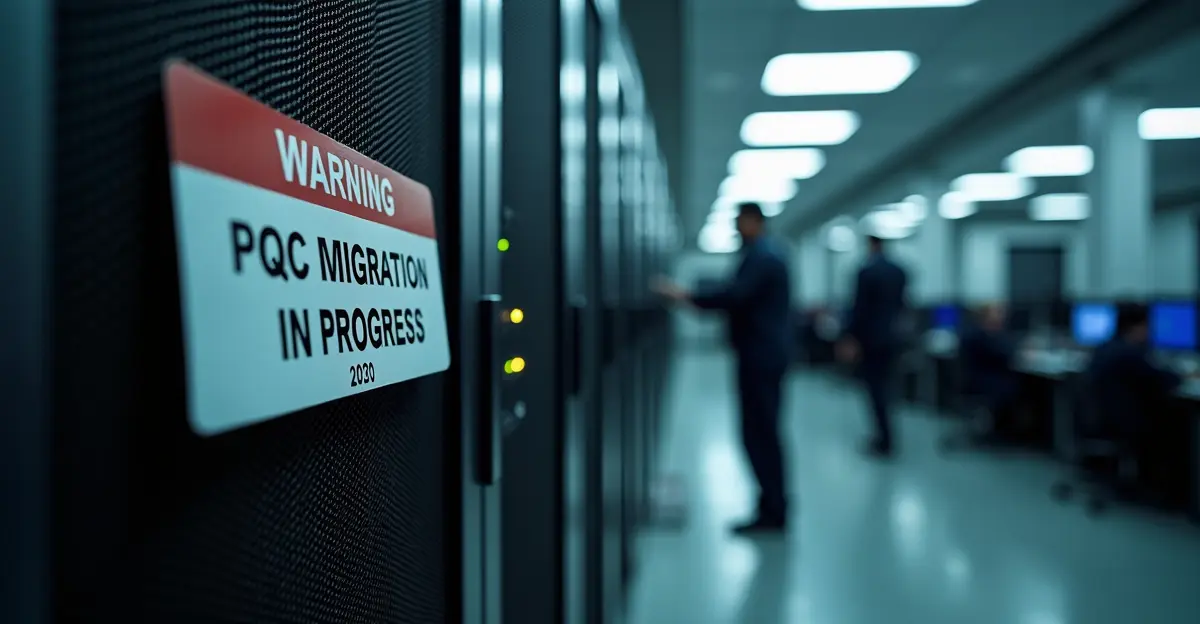
The executive order establishes several critical initiatives, including a consortium with industry to develop secure software development guidance by August 2025, updated NIST security controls for patch deployment by September 2025, and comprehensive secure software development frameworks by December 2025. Additionally, the order addresses emerging quantum computing threats by requiring post-quantum cryptography transition plans and promotes AI integration in cyber defense through vulnerability management and research data accessibility initiatives.
The Department of Homeland Security has also launched over $100 million in cybersecurity grant funding through CISA and FEMA to strengthen community cyber defenses. This funding consists of two separate grant programs: the State and Local Cybersecurity Grant Program (SLCGP) with $91.7 million for state and local governments, and the Tribal Cybersecurity Grant Program (TCGP) with $12.1 million for tribal governments. 'This funding empowers state, local, and tribal governments to build more resilient cyber ecosystems and strengthen digital infrastructure while being good stewards of taxpayer dollars,' emphasized Gottumukkala.
Market Impacts and Economic Consequences
The cybersecurity emergency is having profound effects on global markets and economic stability. According to the 2025 Global Cybersecurity Market Report, projected spending now exceeds $280 billion, with North America leading at $108 billion, followed by Europe ($61 billion) and Asia-Pacific ($55 billion). The private sector contributes over 75% of total spending, while public sector spending has jumped 24% globally in response to the emergency.
Key growth segments include cloud security (27% year-over-year), operational technology security, and AI-based threat detection. Major market drivers include AI/ML adoption (with 73% of enterprise SOCs now using AI detection), cloud expansion (94% global adoption creating new risks), and new global regulations like the U.S. Cybersecurity Strategy 2025 and EU's NIS2 Directive.
'What we're witnessing is a fundamental reallocation of resources toward digital defense,' explained financial analyst Michael Chen. 'Companies that previously viewed cybersecurity as a cost center are now treating it as a strategic investment essential for survival. The market is responding with unprecedented growth in security technologies and services.'
Community and Infrastructure Vulnerabilities
At the community level, the cybersecurity emergency has exposed critical vulnerabilities in essential services. Recent attacks have targeted everything from water treatment facilities and power grids to healthcare systems and transportation networks. The Clairfield International Cybersecurity Report 2024-2025 highlights how these attacks are affecting everyday citizens, with disruptions to medical services, financial transactions, and emergency response systems.
Local governments are particularly vulnerable, often lacking the resources and expertise to defend against sophisticated nation-state attacks. The new grant programs aim to address this gap by supporting cybersecurity improvements including planning, exercises, hiring cybersecurity experts, and enhancing network security to protect critical community services.
'Communities are on the front lines of this digital war,' said Mayor Sarah Johnson of a mid-sized city that recently experienced a ransomware attack. 'We need federal support, but we also need to build local capacity. This isn't just a technical problem—it's about protecting our residents' safety and quality of life.'
Looking Ahead: The Future of Cyber Defense
As the National Cybersecurity Emergency continues to unfold, experts warn that the threat landscape will only become more complex. The World Economic Forum's Global Cybersecurity Outlook 2025 report identifies several emerging challenges, including AI-powered autonomous attacks, quantum computing threats, and increasingly sophisticated social engineering campaigns.
The recent disclosure by Anthropic of an AI-powered attack that was almost entirely autonomous signals troubling future threats. Meanwhile, regional trends show North America focusing on vendor consolidation and public-private partnerships, while Europe emphasizes privacy-centric investments and data sovereignty.
'We're at a turning point in how we approach digital security,' concluded Dr. Rodriguez. 'The emergency has made it clear that cybersecurity can no longer be an afterthought. It must be integrated into every aspect of our digital infrastructure, from design to deployment to daily operations. The policies and investments we make now will determine our resilience for decades to come.'
The National Cybersecurity Emergency serves as a stark reminder of our collective vulnerability in an interconnected world. As government agencies, private companies, and local communities work to strengthen their defenses, the coming months will be critical in shaping a more secure digital future for all.





Follow Discussion