


 Deutsch
 English
 Español
 Français
 Nederlands
 Português


 Share
Share




The Quest for Greener Space Exploration
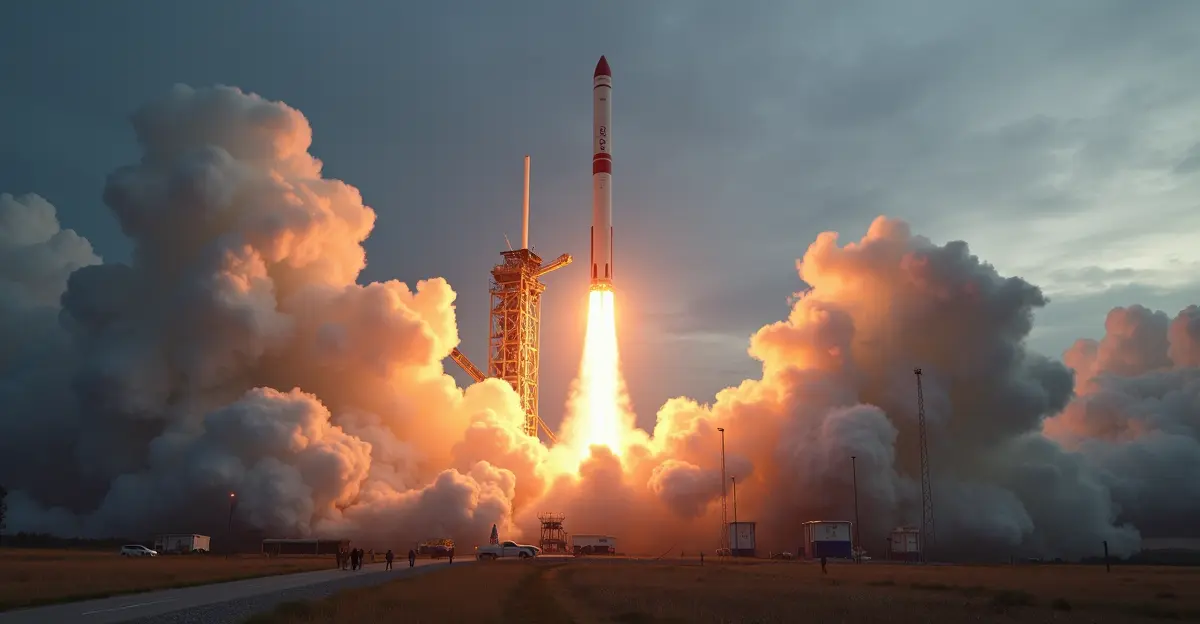
As space travel expands with thousands of satellite launches annually, the environmental impact of traditional rocket propulsion has come under scrutiny. Conventional systems rely on highly toxic propellants like hydrazine, which create handling challenges and leave significant carbon footprints. Recent breakthroughs in eco-friendly propulsion aim to revolutionize space travel's sustainability.
Innovative Green Propulsion Systems
German startup ISPTech is leading the charge with €2 million in pre-seed funding to develop non-toxic propulsion systems. Their HyNOx technology uses ethane and nitrous oxide - a cleaner alternative to traditional fuels - and solves overheating issues that plagued previous green propulsion attempts. For larger spacecraft, their HIP_11 system enables hybrid electric-chemical operation with simplified mechanics.
"Our mission is to meet the clear market demand for affordable, quickly available, and robust propulsion technologies," say founders Felix Lauck and Dr. Lukas Werling, whose work builds on decade of R&D at the German Aerospace Center (DLR). The first space demonstrations are scheduled for late 2025.
Market Shift Toward Sustainability
The satellite launch vehicle market is projected to skyrocket from $18.4B in 2025 to $64.5B by 2034, driven partly by eco-innovation. Key developments include:
- Reusable rocket systems reducing manufacturing waste
- Bio-derived propellants replacing toxic chemicals
- Electric propulsion gaining traction for orbital maneuvers
- Dedicated small-satellite launch vehicles for constellation deployment
"ISPTech is exceptionally positioned to set a new market standard," notes Dr. Koen Geurts of High-Tech Gründerfonds. The European Space Agency has prioritized green propulsion technologies in recent funding cycles.
Technologies Enabling Carbon-Neutral Spaceflight
Electric Propulsion Evolution
Ion thrusters and Hall-effect systems, which use solar electricity to accelerate propellant, have become 50% more efficient since 2020. These systems now enable station-keeping and orbital transfers with minimal emissions. Companies like strong target="_blank" rel="noopener noreferrer">Bellatrix Aerospace are developing water-based plasma thrusters that could eliminate toxic fuels entirely.
Hybrid Systems Breakthroughs
ISPTech's HIP_11 represents a leap in hybrid technology, allowing seamless switching between chemical and electric modes. This dual-capability system reduces fuel consumption by up to 40% compared to conventional systems. "Their systems are already way ahead in performance, stability, and robustness," confirms Dr. Maximilian Ochs of First Momentum Ventures.
Future Trajectory of Space Sustainability
The space industry's carbon neutrality efforts face challenges including atmospheric black carbon accumulation from launches. However, regulatory frameworks are evolving rapidly:
- EU Space Regulation 2025 mandates sustainable propulsion for new satellites
- NASA's Technology Taxonomy now prioritizes green propellant research
- Commercial space stations like Starlab require sustainability certifications
With 85% of new satellite operators now requesting eco-friendly launch options, companies like ISPTech and PLD Space are positioned to transform space travel's environmental impact. As Dr. Christoph Baumeister of Possible Ventures observes: "ISPTech's innovative approach positions them as the frontrunner in eco-friendly space mobility."




Follow Discussion