Nederlands
 English
 Deutsch
 Français
 Español
 Português






The Future of Space Colonization
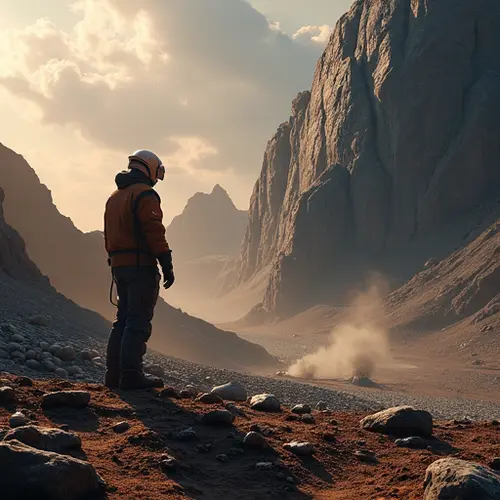
Human settlements on asteroids are moving from science fiction to serious scientific consideration. With NASA's Artemis program establishing lunar infrastructure, asteroid outposts represent the next logical step in space exploration. These celestial bodies offer unique advantages: abundant mineral resources, low gravity for easier launch operations, and potential water ice deposits for life support systems.
Current Progress and Challenges
Recent missions like NASA's OSIRIS-REx and JAXA's Hayabusa2 have demonstrated asteroid sample return capabilities, bringing back 121.6g and 5.4g of material respectively. However, building sustainable habitats presents enormous challenges:
- Radiation protection in deep space
- Microgravity health effects on colonists
- Extreme temperature fluctuations
- Psychological impacts of isolation
NASA's upcoming Artemis IV mission will debut humanity's first lunar space station, serving as a technological testbed for future asteroid habitats.
Resource Utilization Strategies
Asteroid mining could provide essential materials for space construction:
| Resource | Potential Use |
|---|---|
| Iron/Nickel | Structural elements |
| Water Ice | Life support and rocket fuel |
| Platinum Group Metals | Advanced electronics |
SpaceX's reusable rockets have dramatically reduced launch costs, making asteroid resource extraction increasingly feasible. The European Space Agency and China National Space Administration are both developing asteroid mining technologies for implementation in the 2030s.
Habitat Design Concepts
Leading concepts for asteroid bases include:
- Spinning habitats creating artificial gravity
- Buried structures using regolith for radiation shielding
- Modular inflatable habitats assembled robotically
NASA's Advanced Technologies division is currently testing self-healing materials and closed-loop life support systems suitable for asteroid outposts.
The Road Ahead
While significant technical hurdles remain, the economic potential of asteroid resources continues to drive investment. Private companies like AstroForge and TransAstra are developing specialized mining spacecraft, with first demonstration missions planned for 2028. As Dr. Lindy Elkins-Tanton of Arizona State University notes: "Asteroids aren't just rocks - they're stepping stones to becoming an interplanetary species."