


 Deutsch
 English
 Español
 Français
 Nederlands
 Português


 Share
Share




Russia May Be Developing Orbital Nuclear Capabilities, German Space Commander Warns
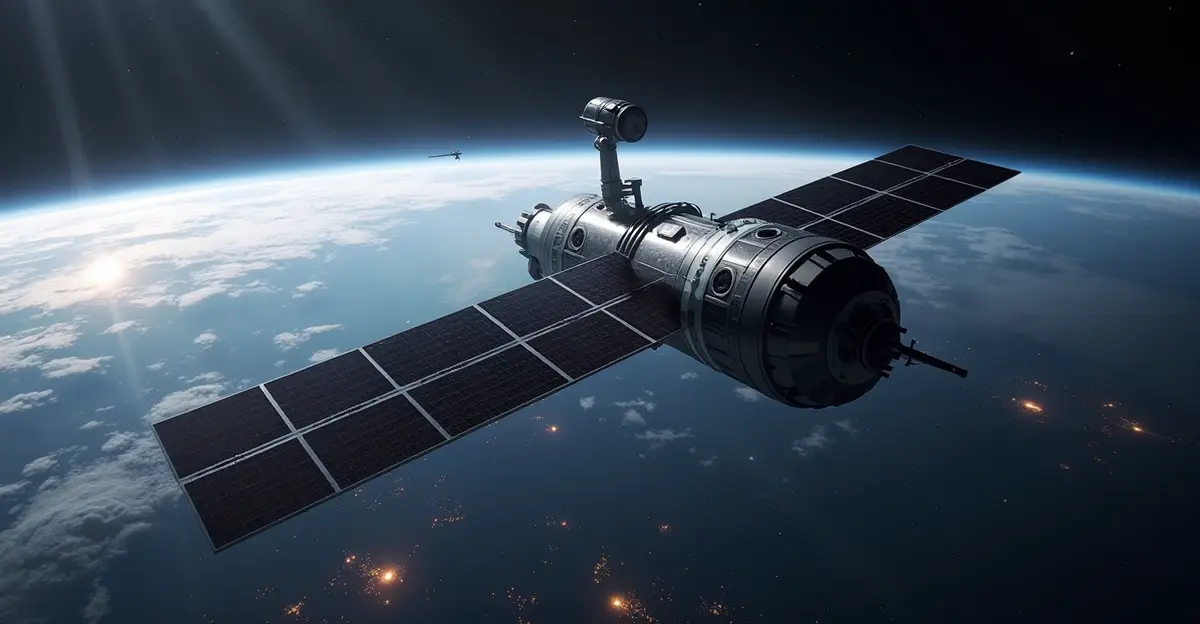
Russia is likely developing technology to place and detonate a nuclear weapon in low Earth orbit, according to Major General Michael Traut, commander of the German Air Force Space Command. In an interview with Politico, Traut warned that such a scenario could disable up to one-third of all satellites in low Earth orbit and render certain orbital altitudes unusable for decades. The warning comes amid growing concerns about the militarization of space and Russia's alleged violations of international treaties prohibiting weapons of mass destruction in orbit.
'It is very possible that certain orbital altitudes will be unusable for decades,' Traut said, drawing parallels to the 1962 Starfish Prime nuclear test. That US high-altitude test, which detonated a 1.4-megaton warhead 250 miles above the Pacific, knocked out 300 streetlights in Hawaii and disabled several early satellites — including the UK's Ariel 1 and AT&T's Telstar. Today, with nearly 10,000 operational satellites in orbit, the consequences would be catastrophic.
What Is an Orbital Nuclear Weapon?
An orbital nuclear weapon is a nuclear explosive device placed in a stable orbit around Earth, capable of being detonated on command. Such a weapon would violate the Outer Space Treaty of 1967, which prohibits the placement of weapons of mass destruction in orbit, on celestial bodies, or in outer space. The treaty, ratified by 118 nations including Russia, forms the cornerstone of international space law.
The primary threat from an orbital nuclear detonation is not the blast itself but the electromagnetic pulse (EMP) and the resulting radiation belts. Unlike a ground-based detonation, an orbital EMP could sweep across vast swaths of space unimpeded, damaging or destroying the electronics of any satellite in its line of sight. This would cripple global communications, GPS navigation, banking systems, weather forecasting, and military targeting systems.
The Kessler Syndrome: A Cascade of Debris
Traut specifically warned about the Kessler syndrome, a scenario first described by NASA scientist Donald J. Kessler in 1978, in which the density of objects in low Earth orbit becomes so high that collisions between debris cascade exponentially. A single nuclear explosion could trigger this runaway effect, creating an impassable debris belt that would make certain orbital altitudes unusable for generations.
'If something comparable to Starfish Prime happened today, up to a third of all satellites in low Earth orbit could fail in the following weeks and months,' Traut told Politico. The resulting debris field would pose risks to the International Space Station, crewed missions, and every satellite-based service modern society depends on. The Kessler syndrome space debris cascade is considered one of the most serious long-term threats to space sustainability.
Russia's Alleged Space and Seabed Weapons Programs
The German general's warning aligns with a joint investigation by German broadcasters WDR and NDR, which cited NATO intelligence reports suggesting Russia is developing a secret project codenamed Skif. According to the investigation, Skif aims to deploy nuclear-capable missile delivery systems on the Arctic Ocean seabed, using custom-built silos at depths of several hundred meters. The missiles could remain hidden for extended periods and be activated remotely, potentially bypassing the 1971 Seabed Arms Control Treaty.
United24 Media reported that Russia may use the specialized transport vessel Zvezdochka and the experimental submarine Sarov for construction. If confirmed, this would represent a significant effort to circumvent international arms control agreements and create a covert nuclear deterrent capability. The Russia Arctic seabed nuclear weapons program raises new concerns about the weaponization of undersea environments.
Separately, Russia is developing its own satellite internet constellation called Rassvet, a $5.5 billion project intended as a domestic alternative to Starlink, though the program recently lost one of its experimental spacecraft. The dual development of space and seabed weapons suggests a comprehensive strategy to challenge Western dominance in both domains.
Germany's Military Space Buildup
Traut's warning came during the ILA Berlin air show, where Germany unveiled its new space security strategy. Berlin is investing €35 billion by 2030 to build sovereign military space capabilities, as announced by Defence Minister Boris Pistorius at the Berlin Space Congress. The investment rivals the entire civil-focused European Space Agency budget and aims to reduce dependence on allies and commercial providers like Starlink.
Key elements of Germany's space buildup include:
- SATCOMBw 4: A new low Earth orbit military satellite communications constellation of approximately 100 satellites, valued between €8 billion and €10 billion, with Rheinmetall, OHB, and Airbus collaborating on the project.
- Non-kinetic counter-space systems: Germany plans to acquire jammers, lasers, and inspection satellites to protect its own assets and potentially disrupt adversary systems.
- Space planes: Long-term plans include reusable orbital vehicles to inspect and potentially act against hostile satellites.
- SATCOMBw 3: A geostationary orbit satellite system scheduled for launch within two years via Ariane 6 rockets, with Airbus as prime contractor.
'You don't enter the arena with only a shield,' Traut said, emphasizing that deterrence requires an active, offensive component. 'Offensive is not the same as aggressive,' he added, noting that Germany must be able to take the initiative in a conflict — targeting not just orbital systems but the broader infrastructure that enables satellite operations, from ground stations to jammers.
The Germany military space strategy 2025 also aims to bring European partners onboard, particularly nations that cannot build their own satellite constellations. Traut stressed that Germany's SATCOMBw 4 is not a competitor to the EU's IRIS² secure connectivity constellation but a complementary addition that would free up bandwidth for others.
Growing Threats in the Space Domain
According to Traut, space threats have 'increased enormously' in recent years, ranging from GPS jamming and laser interference to physical attacks on satellites. Electromagnetic disruptions and laser interference are already daily occurrences. 'The best example is the jamming of GPS signals in the Baltic Sea region,' he said, noting that this affects civilian aviation and maritime traffic.
In February 2022, hours before Russia's full-scale invasion of Ukraine, a cyberattack on Viasat's KA-SAT network disabled 5,800 German wind turbines, demonstrating the vulnerability of space-dependent infrastructure. Since then, Russia has also deployed anti-satellite weapons, including the direct-ascent ASAT test in November 2021 that destroyed Cosmos 1408, creating a debris field that forced the International Space Station to take evasive action.
FAQ: Russia's Orbital Nuclear Threat
What is an orbital nuclear weapon?
An orbital nuclear weapon is a nuclear explosive device placed in orbit around Earth, designed to be detonated in space. It violates the 1967 Outer Space Treaty, which prohibits weapons of mass destruction in orbit.
Could Russia actually deploy such a weapon?
Major General Traut stated he cannot exclude the possibility. Russia has a history of developing asymmetric counterspace capabilities, including anti-satellite missiles, jammers, and now potentially orbital nuclear systems.
What would happen if a nuke exploded in space?
An electromagnetic pulse would sweep across orbit, damaging satellite electronics. Up to one-third of low Earth orbit satellites could fail within weeks. The resulting debris could trigger Kessler syndrome, making certain altitudes unusable for decades.
Is this legal under international law?
No. The Outer Space Treaty explicitly prohibits placing nuclear weapons or any weapons of mass destruction in orbit. Russia is a signatory to this treaty.
How is Germany responding?
Germany is investing €35 billion in military space capabilities, including a sovereign satellite communications constellation, counter-space systems, and space planes. Berlin aims to protect its access to space and deny adversaries the same.



Follow Discussion