
 English

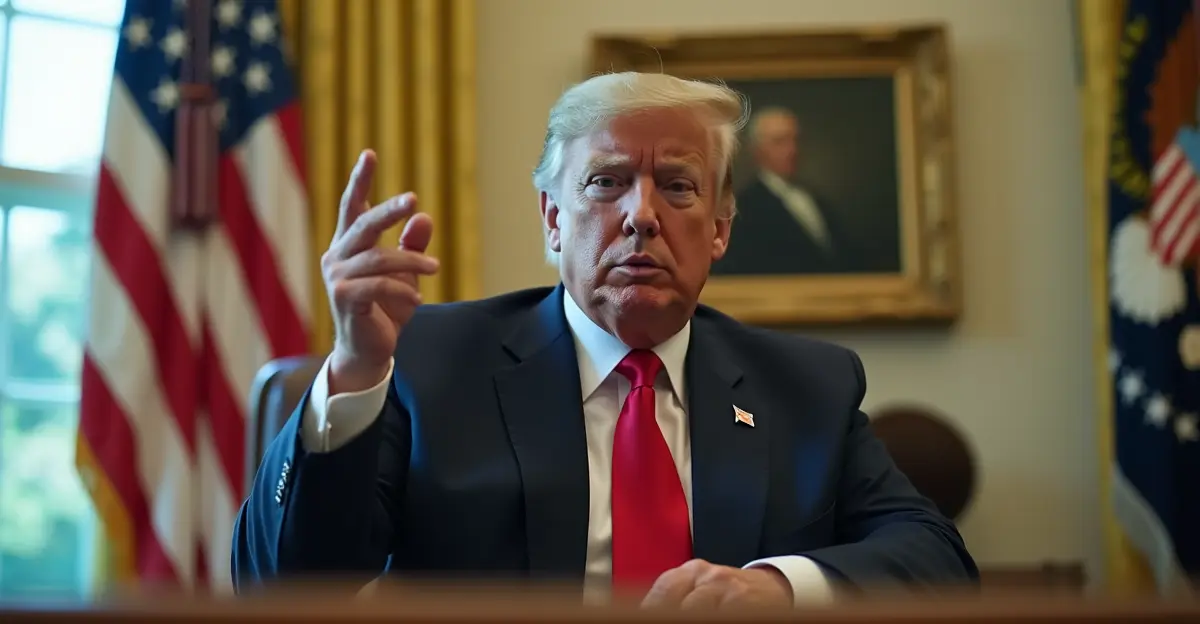





President Donald Trump has threatened to impose steep import tariffs on the United Kingdom unless Prime Minister Keir Starmer's government abolishes the country's digital services tax (DST), escalating trans-Atlantic trade tensions. In an interview with The Telegraph published on April 24, 2026, Trump called the 2% levy on revenues of American tech giants like Apple, Google, and Meta 'unfair' and warned of retaliation.
'If they don't drop the tax, we'll probably put a big tariff on the UK,' Trump said from the Oval Office. He accused the UK of trying to 'make an easy buck' at the expense of U.S. companies. The threat comes just days before King Charles III and Queen Camilla's state visit to the United States, a trip Trump suggested could help repair the strained 'special relationship.'
What Is the UK Digital Services Tax?
The UK's digital services tax, introduced in April 2020, is a 2% levy on the revenues of search engines, social media platforms, and online marketplaces that derive value from UK users. It applies to companies with global digital revenues exceeding £500 million and more than £25 million in UK-sourced revenues. The tax was designed as an interim measure pending a global tax agreement under the OECD's Pillar 1 framework, but that international deal has yet to be implemented.
The DST primarily targets U.S. tech behemoths: Alphabet (Google), Meta (Facebook, Instagram), Amazon, and Apple. According to the UK's Office for Budget Responsibility, the tax raised approximately £944 million in the 2025-2026 fiscal year, a 17% increase year-on-year. Official projections estimate the levy could generate £1.4 billion annually by 2030, making it an increasingly important revenue stream for the British Treasury.
Similar digital services taxes exist in France, Spain, Italy, Austria, Denmark, and several other European nations, but the UK's version is the largest by revenue collected.
Why Trump Calls the Tax Unfair
Trump argues that the DST discriminates against American companies and amounts to an unfair trade practice. 'We can meet that very easily by just putting a big tariff on the UK,' he warned. The president suggested any retaliatory tariff would be 'equal or greater' than what the UK collects from the levy.
The threat is part of a broader pattern of Trump's trade policy towards allies, which has included tariffs on Canada, Mexico, and the European Union. The U.S. Trade Representative has previously investigated digital services taxes in multiple countries under Section 301 of the Trade Act of 1974, finding them discriminatory against U.S. commerce.
Trump also linked the tax dispute to US-UK tensions over the Iran war, criticizing Starmer for refusing to grant U.S. access to British military bases at the start of the conflict. The Pentagon is reportedly reviewing options to punish allies showing restraint, including reconsidering the U.S. position on the Falkland Islands.
UK Government Response
Downing Street has pushed back against Trump's ultimatum. A spokesperson for Prime Minister Starmer called the digital services tax a 'fair and proportionate approach' to taxing business activities that generate value from UK users. The government maintains that the DST is a temporary measure and has reiterated its commitment to replacing it once a global tax solution—the OECD's Pillar 1—is in place.
'The UK's position on the digital services tax is unchanged,' a Downing Street spokesperson said. 'It is a fair tax that ensures large digital companies pay their fair share in the UK.'
The tax remained untouched after a U.S.-UK trade deal in May 2025, though Trump noted that terms 'can always be changed.' The Labour government faces a difficult balancing act: scrapping the DST would cost the Treasury billions in projected revenue, but refusing could trigger tariffs that damage British exports to the U.S., the UK's largest single trading partner.
Impact on US-UK Trade and Relations
The tariff threat adds to growing strains between Washington and London. Bilateral trade between the U.S. and UK was worth over £260 billion in 2025, with the U.S. running a trade surplus in goods. Key UK exports to America include machinery, vehicles, pharmaceuticals, and Scotch whisky—sectors that could be hit by retaliatory tariffs.
Economists warn that a trade dispute would harm both economies. The economic impact of US tariffs on UK exports could be significant, particularly for manufacturing and agriculture. The UK's Office for Budget Responsibility has flagged trade uncertainty as a risk to its fiscal forecasts.
Trump's comments also coincide with heightened geopolitical friction. The president has repeatedly criticized European allies for not contributing enough to NATO and for holding back on military action in the Middle East. The Pentagon's review of U.S. commitments to the Falkland Islands—a British Overseas Territory—has alarmed London, as it touches on a core sovereignty issue.
What Happens Next?
King Charles III's state visit to Washington, scheduled for late April 2026, was originally seen as a diplomatic reset. Trump said the visit could help 'repair' relations, but the tariff threat casts a shadow over the proceedings. Diplomatic sources suggest the UK may seek to negotiate a carve-out for the DST within broader trade talks, but Trump has given little indication of flexibility.
If the UK refuses to budge, Trump could impose tariffs under Section 301 authority, a process that took months in previous cases. However, the president has shown willingness to act unilaterally and quickly on trade matters.
The OECD's global tax deal—Pillar 1—remains the most likely long-term solution, but its implementation has been repeatedly delayed. Until then, the digital services tax will remain a flashpoint in U.S.-UK relations.
Frequently Asked Questions
What is the UK digital services tax?
The UK digital services tax is a 2% levy on revenues of search engines, social media platforms, and online marketplaces that derive value from UK users. It applies to companies with global digital revenues over £500 million and UK revenues over £25 million.
Why does Trump oppose the digital services tax?
Trump argues the tax unfairly targets American tech companies like Apple, Google, and Meta, calling it discriminatory. He has threatened to impose retaliatory tariffs equal to or greater than what the UK collects from the levy.
How much revenue does the UK digital services tax generate?
The tax raised approximately £944 million in 2025-2026. Official projections estimate it could generate £1.4 billion annually by 2030.
Could the UK and US reach a deal on the digital services tax?
Possible but uncertain. The UK has offered to replace the DST with a global tax framework under OECD Pillar 1, but that deal has been delayed. Trump has shown little willingness to compromise, and the issue is now tied to broader geopolitical tensions.
When would Trump's tariffs on the UK take effect?
No timeline has been announced. If Trump invokes Section 301 authority, the process could take months. However, the president has acted quickly on trade matters in the past.
Sources
- CNBC: Trump warns of 'big tariff' if UK doesn't drop digital services tax
- Time: Trump threatens UK with big tariff over digital tax
- The Telegraph: Trump threatens big tariff on UK over digital tax
- Euronews: What is the UK digital services tax and why has it angered Trump?
- UK Government: Digital Services Tax Review Report



Follow Discussion