Nederlands
 English
 Deutsch
 Français
 Español
 Português
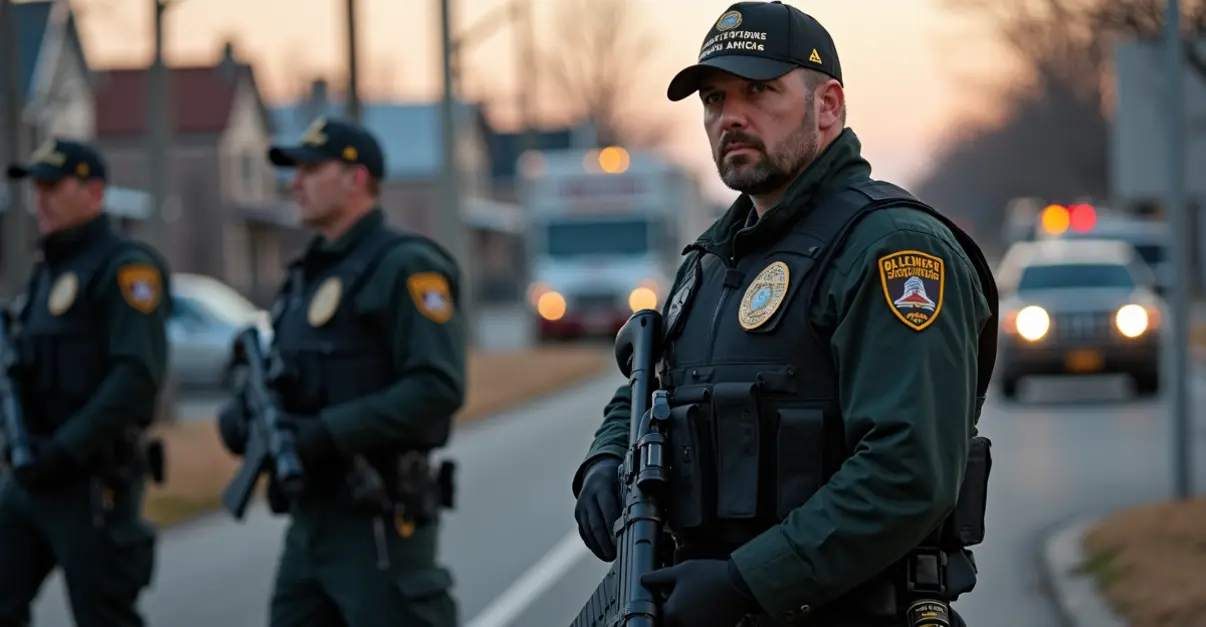





Major Federal Law Enforcement Drawdown in Minnesota
The Trump administration announced today that 700 federal immigration enforcement officers will be immediately withdrawn from Minnesota, marking a significant reduction in the controversial Operation Metro Surge that has roiled the state for months. White House border czar Tom Homan made the announcement in Minneapolis, stating the drawdown represents a 25% reduction that leaves approximately 2,000 agents remaining in the state.
'This is smart law enforcement, not less law enforcement,' Homan declared during a press conference. 'We're achieving unprecedented cooperation between federal, state, and local agencies that allows for more efficient operations.'
Operation Metro Surge and Its Consequences
The withdrawal comes after months of escalating tensions following President Trump's decision in December to send federal agents to Minneapolis and Saint Paul to identify and arrest undocumented immigrants. In January, an additional 2,000 agents were deployed across the state as part of what became known as Operation Metro Surge.
The operation sparked fierce protests across Minnesota, particularly after two fatal shootings by federal agents. In early January, 37-year-old Renee Good was killed, followed by the shooting death of 37-year-old Alex Pretti later that month. According to reports, two Border Patrol agents - Jesus Ochoa (43) and Raymundo Gutierrez (35) - have been identified as the shooters in Pretti's death, with both placed on administrative leave.
'This is a step in the right direction, but 2,000 remaining ICE officers does not constitute de-escalation,' Minneapolis Mayor Jacob Frey stated in response to the announcement.
Political Pressure and Budget Constraints
The drawdown occurs amid significant political pressure and budgetary constraints. Yesterday, Congress reached agreement on a massive spending package that funds most federal agencies through September, but made a critical exception for the Department of Homeland Security (DHS). Due to dissatisfaction with the conduct of Border Patrol and ICE, DHS received only two weeks of funding, giving lawmakers leverage to demand further reforms.
This follows ICE's unprecedented expansion under the One Big Beautiful Bill Act of 2025, which gave the agency an $85 billion budget - making it the highest-funded U.S. law enforcement agency, larger than all other federal law enforcement agencies combined.
Accountability Measures and Future Enforcement
In a related development, Homeland Security Secretary Noem announced overnight that Border Patrol and ICE agents in Minneapolis will be equipped with body cameras, with plans to expand the program nationwide. This concession comes in response to demands from Democrats and some critical Republicans who have been calling for ICE and Border Patrol reforms.
Homan emphasized that the remaining 2,000 agents in Minnesota 'are going nowhere' and will continue their mission. The drawdown was made possible by establishing what Homan called a 'unified command' and cooperation from county authorities that allows more officers to take custody of criminal immigrants directly from jails rather than conducting street operations.
However, Minnesota's top corrections official expressed concerns about the drawdown timeline, calling details 'sketchy,' while Hennepin County Sheriff Dawanna Witt reported her department has incurred over $500,000 in overtime expenses due to the federal operation.
The situation remains fluid as protests continue and Congress maintains pressure through the short-term DHS funding arrangement, ensuring immigration enforcement remains a central political issue in the coming weeks.