


 Deutsch
 English
 Español
 Français
 Nederlands
 Português


 Share
Share




Sagrada Familia Reaches Historic 172.5-Meter Peak After 144 Years
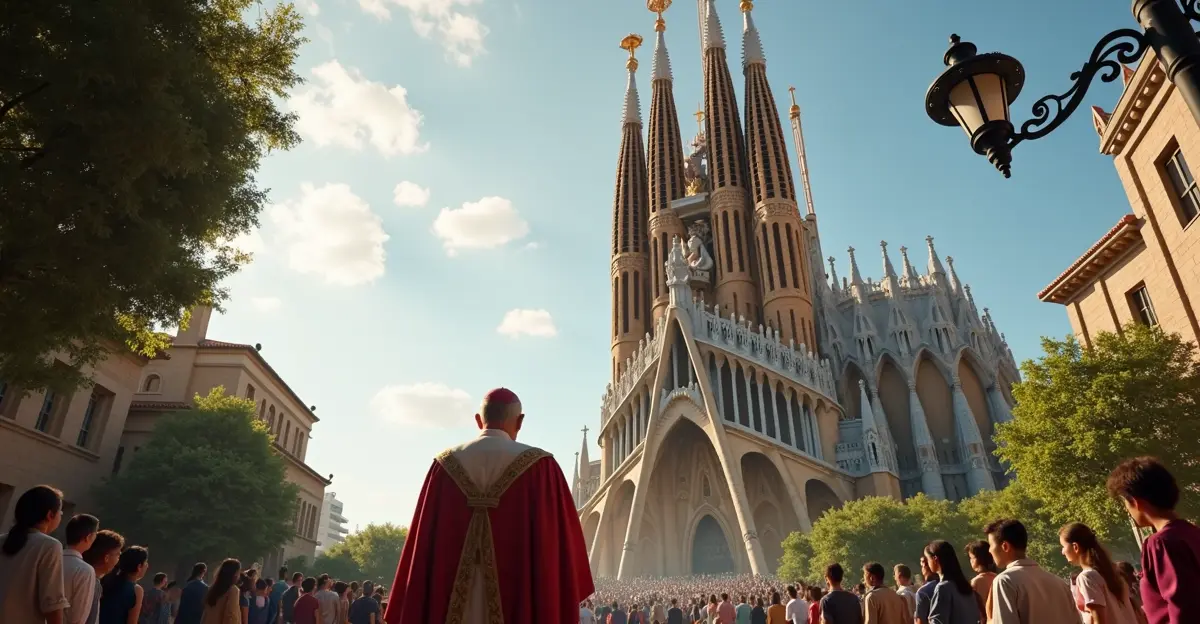
Barcelona's iconic Sagrada Familia basilica has achieved a monumental milestone in its 144-year construction journey, reaching its highest point at 172.5 meters on February 20, 2026. The completion of the central Jesus Christ tower's cross marks a historic moment for Antoni Gaudí's masterpiece, making it the world's tallest church and bringing the longest architectural project in modern history closer to completion.
What is the Sagrada Familia?
The Sagrada Familia (Basílica i Temple Expiatori de la Sagrada Família) is an unfinished Roman Catholic church in Barcelona, Spain, designed by Catalan architect Antoni Gaudí. Construction began in 1882, and the basilica has become one of Spain's most visited tourist attractions, drawing approximately 5 million visitors annually. In 2005, it was added to UNESCO's World Heritage Site list as part of "Works of Antoni Gaudí."
The 2026 Milestone: Cross Completion Details
On February 20, 2026, construction crews used a crane to lift the final components of the 17-meter-high cross to the top of the central Tower of Jesus Christ. This achievement brings the basilica to its maximum height of 172.5 meters (566 feet), surpassing Germany's Ulmer Münster (161.53 meters) as the world's tallest church.
Key Specifications of the Completed Cross:
- Height: 17 meters (55.8 feet)
- Width: 13 meters (42.7 feet)
- Weight: Approximately 100 tons
- Design: Four-armed cross for visibility from all directions
- Material: White ceramic finish
The cross features Gaudí's distinctive four-arm design, ensuring the religious symbol remains recognizable from every direction in Barcelona. "This is a joyful day for all of us who have worked on this project," said chief architect Jordi Faulí in statements to international media.
Historical Context: 144 Years of Construction
The Sagrada Familia's construction timeline represents one of the most extraordinary architectural journeys in history:
| Year | Milestone |
|---|---|
| 1882 | Construction begins under architect Francisco de Paula del Villar |
| 1883 | Antoni Gaudí takes over as chief architect |
| 1926 | Gaudí dies with only one tower completed |
| 1936-1939 | Spanish Civil War interrupts construction |
| 2010 | Pope Benedict XVI consecrates the church as a minor basilica |
| 2025 | Becomes world's tallest church at 162.91 meters |
| 2026 | Reaches maximum height of 172.5 meters with cross completion |
Gaudí's original vision included 18 towers representing the 12 apostles, 4 evangelists, the Virgin Mary, and Jesus Christ. The architect famously remarked about the extended timeline: "My client is not in a hurry," referring to God.
Architectural Significance and Gaudí's Vision
Antoni Gaudí (1852-1926) transformed the Sagrada Familia from a conventional neo-Gothic design into his visionary masterpiece, combining Gothic and curvilinear Art Nouveau forms. The architect worked on the project for 43 years until his death, becoming increasingly religious and eventually living on the construction site.
Gaudí intentionally limited the basilica's height to 172.5 meters, ensuring it wouldn't surpass Barcelona's 177-meter Montjuïc hill. "The work of man should not surpass God's creation," he explained, demonstrating his religious architectural philosophy that guided the entire project.
What Happens Next: Future Timeline and Public Access
While the exterior of the central tower is now complete, significant work remains:
- June 10, 2026: Inauguration ceremony planned for Gaudí's death centenary
- 2028: Public access expected to the tower's upper floor
- 2030s: Completion of Glory Façade and remaining sculptures
- 2034-2036: Final decorative elements and stairway completion
The basilica's construction has been funded primarily through private donations and tourist entrance fees, generating approximately €150 million annually, with half dedicated to ongoing construction. The COVID-19 pandemic caused significant delays and budget challenges, pushing the final completion date from 2026 to the mid-2030s.
Impact on Barcelona and Cultural Significance
The Sagrada Familia's completion milestone represents more than just architectural achievement—it symbolizes Barcelona's cultural identity and Catalonia's artistic heritage. The basilica has become an economic engine for the city, supporting thousands of jobs in tourism and related industries.
Art critic Rainer Zerbst described the structure as "probably impossible to find a church building anything like it in the entire history of art," while architecture expert Paul Goldberger calls it "the most extraordinary personal interpretation of Gothic architecture since the Middle Ages."
Frequently Asked Questions (FAQ)
When will the Sagrada Familia be completely finished?
The full completion is now projected for 2034-2036, though the main structural elements should be complete by 2026-2028. The Glory Façade and decorative elements will require additional years.
How tall is the Sagrada Familia compared to other churches?
At 172.5 meters, it's now the world's tallest church, surpassing Germany's Ulmer Münster (161.53 meters) and Italy's St. Peter's Basilica (136 meters).
Can visitors access the new tower?
Public access to the Tower of Jesus Christ's upper floor is expected to open in 2028, offering panoramic views of Barcelona from the cross level.
How much does it cost to visit?
Standard adult tickets cost approximately €26-€30, with funds supporting ongoing construction. Advance online booking is strongly recommended.
Why has construction taken so long?
Multiple factors include Gaudí's complex design, his sudden death, Spanish Civil War damage, funding reliance on donations, and recent pandemic delays.

Follow Discussion