Nederlands
 English
U.S. public transit ridership reaches 85% of pre-pandemic levels in 2025, with bus recovery at 86% and smaller cities leading at 88%. Policy innovations and technology drive resurgence amid economic benefits.
Urban Transit Ridership Recovery Accelerates in 2025
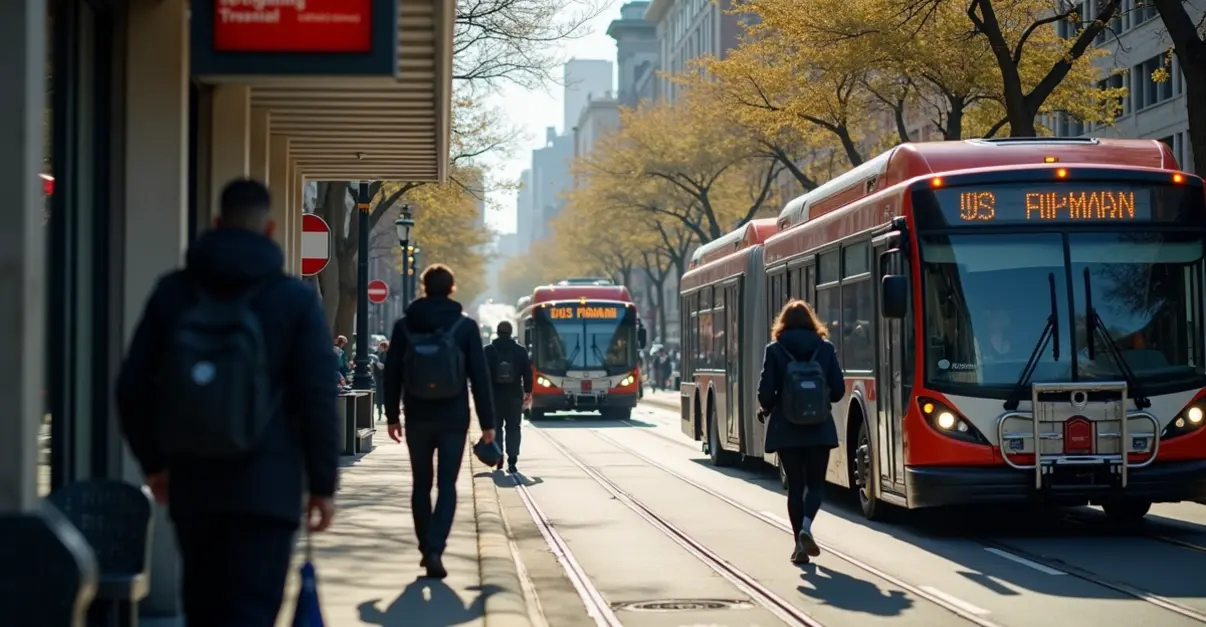
Public transportation systems across the United States are experiencing a remarkable resurgence, with ridership reaching 85% of pre-pandemic levels in early 2025 according to the latest data from the American Public Transportation Association (APTA). This marks the highest recovery rate since COVID-19 began disrupting travel patterns in 2020, and significantly outperforms office occupancy rates which remain stuck at just 52%.
Steady Recovery Across All Modes
The recovery has been steady and impressive, growing from 66% in 2022 to 79% in 2024 before reaching the current 85% milestone. Bus ridership leads the way at 86% of 2019 levels, while rail modes have recovered to 72% with continued growth expected throughout the year. Perhaps most surprisingly, smaller cities with populations under 100,000 have seen the strongest recovery at 88%, demonstrating that transit's appeal extends far beyond major metropolitan areas.
APTA President Paul P. Skoutelas emphasized the broader role transit now plays: 'Public transportation serves far more than traditional commuters. We're connecting communities to work, school, healthcare, and community events in ways that are fundamentally reshaping urban mobility.'
Policy Implications and Economic Impact
The recovery has significant implications for policymakers and urban planners. Transit agencies delivered 7.7 billion passenger trips in 2024, an increase of 491 million from the previous year. This growth comes as agencies face challenges including labor shortages and the need for stable federal funding. According to APTA reports, public transportation generates $5 in economic output for every $1 invested, making it a crucial driver of local economies.
California Transportation Secretary Toks Omishakin outlined the state's comprehensive approach: 'We're focusing on equity, climate action, economic prosperity, and safety through public transportation. The ridership recovery validates our investments in sustainable mobility.'
Technology and Innovation Driving Change
Three key developments are transforming urban mobility according to industry analysts: ridership resurgence showing 17% growth from 2022-2023, technology-driven transformation through AI and Mobility-as-a-Service platforms, and efficiency advancements with electric and hydrogen fuel cell buses. Foothill Transit's 33-bus hydrogen fleet represents the largest in North America, signaling a shift toward cleaner transportation options.
Keolis's DiviaMobilités app in Dijon exemplifies how technology integrates multiple transport modes, while accessibility for people with disabilities has dramatically improved to 99.8% for buses nationwide.
Fare Policies and Equity Considerations
Fare-free transit initiatives are gaining traction as cities seek to boost ridership and address equity concerns. Massachusetts has implemented various trials and programs since the 2010s, with pilot programs expanding following ridership losses during the pandemic. In Boston, a fare-free pilot on Route 28 bus saw ridership increase to over 70,000 weekly trips during COVID-19, compared to pre-pandemic levels of 47,000.
The California Air Resources Board's 2025 policy brief on Transit Fare Policies examines how fare-free or reduced-fare programs can increase accessibility, particularly for low-income communities, while supporting climate goals by encouraging modal shift from private vehicles.
Future Outlook and Challenges
While the recovery is encouraging, challenges remain. APTA Chair MJ Maynard-Carey stressed the importance of telling compelling stories about transit's return on investment, safety, and economic impact to gain political support. Labor shortages continue to affect service reliability, and stable federal funding remains crucial for long-term planning.
New York City's congestion pricing program, which boosted ridership by 4-9% in early 2025, demonstrates how policy interventions can support transit recovery. As APTA's Skoutelas noted, 'The data shows we're serving broader purposes beyond traditional commuting. We're connecting people to what matters most in their lives.'
The ridership recovery suggests a fundamental shift in how Americans view and use public transportation. With continued investment in technology, infrastructure, and equitable policies, urban transit appears poised for sustained growth in the coming years.