


 Deutsch
 English
 Español
 Français
 Nederlands
 Português


 Share
Share




Federal Funding Fuels Urban Food System Transformation
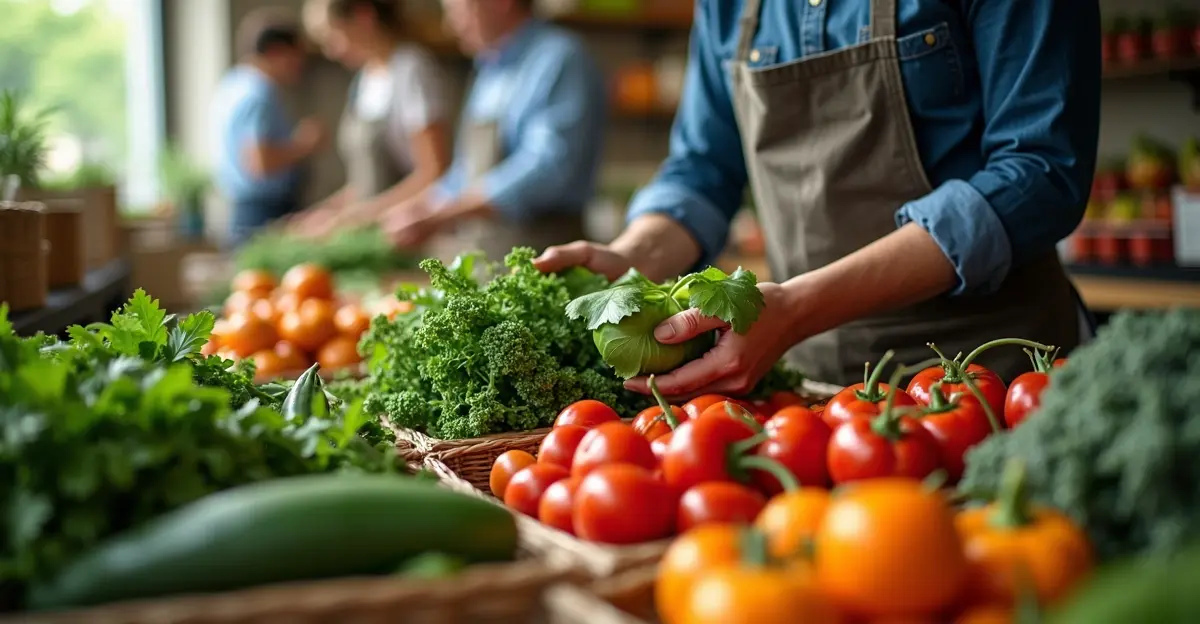
As cities across the United States grapple with food insecurity and supply chain vulnerabilities, a new wave of federal grants is transforming urban food systems. The USDA's Community Food Projects Competitive Grants Program (CFPCGP) and Urban Agriculture and Innovative Production (UAIP) initiatives are injecting millions into local markets, with 2025 seeing over $150 million allocated specifically for nutrition security projects.
'This funding represents a paradigm shift in how we approach food access in urban areas,' says Dr. Maria Rodriguez, a food policy expert at the Urban Food Systems Institute. 'We're moving beyond emergency food assistance to building sustainable, locally-driven systems that connect producers directly with consumers.'
Funding Criteria Focus on Producer Links and Logistics
The grant programs have evolved significantly in their evaluation criteria. Successful applications now must demonstrate strong producer-to-market connections, efficient logistics systems, and measurable nutrition outcomes. The USDA's 2025 guidelines emphasize projects that:
- Create direct links between urban farmers and local markets
- Develop innovative distribution systems reducing food miles
- Implement nutrition education programs with measurable health outcomes
- Address food deserts in historically underserved communities
'We're seeing a real emphasis on the entire supply chain,' notes James Wilson, director of the National Sustainable Agriculture Coalition. 'Grants aren't just for starting farms anymore—they're for building the infrastructure that gets healthy food to people who need it most.'
Nutrition Outcomes Take Center Stage
Perhaps the most significant shift in recent funding cycles has been the increased focus on nutrition outcomes. The $150 million Nutrition Security Grants announced for 2025 specifically target 'Food as Medicine' programs that link nutrition to clinical care. These grants range from $250,000 to $2 million for 2-4 year projects and require applicants to demonstrate how their programs will improve health metrics.
Research shows these investments are paying off. A recent study published in the Journal of Urban Health found that communities with funded local food projects saw a 23% reduction in diet-related health issues and a 15% increase in fresh produce consumption among low-income residents.
Success Stories from the Ground
In Detroit, a $400,000 Community Food Project grant helped establish the Eastern Market Food Hub, connecting 45 urban farms with 12 neighborhood markets and 8 school districts. 'Before the grant, our farmers were growing amazing produce but struggling to get it to market efficiently,' says project coordinator Lena Washington. 'Now we have refrigerated trucks, a centralized distribution center, and nutrition education programs reaching 5,000 families monthly.'
Similarly, in Seattle, a UAIP implementation grant funded the Rainier Valley Food Innovation District, which includes a commercial kitchen, food processing facility, and mobile market serving 15 food-insecure neighborhoods. The project has created 35 new jobs while increasing local food access by 40%.
Application Process and Future Outlook
The application process for these grants has become increasingly competitive. The 2025 cycle saw a 45% increase in applications compared to 2024, with only about 20% of proposals receiving funding. Key success factors include:
- Strong partnerships between producers, distributors, and community organizations
- Clear metrics for measuring nutrition and health outcomes
- Innovative approaches to logistics and distribution
- Sustainability plans for continuing operations after grant funding ends
Looking ahead to 2026, experts predict continued growth in this funding area. The USDA has indicated plans to expand the UAIP program and create new grant categories specifically targeting food system resilience in the face of climate change.
'We're at a tipping point for urban food systems,' concludes Rodriguez. 'With the right investments and community-driven approaches, we can build food systems that are not only sustainable but also equitable and health-promoting for all urban residents.'
For more information on grant opportunities, visit the USDA NIFA website or explore resources from the Good Food Funding Guide.
Follow Discussion