
 Deutsch
 English
 Español
 Français
 Nederlands
 Português






The Geopolitical Calculus Behind EU's CBAM Implementation and Global Trade Realignment
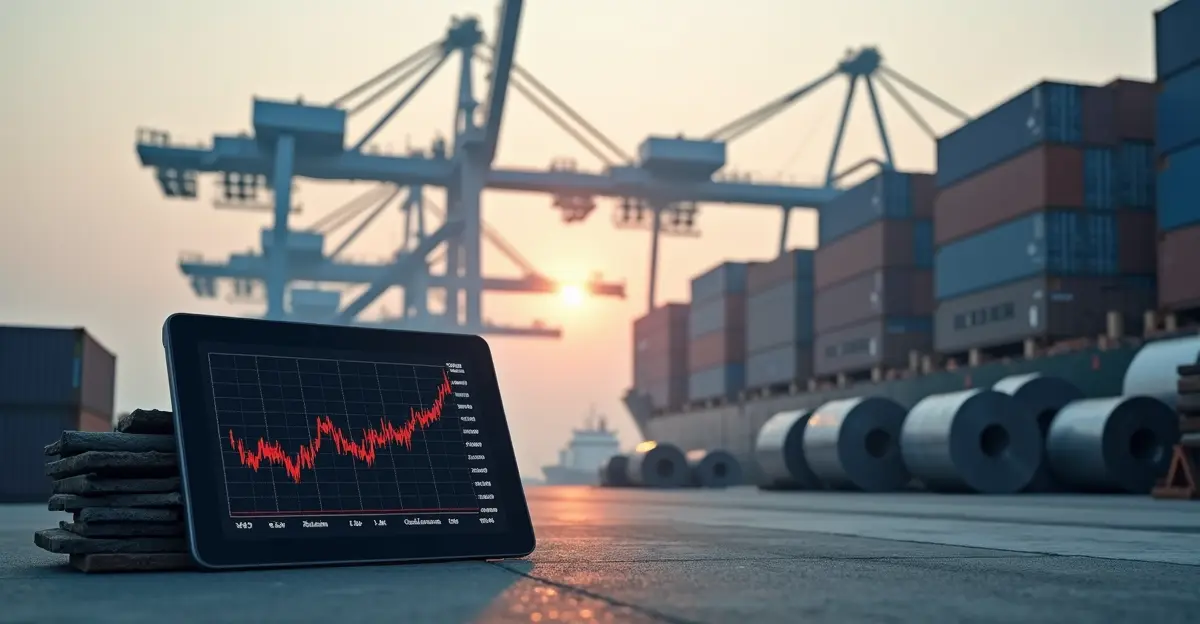
The European Union's Carbon Border Adjustment Mechanism (CBAM), which entered its definitive operational phase on January 1, 2026, represents the world's first fully functional carbon border tax and is fundamentally reshaping global trade patterns while creating new geopolitical fault lines. This landmark climate policy imposes carbon pricing on imports of carbon-intensive goods, forcing developing nations to choose between implementing domestic carbon pricing systems or losing access to the lucrative EU market worth €2.4 trillion annually. As the mechanism transitions from transitional reporting requirements to actual financial obligations, it's creating immediate economic impacts that are accelerating the fragmentation of global trade into climate-aligned blocs versus price-competitive blocs.
What is the EU Carbon Border Adjustment Mechanism?
The Carbon Border Adjustment Mechanism (CBAM) is the EU's environmental policy tool designed to put a fair price on carbon emissions from carbon-intensive goods imported into the European Union. Legislated as part of the European Green Deal, CBAM aims to prevent 'carbon leakage' where companies might move production to countries with less stringent climate policies. The mechanism initially covers six sectors: cement, iron and steel, aluminium, fertilisers, electricity, and hydrogen – representing over 50% of emissions in EU Emissions Trading System (ETS)-covered sectors. Importers bringing more than 50 tonnes of CBAM goods into the EU must purchase CBAM certificates priced at EU ETS market rates, which ranged between €50-€80 per ton of CO2 in 2024-2025.
The Strategic Dilemma for Developing Economies
CBAM presents developing nations with a stark strategic choice: implement domestic carbon pricing systems or face significant trade disadvantages. According to recent analyses, countries like India could face CBAM costs of €370-€452 per ton for steel imports using default values, compared to €80-€97.5 per ton for Chinese imports. This disparity creates what experts call a 'climate-conditioned trade policy' that's forcing rapid adaptation.
Major Exporters' Responses
China, India, and Brazil – three of the most affected major exporters – have developed distinct strategic responses to CBAM. China has accelerated its national emissions trading system expansion while simultaneously exploring retaliatory measures through the World Trade Organization. India has denounced CBAM as "unilateral and arbitrary" and notified WTO of retaliatory plans, arguing that high-income countries historically responsible for climate change should bear greater responsibility. Brazil, meanwhile, is leveraging its cleaner energy matrix to negotiate preferential terms while developing its own carbon market framework.
The global carbon pricing landscape is evolving rapidly in response to these pressures, with at least 47 carbon pricing initiatives now operational worldwide as of 2025. This represents a 40% increase from just five years ago, demonstrating how CBAM is catalyzing global climate policy alignment.
Trade Fragmentation: Climate-Aligned vs Price-Competitive Blocs
CBAM is accelerating the division of global trade into two distinct blocs. The first consists of countries aligning with EU climate standards, including Canada, the UK, Australia, and Türkiye, all of which are exploring similar border carbon adjustment policies. The second bloc comprises nations prioritizing price competitiveness, potentially creating new south-south trade networks that bypass EU climate requirements entirely.
This fragmentation has significant implications for global supply chains. Companies in high-emissions, export-intensive sectors must implement strong governance, credible data systems, and long-term decarbonization plans. The PACE framework (Plan, Achieve, Change, Engage) has emerged as a critical guidance tool for businesses navigating this new landscape. According to World Economic Forum analysis, while border carbon adjustments may initially complicate global trade standardization, they could eventually drive convergence in carbon pricing, reporting standards, and emissions accounting across international markets.
Legitimate Climate Policy or Green Protectionism?
The central debate surrounding CBAM revolves around whether it represents legitimate climate policy or a new form of green protectionism. Supporters argue that CBAM is essential for preventing carbon leakage and creating a level playing field for EU companies subject to the EU ETS. "Without mechanisms like CBAM, we risk simply exporting our emissions rather than reducing them globally," explains climate policy analyst Dr. Elena Schmidt.
Critics, however, label CBAM as discriminatory trade protectionism that disproportionately harms developing economies. Developing nations argue they lack administrative capacity to comply and face potential GDP declines of 1.4-2.4%. The mechanism has sparked what some analysts call the climate justice debate, with poorer nations arguing that historical emitters should bear greater responsibility for climate mitigation costs.
Implications for Global Climate Negotiations
CBAM's implementation comes at a critical juncture for international climate cooperation. The mechanism could either strengthen global climate ambition by creating economic incentives for decarbonization or undermine cooperation by triggering trade conflicts. The EU has proposed reforming CBAM into a "CBAM-plus" mechanism that would redirect revenues to support decarbonization efforts in developing exporting countries and recognize their diverse climate actions.
This proposal represents an attempt to balance climate objectives with trade justice concerns. By aligning climate and development objectives, CBAM-plus could foster greater international cooperation while maintaining the mechanism's environmental effectiveness. However, its success depends on addressing what developing countries call the climate finance gap – the disparity between promised and delivered climate funding from developed to developing nations.
Expert Perspectives on CBAM's Future
Climate economists are divided on CBAM's long-term impact. Some predict it will drive a global race to the top in climate policy, while others warn of escalating trade tensions. "CBAM represents a fundamental shift in how climate policy interacts with trade," notes international trade expert Professor Michael Chen. "We're moving from voluntary cooperation to economic coercion, which carries both risks and opportunities for global decarbonization."
The mechanism's expansion timeline adds further complexity. By 2030, CBAM is expected to cover all EU ETS sectors, while free allowances in relevant sectors will be phased out by 2034 as the fully implemented CBAM ensures a level playing field. This gradual expansion gives affected countries and companies time to adapt but also creates uncertainty about future coverage and costs.
FAQ: Understanding CBAM's Impact
What products does CBAM cover?
CBAM initially covers cement, iron and steel, aluminium, fertilisers, electricity, and hydrogen. These sectors were selected because they're carbon-intensive and highly exposed to international trade.
How much will CBAM cost importers?
Costs vary based on product emissions intensity and EU ETS prices. For example, importing steel tubes from China could cost €80-97.5 per ton, while the same product from India might cost €370-452 per ton using default values.
Is CBAM WTO-compatible?
The EU designed CBAM to be WTO-compatible by applying equivalent carbon pricing to imports and domestic production. However, several countries have raised WTO concerns, and the mechanism may face legal challenges.
How are developing countries responding?
Developing nations are pursuing multiple strategies: implementing domestic carbon pricing, exploring WTO challenges, developing south-south trade networks, and negotiating for technical and financial support.
Will other countries implement similar policies?
Yes, Canada, the US, Australia, the UK, and Türkiye are all exploring similar border carbon adjustment policies, suggesting CBAM may represent the beginning of a global trend.
Conclusion: Navigating the New Climate-Trade Landscape
As CBAM enters its definitive operational phase in 2026, it represents more than just a climate policy – it's a geopolitical tool reshaping global economic relationships. The mechanism creates both challenges and opportunities: while it risks exacerbating north-south divides and triggering trade conflicts, it also provides unprecedented economic incentives for global decarbonization. The coming years will determine whether CBAM accelerates a race to the top in climate ambition or fragments the global trading system along climate policy lines. What's clear is that the intersection of climate policy and trade has become a central arena for 21st-century geopolitics, with the EU Green Deal serving as both blueprint and battleground for this new reality.
Sources
European Commission CBAM Portal
World Economic Forum CBAM Analysis
CNBC CBAM Opposition Report
Developing Country Perspectives on CBAM
CBAM Cost Analysis and Benchmarks





Follow Discussion