


 Deutsch
 English
 Español
 Français
 Nederlands
 Português


 Share
Share




Strategic Partnership Deepens Amid Global Tensions
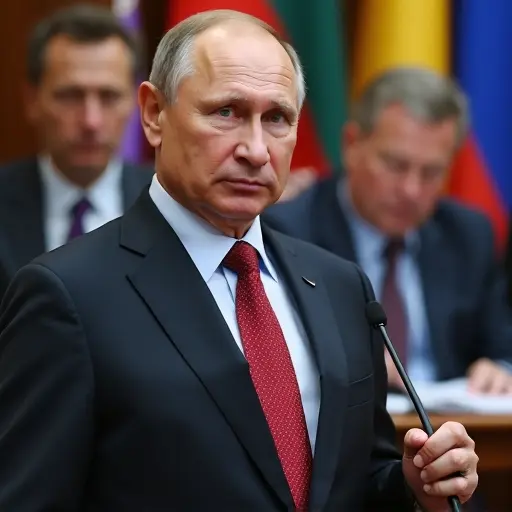
Russian President Vladimir Putin and Chinese President Xi Jinping held a significant video conference on February 4, 2026, reinforcing what both leaders described as an "exemplary" strategic partnership. The 1 hour 25 minute call came at a crucial time as Russia approaches the fourth anniversary of its invasion of Ukraine, with Moscow increasingly dependent on Beijing for economic support amid sweeping Western sanctions.
'Stabilizing Factor in Global Turbulence'
During the conversation, which was partially broadcast on Russian state television, Putin characterized the Russia-China relationship as "the stabilizing factor in the global turbulence of this moment." Xi reciprocated by emphasizing that bilateral relations were moving in a positive direction and called for both nations to work on a "grand plan" to further develop their partnership.
'Our relations are exemplary and represent the stabilizing factor in the global turbulence of this moment,' Putin stated during the call, addressing Xi as his "dear friend."
Economic Dependence and Strategic Alignment
The timing of this high-level discussion is particularly significant. According to research from SWP Berlin, Russia's economic dependence on China has deepened substantially since Western sanctions were imposed following the 2022 invasion of Ukraine. Bilateral trade reached $234 billion in 2025, making China Russia's largest trading partner.
China has maintained a delicate balancing act, refusing to condemn Russia's actions in Ukraine while continuing to expand economic cooperation. This approach has drawn criticism from Western nations but aligns with Beijing's strategic interests in challenging what it views as U.S. hegemony.
Geopolitical Implications and Western Response
The strengthening Russia-China axis represents a fundamental shift in global power dynamics. As reported by Channel News Asia, the leaders discussed coordinating positions on the United States, the tense situation in Iran, and nuclear pact expirations during their conversation.
'This partnership is about more than just bilateral relations—it's about creating an alternative to Western-dominated international systems,' noted geopolitical analyst Maria Chen.
Despite the deepening ties with Moscow, Xi continues to engage with Western leaders. He recently met with British Prime Minister Keir Starmer and Canadian Prime Minister Mark Carney, with German Chancellor Friedrich Merz scheduled to visit Beijing later this month.
Military Cooperation and Future Meetings
The military dimension of the relationship has also expanded. According to the Council on Foreign Relations, China has reportedly provided Russia with satellite intelligence on Ukrainian targets and conducted reconnaissance flights over western Ukraine. The two countries have conducted joint naval exercises, including submarine operations through the Tsushima Strait.
Putin accepted invitations to visit China in the first half of 2026 and attend the APEC summit in November. The leaders last met in person in September 2025 during a major military parade in Beijing, where Putin was flanked by North Korean leader Kim Jong-un.
The evolving partnership between Moscow and Beijing continues to reshape global geopolitics, creating new challenges for Western policymakers as they navigate an increasingly multipolar world order.

Follow Discussion