Deutsch
 English
 Español
 Français
 Nederlands
 Português






Europe Unites Against US Greenland Ambitions
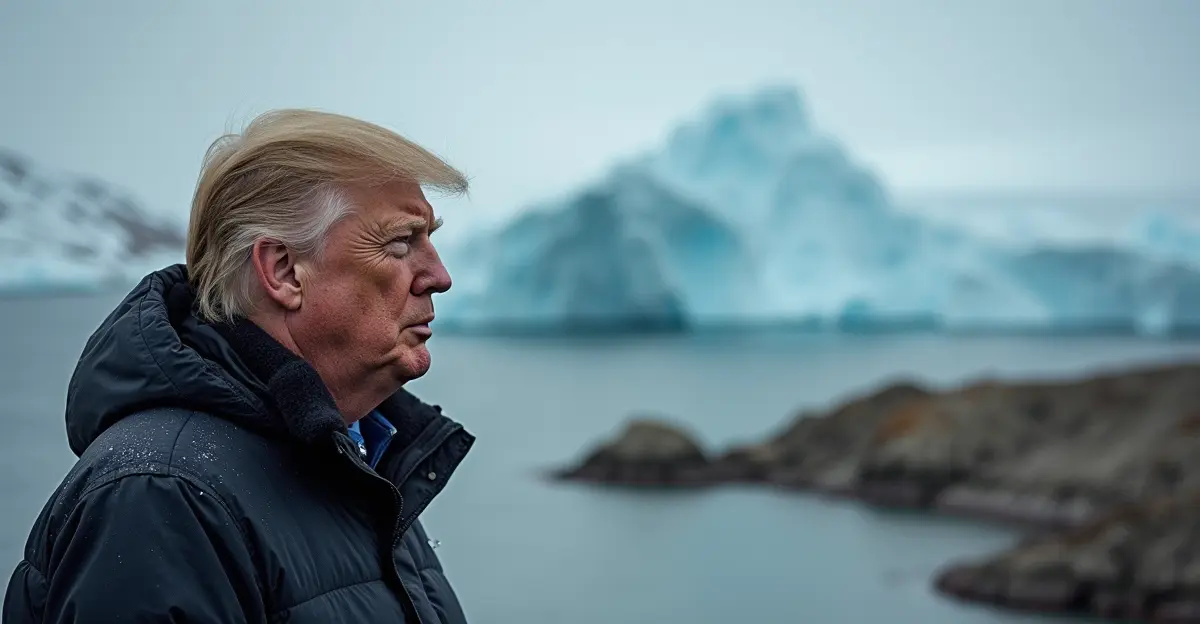
The European Union has thrown its full weight behind Denmark and Greenland as tensions escalate over renewed US threats to seize control of the strategic Arctic island. European Council President António Costa delivered a firm message on Wednesday: 'On Greenland, allow me to be clear: Greenland belongs to its people. Nothing can be decided about Denmark or Greenland without Denmark, or without Greenland. They have the full support and solidarity of the European Union.'
Trump's Arctic Ambitions
US President Donald Trump has been explicit about his intentions, stating the United States 'need Greenland for reasons of national security' and refusing to rule out military action. The White House confirmed this week that Trump is 'discussing options' to take control of Greenland, including potential military intervention. This comes after Trump's controversial military operation in Venezuela, where US special forces captured President Nicolás Maduro, raising fears in Europe that Greenland could face a similar scenario.
Greenland, the world's largest island, holds immense strategic value. Located on the shortest missile route between Russia and the US, it's a crucial part of America's anti-missile shield. The island also contains vast untapped resources, including approximately 38.5 million tonnes of rare earth oxides - representing about 30% of global reserves according to recent analysis. As climate change opens new Arctic shipping routes, Greenland's geopolitical importance only grows.
NATO Unity at Stake
The situation has created an unprecedented crisis within NATO. Danish Prime Minister Mette Frederiksen issued a stark warning: a US military move against Greenland would shatter the alliance, ending 'everything' including NATO and the post-World War II security structure. 'I cannot imagine a scenario in which the United States of America would be placed in a position to violate Danish sovereignty,' French President Emmanuel Macron said cautiously during Ukraine peace talks in Paris.
European leaders find themselves in a delicate position. They need US support for Ukraine against Russia but cannot condone threats against a fellow NATO ally. According to CNN reporting, European leaders like Britain's Keir Starmer and France's Emmanuel Macron have avoided public criticism of the US to preserve cooperation on Ukraine, creating a diplomatic tightrope.
Historical Context and Current Reality
The US-Greenland relationship dates back to World War II when Denmark, occupied by Nazi Germany, authorized the US to build military bases on Greenland. Today, only one base remains - the Pituffik air base on the northwestern coast. Since 1951, a Danish agreement gives the US military practically carte blanche on Greenlandic territory, as long as it informs Denmark and Greenland in advance.
Greenland is an autonomous territory of the Kingdom of Denmark, though not part of the EU. With a population of just 57,000 people spread across 2.2 million square kilometers, the island is largely self-governing. A year ago, 85% of Greenlanders said they opposed joining the US in a poll published in Danish and Greenlandic press.
European Solidarity and Next Steps
Representatives of six EU countries and the United Kingdom issued a joint statement affirming that Greenland belongs to its people and only Denmark and Greenland can decide on matters concerning their relations. German Foreign Minister Johann Wadephul urged Washington to respect international law, while Spanish Prime Minister Pedro Sánchez declared 'Spain will always be actively committed to the United Nations and in full solidarity with Denmark and the people of Greenland.'
US Secretary of State Marco Rubio plans to meet with Danish representatives next week to discuss US interest in Greenland. Meanwhile, Denmark has significantly increased its investments in Greenland's security, allocating 1.2 billion Euro to the region in 2025 alone.
The crisis highlights growing tensions in the Arctic, where Russia, China, and the United States are all vying for influence. As Danish Prime Minister Frederiksen noted, 'Security in the Arctic must be achieved collectively, in cooperation with allies in the NATO military alliance, including the United States.' The coming weeks will test whether NATO can survive this unprecedented challenge to its fundamental principles.