
 Deutsch
 English
 Español
 Français
 Nederlands
 Português






International Outcry Over US Annexation Threats
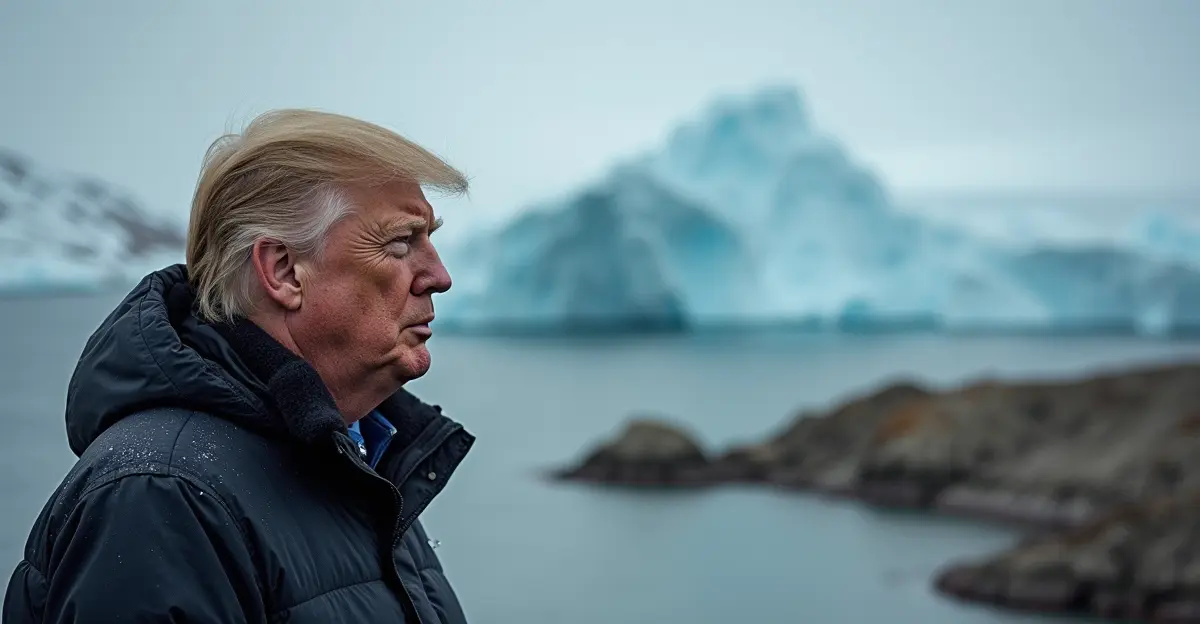
World leaders are calling on the United States to stop threatening Greenland after former President Donald Trump renewed his push to acquire the autonomous Danish territory. In a recent interview with The Atlantic, Trump stated that the US 'absolutely needs' Greenland for security and strategic reasons, sparking immediate condemnation from European allies.
Danish and Greenlandic Leaders Push Back
Danish Prime Minister Mette Frederiksen dismissed Trump's claims as 'absolutely nonsense,' stating that 'the US has no legal basis to annex any of the three countries of the Danish Kingdom'. She emphasized the NATO alliance that binds both nations, highlighting the diplomatic strain caused by Trump's rhetoric.
Greenland's Prime Minister Jens-Frederik Nielsen responded on Facebook, writing that 'generations have seen the US as neighbor and friend' and calling Trump's comments 'very impolite and disrespectful'. He added, 'Our country should not be seen as a means to an end'.
European Solidarity Emerges
Finnish President Alexander Stubb expressed strong support for Greenland and Denmark on X (formerly Twitter), stating 'Nobody decides for Greenland and Denmark, except Greenland and Denmark themselves'. He affirmed that 'Our Scandinavian friend Denmark and the prime minister have our full support'.
The diplomatic tensions escalated after a social media post by the wife of a key Trump advisor showed Greenland in US flag colors with the caption 'SOON.' This followed Trump's appointment of a special envoy to Greenland in December 2025, which Denmark described as 'very upsetting' according to The New York Times.
Strategic Importance of Greenland
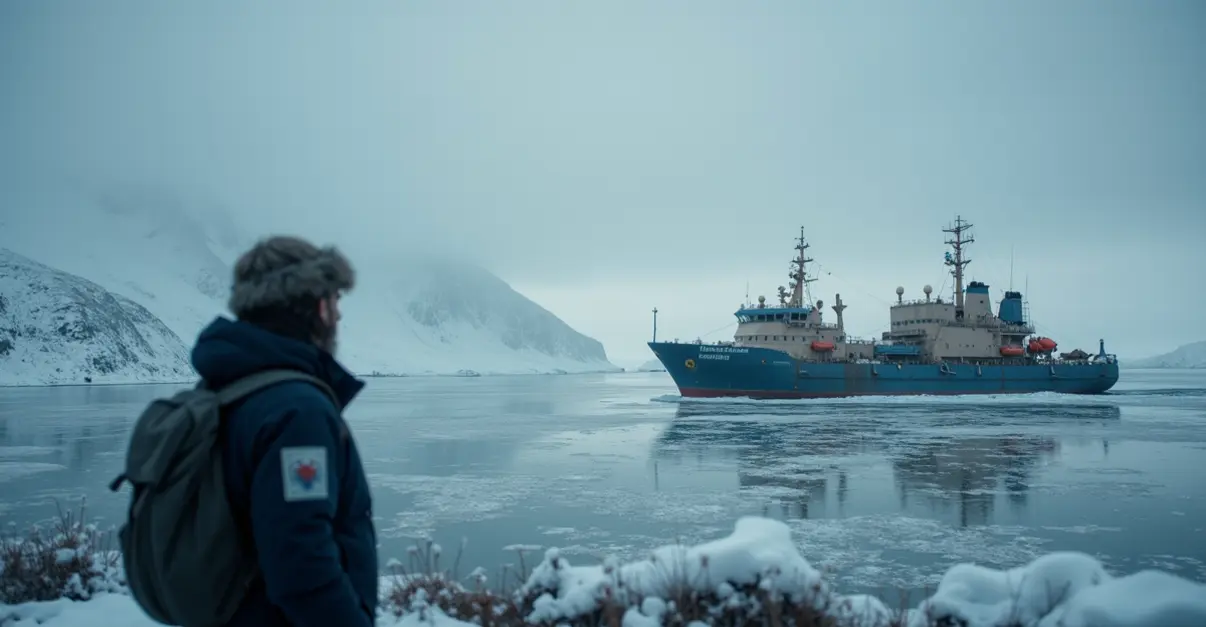
Greenland's geopolitical significance has grown dramatically in recent years. As the world's largest island, it sits at the crossroads of emerging Arctic shipping routes and contains vast untapped mineral resources. According to a European Parliament briefing, Greenland has become a focal point of competition between major powers including the US, Russia, and China.
The territory's strategic location between North America and Europe, combined with melting ice opening new shipping lanes, makes it increasingly valuable. Republican senators highlighted this during a Senate Commerce Committee hearing, discussing Greenland's 'strategic importance and untapped resource potential' as reported by the Senate Commerce Committee.
Venezuela Comparison Raises Concerns
Observers note that Trump's language toward Greenland echoes his approach to Venezuela, where the US has taken increasingly aggressive stances. The comparison has European leaders worried about potential similar actions in the Arctic region.
'By the American actions in Venezuela last week, countries are looking nervously at which countries Trump could act similarly in,' noted the original NOS report. This concern is amplified by Trump's repeated statements about wanting to annex Greenland since returning to the presidency in 2025.
Greenland's Political Status
Greenland is an autonomous territory within the Kingdom of Denmark, with its own government but with Denmark handling defense and foreign affairs. According to Wikipedia, Greenland gained home rule in 1979 and self-government in 2009, though it remains economically dependent on Denmark with nearly half its public revenue coming from Danish aid.
Most Greenlanders ultimately want independence from Denmark. A January 2025 poll showed 56% would vote for independence immediately, though many believe the territory needs economic development first, as reported by The World.
Independence Movement Strengthens
Prime Minister Nielsen has emphasized that Greenland seeks to strengthen ties with Denmark while pursuing eventual independence. He firmly rejected US ambitions, stating 'Greenland will never be a part of America' and 'we will never be for sale' according to US News.
The legal path to independence is established through Denmark's constitution and Greenland's 2009 self-rule law, with a commission reviewing the process and expected to conclude in late 2026.
Broader Implications
This controversy highlights growing tensions in the Arctic region, where climate change is opening new economic and strategic opportunities. The US maintains a military presence at Thule Air Base in northern Greenland under a 1951 defense agreement, but Trump's comments suggest he wants more direct control.
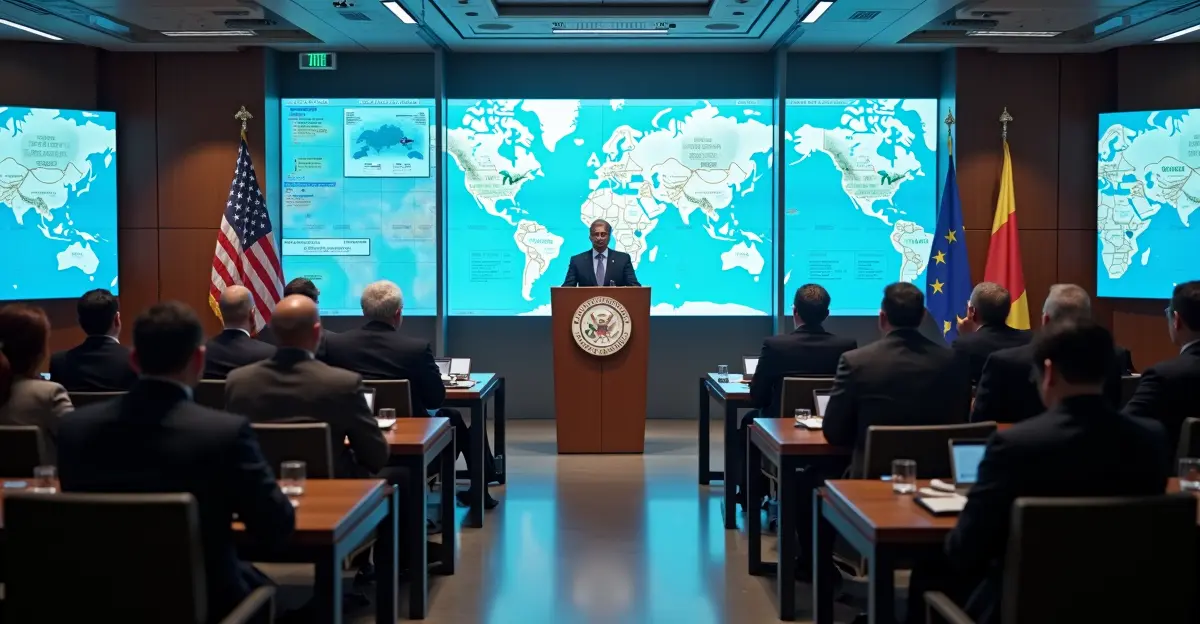
European leaders worry that such rhetoric undermines NATO unity and international norms of sovereignty. As Denmark's Frederiksen noted, the alliance relationship makes Trump's threats particularly troubling for transatlantic relations.
The situation remains fluid, with Greenland caught between its aspirations for independence, its relationship with Denmark, and growing great power competition in the Arctic. What's clear is that the world's largest island has become a flashpoint in 21st century geopolitics.



Follow Discussion