Nederlands
 English
 Deutsch
 Français
 Español
 Português





Major Eurovision Boycott as Multiple Countries Withdraw
In a dramatic development that threatens to fracture Europe's most popular music competition, the Netherlands has announced it will not participate in the 2026 Eurovision Song Contest. Dutch broadcaster AVROTROS made the announcement following a contentious European Broadcasting Union (EBU) meeting in Geneva that confirmed Israel's participation despite ongoing controversy over the Gaza war.
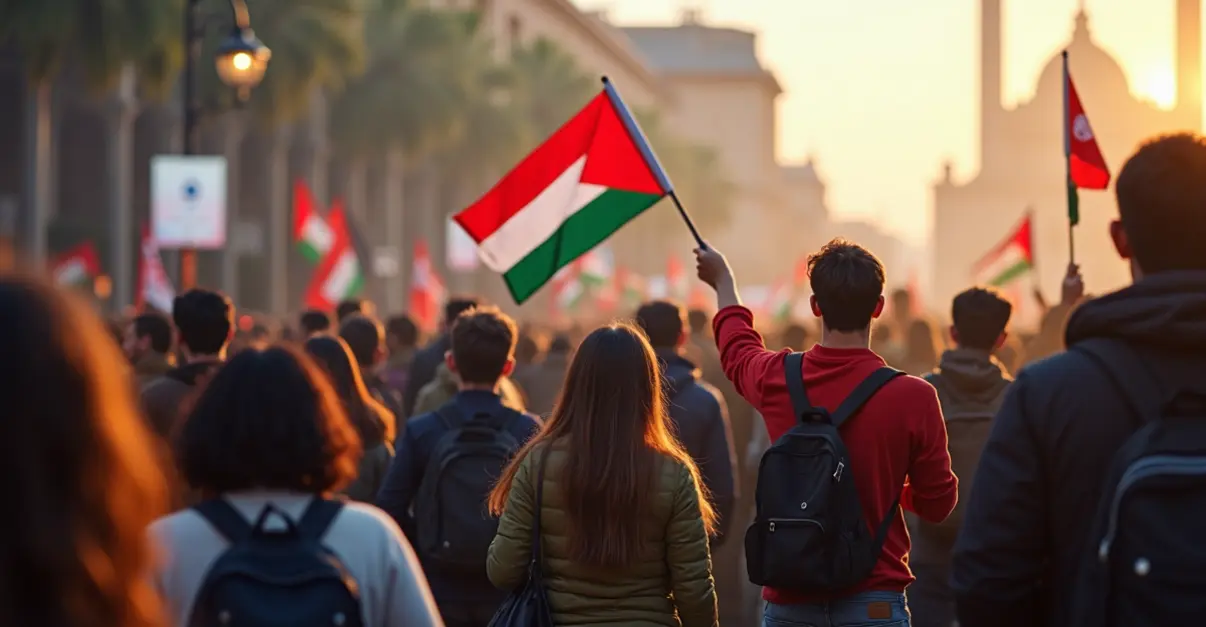
The Netherlands joins Spain, Ireland, and Slovenia in what has become the largest coordinated boycott in Eurovision's 70-year history. The withdrawals represent a significant challenge to the contest's traditional 'United by Music' ethos, highlighting how geopolitical tensions are increasingly spilling over into cultural events.
AVROTROS Takes a Stand
AVROTROS director Taco Zimmerman explained the difficult decision in an emotional statement: 'The Songfestival is very valuable to us. Culture connects, but not at any cost. What has happened in the past year touches our boundaries. Universal values like humanity and free press have been seriously violated and are non-negotiable for us.'
The Dutch broadcaster conducted extensive consultations with stakeholders including the Israeli ambassador, Amnesty International, the EBU, European public broadcasters, and thousands of Eurovision fans before reaching their decision. According to Zimmerman, 'We did not take this decision lightly. There are only losers in this situation.'
The Netherlands has participated in Eurovision 65 times since 1956, winning five times including their most recent victory in 2019 with Duncan Laurence's 'Arcade.' While AVROTROS will not participate or broadcast the 2026 contest, Dutch viewers will still have access through broadcaster NPO.
Spain Leads the Boycott Movement
Spain's withdrawal represents a particularly significant blow to the contest. As one of the 'Big Five' major financial contributors, Spain's public broadcaster RTVE automatically qualifies for the final each year. Their departure means the loss of one of Eurovision's most consistent and influential participants.
Ireland, which holds the record for most Eurovision wins with seven victories, has also confirmed its withdrawal. Irish broadcaster RTÉ stated it 'will not participate in or broadcast' the 2026 contest. Slovenia has joined the boycott, while Iceland and Belgium are reportedly considering their positions.
Deep Divisions at EBU Meeting
The EBU meeting in Geneva was marked by intense disagreement among member broadcasters. According to sources, several countries including Germany and Austria strongly opposed any boycott of Israel. Austrian broadcaster ORF, which will host the 2026 contest in Vienna, argued that given Austria's own wartime history, excluding Israel from the song competition was unthinkable.
Germany reportedly took a similar position, with sources indicating the country would not participate if Israel were barred. Ultimately, no formal vote was taken on Israel's participation, effectively confirming their inclusion for 2026.
Rule Changes Amid Controversy
In response to the controversy, the EBU has announced significant voting rule changes for the 2026 contest. According to official EBU announcements, the changes include:
- Reduction of public voting limits from 20 to 10 votes per payment method
- Return of professional juries to semi-finals with expanded panels
- Clearer rules to discourage 'excessive' promotional campaigns
- Enhanced technical safeguards to detect fraudulent voting
These measures aim to address concerns about political influence and voting manipulation that have surfaced during recent contests.
Historical Context and Future Implications
This boycott represents the most significant political crisis in Eurovision since Russia was banned following its 2022 invasion of Ukraine. However, the current situation is more complex, involving multiple withdrawing countries rather than a single exclusion.
The controversy highlights the increasing difficulty of maintaining Eurovision's traditional separation of politics and music. As The New York Times reported, cultural events are becoming arenas for political expression in ways that challenge their original purposes.
With the 2026 contest scheduled for Vienna's Wiener Stadthalle in May, organizers now face the challenge of staging an event that has lost several key participants. The withdrawals raise questions about whether other countries might join the boycott and how the EBU will navigate these complex geopolitical waters in future editions.
The situation remains fluid, with broadcasters from 32 countries having provisionally confirmed participation for 2026, while Bulgaria, Moldova, and Romania are returning after recent absences. How this unprecedented boycott will affect the contest's viewership, which typically reaches approximately 160 million people worldwide, remains to be seen.