Nederlands
 English
 Deutsch
 Français
 Español
 Português
Major international journalism organizations have adopted comprehensive verification standards for conflict reporting, establishing new protocols for source verification, visual content authentication, and ethical reporting in war zones.
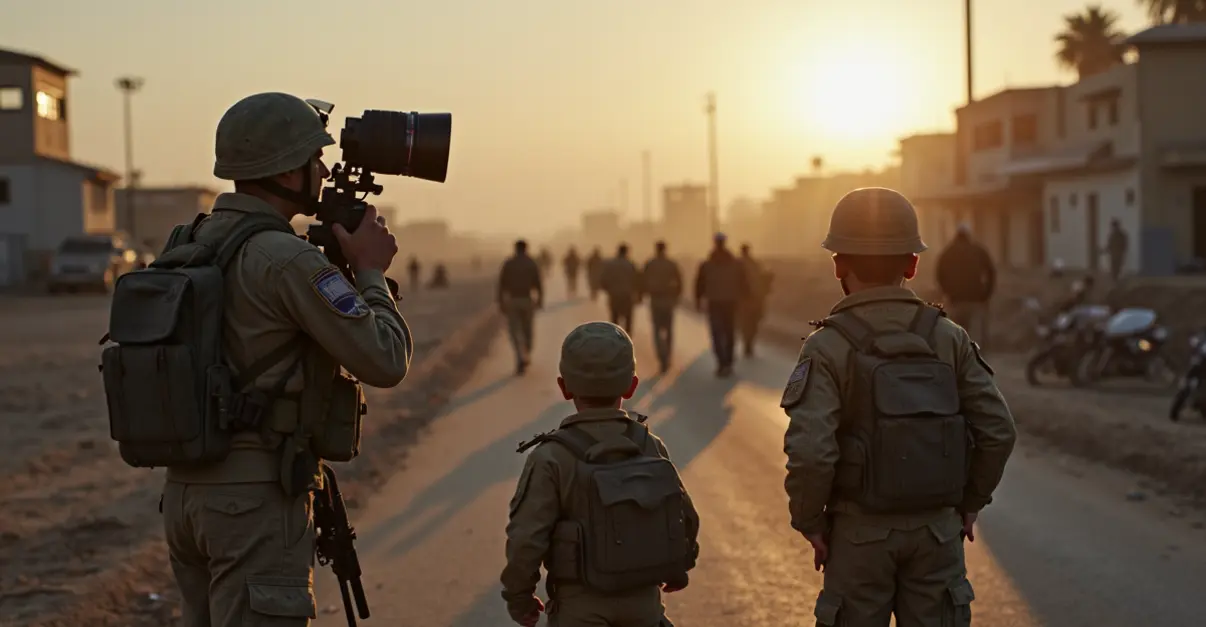
New Verification Standards Transform Conflict Journalism
In a landmark development for global journalism, major international organizations have adopted comprehensive verification standards specifically designed for conflict reporting. The new framework, finalized in late 2025, represents the most significant update to conflict journalism protocols in decades and is already reshaping how media organizations report on wars, humanitarian crises, and military engagements worldwide.
The Verification Challenge in Modern Conflict Zones
With the proliferation of social media and user-generated content, verifying information from conflict zones has become increasingly complex. Journalists now face a deluge of unverified footage, conflicting reports, and deliberate misinformation campaigns. 'We're operating in an environment where a single unverified video can go viral and shape international policy within hours,' says Maria Rodriguez, a veteran conflict correspondent with 15 years of experience in Middle Eastern war zones. 'These new standards give us the tools to separate fact from fiction while maintaining the speed required in modern news cycles.'
The standards were developed through a collaborative effort involving the International Federation of Journalists (IFJ), the Committee to Protect Journalists (CPJ), and major news organizations including BBC, Reuters, and Associated Press. Technical expertise came from verification specialists at organizations like Storyful and Bellingcat, who have pioneered digital verification techniques.
Key Components of the New Framework
The verification standards establish clear protocols for several critical areas of conflict reporting:
Source Verification: Journalists must now document at least two independent sources for all information from conflict zones, with special requirements for anonymous sources. The standards provide specific guidelines for verifying user-generated content, including geolocation techniques, metadata analysis, and cross-referencing with satellite imagery.
Visual Content Authentication: New requirements mandate that all photographs and videos from conflict areas undergo technical verification for authenticity. This includes checking for digital manipulation, verifying timestamps, and confirming locations through multiple methods. 'We've seen too many instances where manipulated images have influenced public opinion and even policy decisions,' notes verification expert David Chen from the Digital Verification Lab.
Contextual Reporting Standards: The framework emphasizes the importance of providing historical and political context in conflict reporting. Journalists are encouraged to explain root causes, historical grievances, and local dynamics rather than simply reporting on immediate violence.
Safety Protocols: Enhanced safety standards require news organizations to provide specialized training for journalists entering conflict zones and establish clear emergency protocols. The standards also address the ethical responsibility to protect sources and vulnerable populations.
Impact on Policy and International Relations
The adoption of these standards is already having significant implications for international policy and humanitarian response. Government agencies and international organizations are increasingly relying on verified conflict reporting to make decisions about sanctions, humanitarian aid, and diplomatic interventions.
'When we're deciding where to allocate emergency resources or whether to impose sanctions, we need information we can trust,' explains UN humanitarian coordinator Sarah Johnson. 'These verification standards create a more reliable information ecosystem that directly impacts our ability to respond effectively to crises.'
The financial markets are also responding to the increased reliability of conflict reporting. Commodity traders, insurance companies, and investment firms that monitor geopolitical risks are incorporating verified conflict data into their risk assessment models, leading to more stable market responses during international crises.
Community-Level Implications
At the community level, the standards are changing how local populations interact with international media. Community journalists and citizen reporters now have clearer guidelines for contributing to the global information ecosystem while maintaining ethical standards.
The framework includes specific provisions for protecting vulnerable communities and ensuring that reporting doesn't inadvertently put populations at risk. 'For too long, conflict reporting has sometimes done more harm than good in local communities,' says community organizer Ahmed Hassan from Syria. 'These new standards recognize that journalists have a responsibility not just to report the news, but to consider the consequences of their reporting.'
Training programs are being rolled out globally to help journalists implement the new standards, with particular focus on regions experiencing ongoing conflicts. The International Red Cross has incorporated the verification protocols into their 2025 International Humanitarian Law Youth Action Campaign, highlighting the intersection between journalism ethics and humanitarian protection.
Looking Forward: The Future of Conflict Journalism
As the standards take effect throughout 2026, early adopters report significant improvements in reporting accuracy and credibility. News organizations that have implemented the framework are seeing increased trust from audiences and more productive relationships with international organizations.
The verification standards represent a shift toward more responsible, accurate conflict reporting that balances the need for timely information with ethical responsibilities. While challenges remain in implementation, particularly in regions with limited resources or press freedom restrictions, the framework provides a clear path forward for journalism in an increasingly complex global information environment.
'This isn't just about better journalism—it's about creating a more informed global public that can make better decisions about peace, conflict, and humanitarian response,' concludes IFJ director Michael Thompson. 'In an age of information overload, verification standards are our best defense against misinformation and manipulation.'