


 Deutsch
 English
 Español
 Français
 Nederlands
 Português


 Share
Share




Spain imposed temporary border controls on all air and sea travellers arriving from Italy early Saturday, escalating a bitter diplomatic row over migration that has pitted Madrid against Rome and thrown the Schengen free-movement zone into its deepest crisis in years. The checks—covering passports, nationality and visas—took effect at midnight on 8 August and will remain in force until at least 7 September, according to a Spanish government announcement late Friday.
Background: The Ceuta Migration Emergency
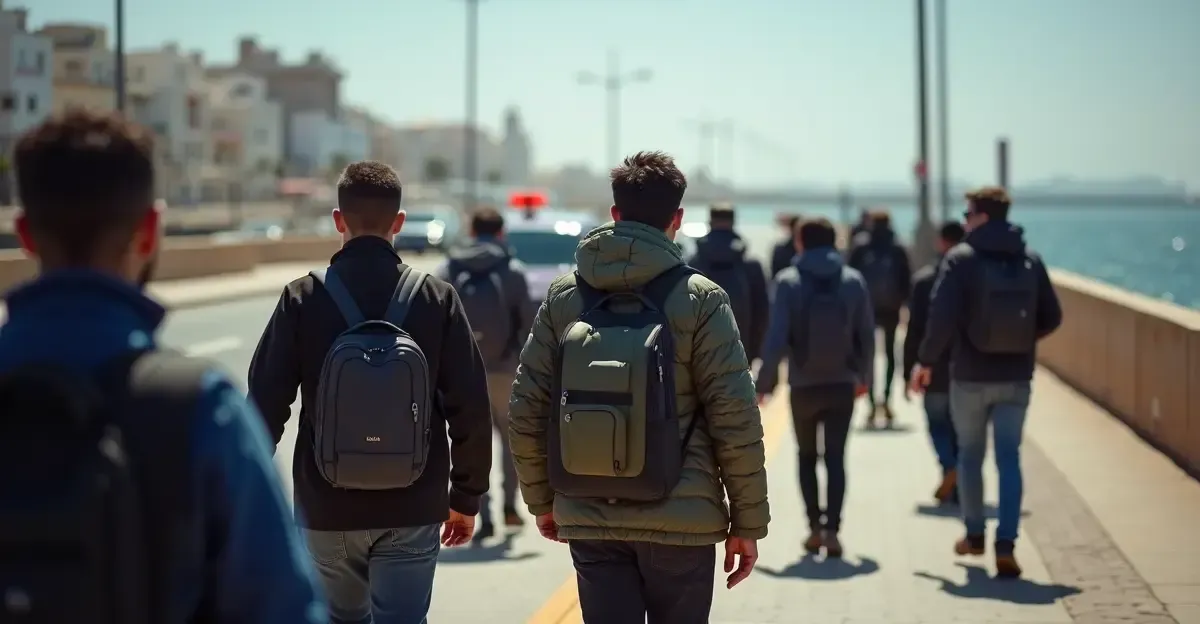
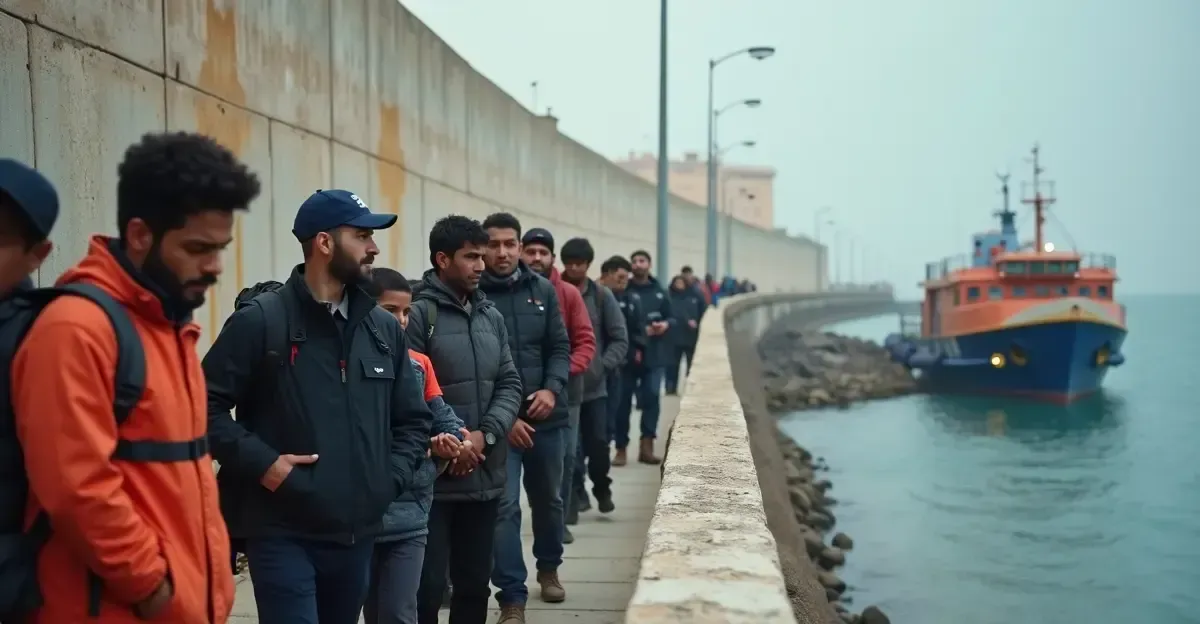
The measures are a direct consequence of the mass migration crisis at Ceuta that unfolded on 30–31 July 2026. An estimated 72,000 to 80,000 people, overwhelmingly young Moroccan men, stormed across the border from Morocco into the Spanish exclave of Ceuta, many swimming around breakwaters or wading along the shoreline. The influx—the largest single-day irregular crossing in EU history—overwhelmed reception centres, left at least 111 people dead and prompted Ceuta’s government to request a national emergency. Although most migrants returned voluntarily to Morocco within days, the spectacle reignited Europe’s long-running debate over border security and migration policy.
From Schengen Suspension to Tit-for-Tat Controls
Italy’s First Move
Within 48 hours of the Ceuta breach, Italy announced it was temporarily suspending the Schengen agreement for travellers arriving from Spain. Rome introduced checks at ports and airports, initially aimed at non‑EU nationals, and declared it would keep the controls in place until at least 15 August. “Italy does not accept ultimatums or demands from abroad regarding national security and border control,” Prime Minister Giorgia Meloni’s office said, rebuffing Madrid’s calls to lift the restrictions.
The Italian government pointed to the risk of “secondary movements” of irregular migrants and cited terrorism concerns. However, Spanish Foreign Minister José Manuel Albares dismissed the move as “partisan demagoguery,” noting that most Ceuta entrants had already left Spanish territory and that Schengen integrity was not at risk.
Spain’s Retaliation
After Rome refused to back down, Madrid carried out its threat to impose “proportional measures.” The Spanish Interior Ministry framed the new controls as a response to “continuing irregular migration pressure” from Italy. The checks apply to all passengers—Italian citizens, other EU nationals and third‑country nationals—arriving by plane or ship from Italy. Reports from Spanish airports indicate that passengers are already facing longer queues and stricter document verification.
What the Border Controls Mean for Travellers
Unlike normal Schengen free movement rules, which allow passport‑free travel between member states, the temporary controls mean that anyone flying or sailing from Italy to Spain must present a valid travel document and, if required, a visa. Airlines and ferry operators have been advised to check passenger documents before boarding. Travel experts recommend arriving at ports and airports at least 60–90 minutes earlier than usual, carrying physical passports rather than relying on digital copies, and confirming visa validity before departure.
The suspension affects major routes such as Rome–Madrid, Milan–Barcelona and Venice–Barcelona, as well as popular Mediterranean cruise hubs including Civitavecchia, Naples, Genoa, Barcelona and Valencia. While Spanish nationals are exempt from the most intrusive checks, reports suggest that processing times have increased for all travellers.
Political Fallout and EU Implications
The spat is the most serious bilateral breakdown between two Schengen members since the 2015 migration crisis. It pits Spain’s socialist Prime Minister Pedro Sánchez against Italy’s conservative leader Giorgia Meloni, both of whom face domestic pressure to appear tough on migration. Sánchez has already written to Brussels complaining about Italy’s “unfriendly” behaviour, while Meloni has enlisted support from Finland and Denmark for stricter border enforcement.
The stand‑off also exposes deeper fractures in the EU’s approach to migration. Spain’s April 2026 mass regularisation programme—granting legal status to roughly 500,000 undocumented migrants—has been criticised by 22 EU governments as a “pull factor.” Meanwhile, a June 2026 Spanish Supreme Court ruling that restricts summary returns of migrants intercepted at sea has complicated enforcement. The European Union migration policy is once again at a crossroads, with southern member states demanding more solidarity while northern and eastern countries push for tighter external controls.
“This tit‑for‑tat suspension of Schengen is a warning shot,” said a Brussels‑based EU official who spoke on condition of anonymity. “If two founding members can’t resolve a migration dispute without shredding free movement, the whole architecture looks fragile.”
FAQ
How long will the Spain–Italy border controls last? Italy’s checks are scheduled until at least 15 August; Spain’s counter‑measures run from 8 August to 7 September. Both governments may extend the periods depending on the security situation.
Do the controls affect all travellers? Italy’s checks target non‑EU nationals arriving from Spain, though Spanish citizens have also reported delays. Spain’s controls apply to all passengers arriving from Italy, regardless of nationality.
Can I still travel without a passport? No. Even within the Schengen area, temporary controls require a valid passport or national ID card. Travellers should carry physical documents.
Will flights be cancelled? No cancellations have been announced, but airlines may face turnaround delays. Under EU Regulation 261/2004, compensation for delays caused by “extraordinary circumstances” may be limited.
What triggered the crisis? The immediate trigger was the mass influx of migrants into Ceuta on 30–31 July, but underlying causes include Morocco’s economic hardship, Spain’s regularisation policies and a Spanish court ruling that limited fast‑track returns.




Follow Discussion