Nederlands
 English
 Deutsch
 Français
 Español
 Português





Major News Organizations Implement Comprehensive Safety and Verification Protocols
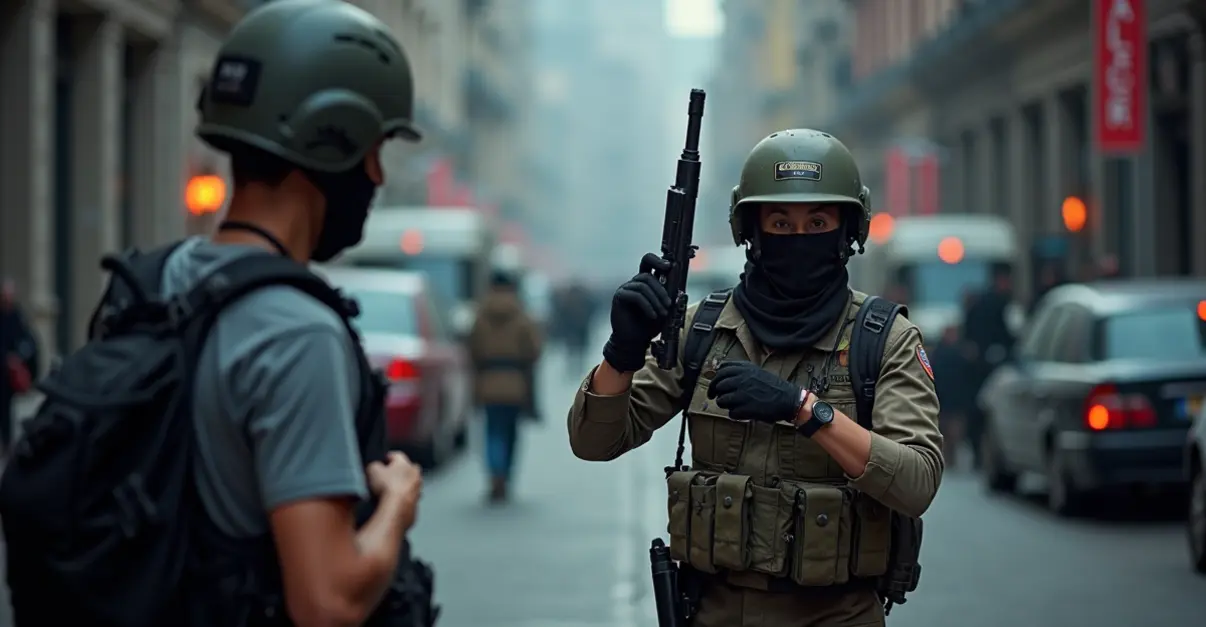
In a landmark shift for journalism, major global media organizations are rolling out comprehensive new verification standards for conflict reporting, driven by alarming safety statistics and the need for more reliable information in war zones. The initiative establishes standardized approaches to source verification, digital evidence collection, and reporter protection that represent a fundamental change in how news is gathered from the world's most dangerous areas.
'This isn't just about better journalism—it's about keeping our people alive while ensuring the public gets accurate information,' says Amina Khalid, a veteran conflict reporter who has covered conflicts from Syria to Ukraine. 'For too long, we've operated with ad-hoc safety measures and inconsistent verification. These new standards provide a framework that should have been in place decades ago.'
The Safety Crisis Driving Change
The urgency for these new protocols comes from sobering statistics. According to UNESCO data, over 50% of journalist killings in 2023 occurred in crisis and conflict areas. The United Nations reports that since 1993, over 1,600 journalists have been killed worldwide, with 90% of these murders going unresolved. The UN Plan of Action on Safety of Journalists, established in 2012, has made progress but faces new digital challenges including online violence, surveillance, and sophisticated disinformation campaigns.
Freelance journalists are particularly vulnerable, representing about 20% of journalist killings in recent years according to UNESCO's World Trends Report. These independent reporters often work without institutional support, proper safety training, or adequate equipment—gaps the new standards aim to address.
Key Components of the New Framework
The verification framework draws heavily from the Berkeley Protocol on Digital Open Source Investigations, developed by UC Berkeley's Human Rights Center in partnership with the UN Office of the High Commissioner for Human Rights. This protocol, launched in 2020 and now translated into all UN languages, establishes minimum professional standards for verifying digital information that can be used in international courts.
The media adaptation includes three core components:
1. Digital Verification Standards
News organizations are implementing systematic approaches to authenticating user-generated content from conflict zones. This includes geolocation verification, timestamp analysis, cross-referencing with satellite imagery, and digital forensics to detect manipulation. 'We're moving beyond basic fact-checking to forensic-level verification,' explains a Reuters editor involved in the implementation. 'Every piece of user-generated content from a conflict zone now goes through a standardized verification workflow before publication.'
2. Enhanced Safety Training
Comprehensive safety programs now cover physical protection, digital security, psychological first aid, and emergency medical training. Organizations like Modern News Media emphasize the importance of specialized training for high-risk environments, including evacuation protocols, secure communication systems, and risk assessment methodologies.
The training also addresses the specific threats faced by women journalists, who are particularly vulnerable to sexual violence and online harassment. 'The old approach of sending reporters into conflict zones with minimal preparation was reckless and unethical,' says a safety trainer working with multiple news organizations. 'Now we're seeing a cultural shift where safety is prioritized from the planning stage through to post-deployment support.'
3. Technical Workflows and Open Standards
Media organizations are developing shared technical standards for data collection, preservation, and sharing. This includes encrypted communication platforms, secure cloud storage for sensitive materials, and standardized metadata protocols. The goal is to create interoperable systems that allow different news organizations to collaborate while maintaining security and chain of custody for evidence.
Major players like Reuters, Associated Press, and CNN have committed to implementing these standards, though challenges remain for smaller outlets with limited resources. 'The technical infrastructure required isn't cheap,' acknowledges a media technology director. 'But we're working on scaled-down versions and shared resources to ensure smaller organizations and freelance journalists can participate.'
Ethical Dimensions and Implementation Challenges
The new standards also address complex ethical questions, including protecting vulnerable sources, maintaining independence from military influences, and balancing verification needs with timely reporting. There's particular emphasis on protecting local journalists and fixers who face disproportionate risks.
Implementation faces practical hurdles, including cost, training time, and resistance to changing established workflows. 'Some veteran reporters initially saw this as bureaucratic overreach,' says a newsroom manager at a major network. 'But after seeing how these protocols prevented several dangerous situations and improved our reporting accuracy, support has grown significantly.'
The standards also require news organizations to provide proper equipment—from protective gear to encrypted communication devices—and establish clear emergency protocols and evacuation plans.
The Future of Conflict Reporting
This initiative represents more than just new procedures—it signals a fundamental shift in how media organizations approach dangerous assignments. The reactive model of responding to crises is being replaced by proactive safety planning and more deliberate, verified reporting.
As digital threats evolve alongside physical dangers, the standards are designed to be adaptable. 'We're building a living framework that can respond to new technologies and emerging threats,' says a coordinator of the media safety initiative. 'The goal is to create a sustainable ecosystem where journalists can do their vital work without unnecessary risk, and the public can trust the information coming from conflict zones.'
The implementation comes at a critical time, with multiple active conflicts worldwide and growing concerns about disinformation. By establishing these verification and safety standards, media organizations aim to protect both their personnel and the integrity of information—ensuring that conflict zones don't become 'zones of silence' where truth becomes the first casualty.