Deutsch
 English
 Español
 Français
 Nederlands
 Português






Historic Policy Shift Opens North Korean Propaganda to South Korean Public
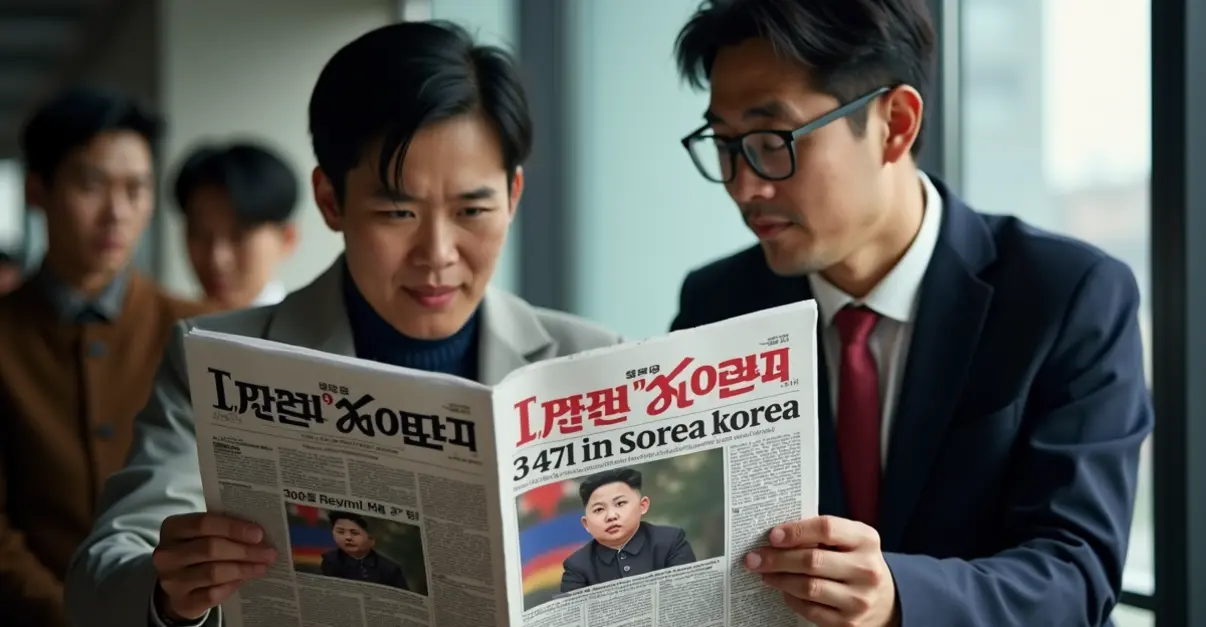
In a landmark policy reversal, South Korea has lifted its decades-long ban on public access to North Korea's main propaganda newspaper, Rodong Sinmun. For the first time since the establishment of South Korea in 1948, ordinary citizens can now read the official mouthpiece of the Kim regime at designated public institutions without needing special approval or identification.
A New Era of Information Access
The Ministry of Unification announced that Rodong Sinmun has been reclassified from a 'special publication' to a 'general publication,' allowing access at approximately 181 authorized locations nationwide including public libraries, government buildings, and educational institutions. While the physical newspaper can now be read freely, North Korean websites including Rodong Sinmun's online version remain blocked under existing security laws.
President Lee Jae-myung has championed this policy shift as part of his broader diplomatic approach toward North Korea. 'The previous restrictions reflected an outdated distrust in our citizens' ability to identify propaganda,' Lee stated during a recent briefing. 'We should treat our people as autonomous beings capable of critical thinking, not as vulnerable subjects who need protection from information.'
Symbolic Gesture with Practical Limitations
Experts note that while the policy change is significant symbolically, its practical impact may be limited. Chad O'Connell, founder of NK News, told reporters: 'This is largely a symbolic gesture. People will need to make considerable effort to access physical newspapers at specific locations, and researchers already have better digital tools for analyzing North Korean media.'
The move comes as part of President Lee's 'Korean Peninsula Peace Process' initiative, which seeks to improve relations with Pyongyang through gradual confidence-building measures. However, North Korea has shown little reciprocal interest, maintaining its institutionalized indifference toward South Korean outreach efforts.
Security Concerns and Public Reaction
South Korea's National Security Law, enacted in 1948, has long restricted access to North Korean media out of concerns about ideological influence. The law classifies praising or sympathizing with North Korea as seditious activity, though enforcement has varied over decades.
Bada Nam, secretary-general of PSCORE, an organization advocating for Korean reunification, argues that fears of propaganda influence are overblown. 'Cases of South Koreans being swayed by North Korean propaganda are extremely rare,' Nam explained. 'Those incidents usually involve specific political motivations rather than the persuasive power of the propaganda itself. South Koreans have access to diverse information sources that can counter North Korean narratives.'
Broader Diplomatic Context
The policy change occurs amid complex regional dynamics. According to The Diplomat, North Korea's 2026 strategy focuses on institutionalizing its nuclear status while maintaining calculated engagement with the United States. Meanwhile, South Korea is pursuing regular policy coordination with Washington while seeking China's constructive role in peninsula issues during President Lee's recent state visit to Beijing.
The Rodong Sinmun, founded in 1945 as Chŏngro, serves as the official newspaper of the Workers' Party of Korea and is frequently quoted by international media as representing official North Korean positions. The six-page daily publication consistently features praise for the Kim family leadership and criticism of South Korean, Japanese, and American policies.
Future Implications
While the immediate practical impact may be limited, the policy shift represents a significant philosophical change in how South Korea approaches information control and citizen autonomy. As Bada Nam notes: 'Decades of experience have shown that restricting contact doesn't lead to desired change. South Korea shouldn't limit information about the North within its own society while calling on North Korea to open up.'
The move also comes as the U.S. State Department has criticized South Korea's National Security Act for limiting freedom of expression, particularly regarding North Korean media access. Whether this policy change will lead to further liberalization of cross-border information flows remains to be seen, but it marks an important step in President Lee's efforts to reshape inter-Korean relations through increased transparency and engagement.