Nederlands
 English
 Deutsch
 Français
 Español
 Português
Coastal relocation planning funds expanded significantly in 2025 as communities face rising sea levels and intensifying storms. Federal and state programs now support managed retreat initiatives, with funding mechanisms addressing complex human and policy challenges.
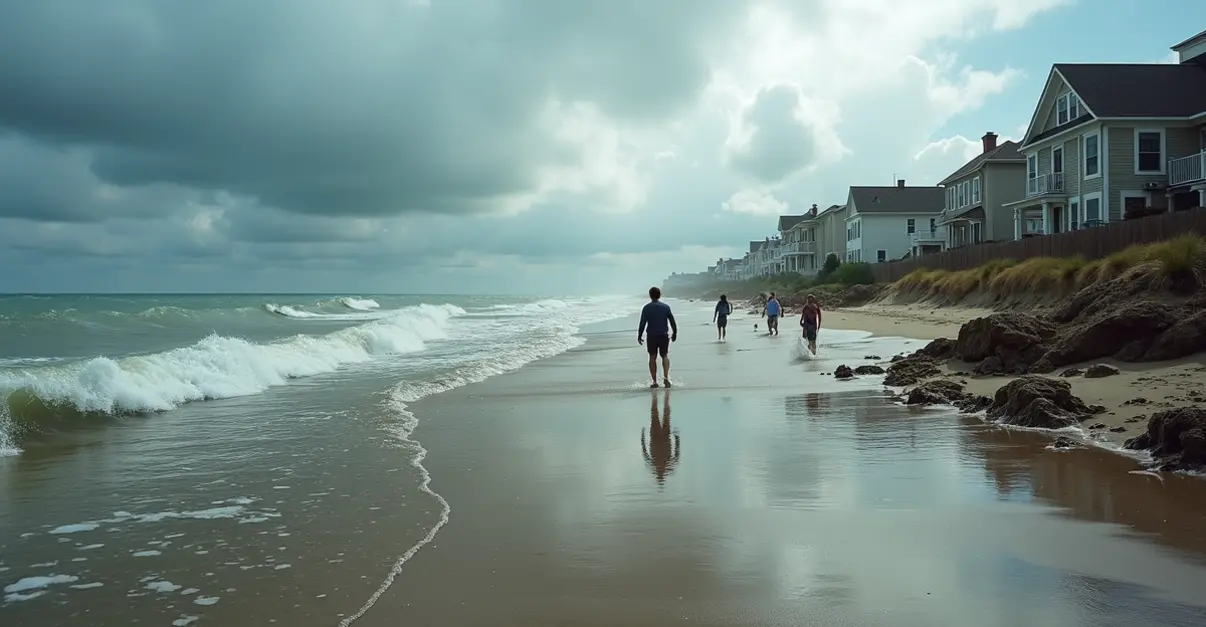
Coastal Communities Face Tough Choices as Relocation Funding Expands
In a pivotal year for climate adaptation, coastal relocation planning funds have emerged as a critical tool for communities facing existential threats from sea-level rise and intensifying storms. With 2025 marking a significant expansion in federal and state funding for managed retreat programs, policymakers are grappling with complex questions about how to equitably move people and infrastructure away from vulnerable coastal areas.
The Rise of Managed Retreat as Policy Priority
The concept of managed retreat—the deliberate, planned movement of communities from high-risk coastal zones—has evolved from theoretical discussion to urgent policy priority. 'We're past the point where we can protect every inch of coastline,' says Dr. Maria Chen, a coastal resilience expert at Georgetown University. 'The question now is how we manage retreat in ways that preserve community identity and minimize trauma.'
Recent data shows why the shift is necessary: the Los Angeles wildfires alone caused over $60 billion in damage in 2025, while hurricanes Helene and Chantal devastated coastal communities across the Southeast. These events have accelerated funding commitments, with programs like the National Coastal Resilience Fund offering grants ranging from $100,000 to $10 million for planning and implementation projects.
State-Level Initiatives Lead the Way
While federal programs provide crucial support, state governments have taken innovative approaches to coastal relocation. North Carolina's Department of Environmental Quality recently awarded nearly $6 million in Resilient Coastal Communities Program grants to 32 communities. 'This funding helps communities move beyond emergency response to proactive planning,' explains state environmental official James Wilson. 'We're seeing everything from wetland restoration to complete community relocation plans.'
Florida has been particularly aggressive, with Governor Ron DeSantis announcing $311 million in infrastructure awards to 37 communities, many in rural coastal areas. The funding targets critical needs including utility improvements and emergency operations resources for communities impacted by recent hurricanes. Meanwhile, Hawaii implemented a 'green' tourism tax expected to raise $100 million annually for climate resilience projects, including potential relocation planning.
The Human Dimension of Relocation
Behind the policy discussions and funding announcements are real communities facing difficult decisions. The Georgetown Climate Center's Managed Retreat Toolkit has become an essential resource for local governments navigating these challenges. The toolkit addresses complex issues including community engagement, equity considerations, and legal frameworks.
'The hardest part isn't the engineering or the funding—it's the human element,' says community organizer Lisa Rodriguez from a threatened Florida coastal town. 'People have lived here for generations. Their identities are tied to this place. Asking them to leave requires sensitivity and meaningful compensation.'
Funding Mechanisms and Implementation Challenges
The National Coastal Resilience Fund, primarily funded through the Bipartisan Infrastructure Law with additional support from the Inflation Reduction Act, represents a major federal commitment. The program has invested $139 million across 94 projects in 2024, with similar allocations expected for 2025. Projects span nationwide, including living shoreline installations in Florida, wetland restoration in Alaska, and coral reef protection in the U.S. Virgin Islands.
However, implementation faces significant hurdles. 'There's no one-size-fits-all approach to managed retreat,' notes policy analyst Michael Thompson. 'What works for a small island community in Louisiana won't work for a densely populated coastal city in California. We need flexible funding mechanisms that can adapt to local contexts.'
Looking Ahead: The Future of Coastal Communities
As 2025 progresses, several trends are emerging. First, there's growing recognition that relocation planning must begin long before disasters strike. Second, equity concerns are moving to the forefront, with particular attention to how relocation affects low-income communities and communities of color. Third, nature-based solutions are increasingly integrated with relocation planning, creating opportunities for habitat restoration alongside community protection.
The U.S. Climate Resilience Toolkit highlights innovative practices being deployed nationwide, offering frameworks to overcome implementation barriers. 'We're learning from each other,' says coastal planner Sarah Johnson. 'Communities that have gone through this process are sharing their experiences, both the successes and the painful lessons.'
With sea levels projected to rise over a meter by 2100 without emissions reductions, the expansion of coastal relocation planning funds represents a crucial step toward climate adaptation. The challenge now is ensuring these funds translate into equitable, community-centered outcomes that preserve both lives and livelihoods.