
 Deutsch
 English
 Español
 Français
 Nederlands
 Português






Heat Stress Reduces Crop Yields in Key Agricultural Regions
As global temperatures continue to rise, heat stress is becoming an increasingly critical threat to agricultural productivity in key growing regions worldwide. Recent research from Stanford University reveals that rising temperatures and increased atmospheric dryness are significantly reducing global crop yields, creating challenging growing environments that threaten food security. The study examines how climate change impacts agricultural productivity across different regions and crops, with hotter and drier conditions becoming more frequent and severe.
The Science Behind Heat Stress Damage
Heat stress affects crops through multiple physiological mechanisms. When temperatures exceed optimal ranges, plants experience reduced photosynthesis, increased respiration, and damage to reproductive structures. 'We're seeing heat stress events that would have been considered extreme just a decade ago becoming increasingly common,' explains Dr. Maria Rodriguez, an agricultural climatologist at the University of California, Davis. 'The cumulative effect of these repeated stress events is what's really driving yield reductions.'
A comprehensive study published in Scientific Reports projects significant yield reductions by 2080-2100 under business-as-usual emissions scenarios: maize (-22%), rice (-9%), soy (-15%), and wheat (-14%). Under lower emissions scenarios, reductions are much smaller, highlighting the critical importance of climate mitigation efforts. The research incorporates multiple uncertainty sources including climate model projections, emissions scenarios, and methodological choices.
Agronomic Support and Irrigation Scheduling Solutions
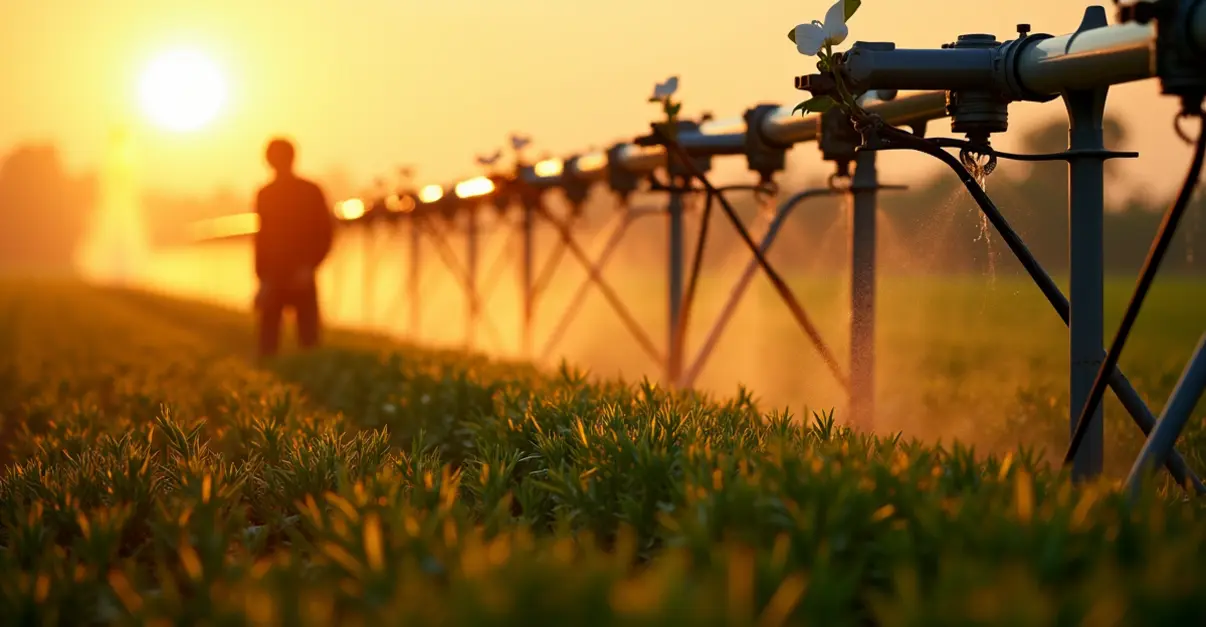
In response to these challenges, agricultural scientists and farmers are turning to advanced agronomic support systems and precision irrigation technologies. A 2025 review published in Agricultural Water Management evaluated Decision Support Systems (DSS) for precision irrigation and water use efficiency, analyzing six major tools including DSSAT, APSIM, CropWat, AquaCrop, GesCoN, and VegSyst.
'The integration of wireless sensor networks, remote sensing, and environmental variables like soil moisture and evapotranspiration has revolutionized irrigation management,' says agricultural engineer Dr. James Wilson. 'We're seeing DSSAT and APSIM achieving 30-50% water savings and up to 20% yield increases through adaptive irrigation scheduling based on real-time data.'
The Council for Agricultural Science and Technology (CAST) released a comprehensive document in November 2025 focusing on precision irrigation management strategies. This science-based publication addresses the critical need for efficient water use in agriculture through advanced technologies and data-driven approaches.
Market Implications and Food Security Concerns
The agricultural yield reductions have significant implications for global food markets and prices. According to a Forbes analysis, climate models project staple crop yields could decline 20-35% by century's end, with wheat, maize, and soybean yields potentially dropping nearly a third if warming exceeds 2°C. These declines threaten to trigger inflation, trade disruptions, insurance losses, and sovereign credit stress.
Global agricultural commodity markets are experiencing significant volatility in wheat, corn, and soybeans due to unpredictable weather patterns. Market analysis shows key drivers include drought in major wheat-exporting regions like Russia and Argentina, US Midwest drought affecting soybeans, and Brazil's favorable rains boosting production.
'The volatility creates winners like agricultural giants ADM and Bunge with strong risk management, and losers including food processors with limited pricing power and small farmers,' notes market analyst Sarah Chen. 'This instability signals a period of sustained uncertainty for global food security, inflation, and agricultural profitability.'
The Path Forward: Adaptation and Innovation
The global precision agriculture market is projected to grow from $9.86 billion in 2024 to $22.49 billion by 2034, representing an 8.59% compound annual growth rate, according to market research. This significant growth is driven by technological advancements including IoT, AI, data analytics, and robotics that enable optimized resource utilization, enhanced crop yields, and sustainable farming practices.
However, challenges remain in implementing these technologies broadly. 'High data input requirements and limited ability to account for spatial field variability are still barriers for many farmers,' explains Dr. Wilson. 'Future developments should focus on simplifying data processes and improving accessibility to make informed, data-driven irrigation decisions more widely available.'
As climate change continues to reshape agricultural landscapes, the integration of advanced agronomic support, precision irrigation scheduling, and market-aware farming strategies will be essential for maintaining global food security in the face of increasing heat stress and water scarcity challenges.




Follow Discussion