
 Deutsch
 English
 Español
 Français
 Nederlands
 Português

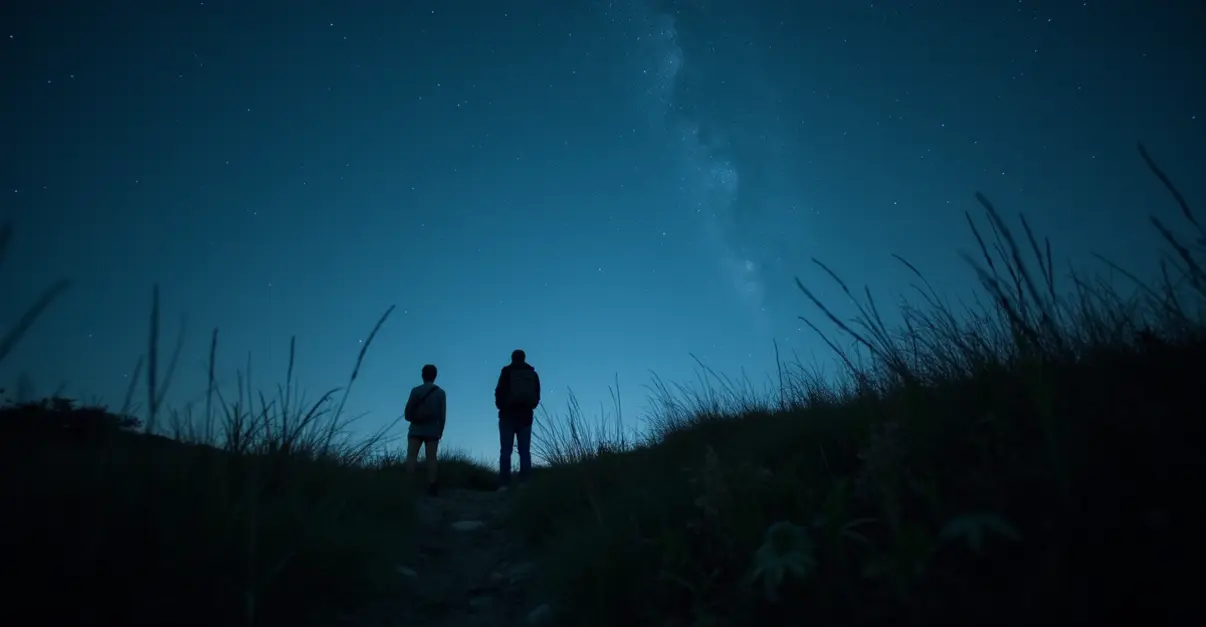





Dark-Sky Reserves: A Beacon of Hope for Nocturnal Wildlife
As light pollution continues to brighten our night skies at an alarming rate of 10% annually, dark-sky reserves are emerging as critical sanctuaries for insects, birds, and other nocturnal wildlife. These protected areas, certified by organizations like DarkSky International, implement strict lighting controls to preserve natural darkness—and new research shows they're making a measurable difference for biodiversity.
The Global Light Pollution Crisis
According to DarkSky International's 2025 State of the Science report, light pollution research has grown by 15% annually for a decade, with over 5,000 scientific papers now documenting its impacts. 'We're seeing unprecedented growth in scientific understanding of how artificial light affects ecosystems,' says Dr. Sarah Johnson, a light pollution researcher at Cornell University. 'The evidence is clear: light pollution disrupts migration patterns, reproduction cycles, and predator-prey relationships across countless species.'
Globally, only 20.6% of areas maintain high dark sky quality, primarily in remote regions like the Qinghai-Tibet Plateau and inland Australia. North America experiences the fastest rate of change, with skies getting 10% brighter each year. This has devastating consequences: up to one billion birds die annually from building collisions exacerbated by bright lights, while 30% of vertebrates and over 60% of invertebrates that are nocturnal face serious threats.
Before-and-After Surveys Show Dramatic Results
Recent before-and-after surveys in established dark-sky reserves reveal remarkable recoveries in insect and bird populations. In West Texas's Greater Big Bend International Dark Sky Reserve—the world's largest at 15,000 square miles—conservationists have documented significant improvements since its 2022 designation.
'We've seen insect populations increase by 40% in protected zones within three years of implementing dark-sky lighting protocols,' reports Maria Rodriguez, a field biologist with the Texas Parks and Wildlife Department. 'Migratory birds that once avoided the area due to oilfield lighting now use it as a critical stopover point.'
The reserve's success comes from working with oil and gas operators in the Permian Basin to replace conventional lighting with dark-sky friendly amber-tinted lights and hooded fixtures. Communities like Alpine and Marfa have embraced the initiative, with local ordinances requiring shielded outdoor lighting and public education programs about the importance of dark skies.
How Dark-Sky Reserves Work
Dark-sky reserves follow a specific model: a dark 'core' zone surrounded by a populated periphery where lighting policies protect the central darkness. These areas implement what experts call the 'three principles of responsible lighting': keep lights low, shield them to direct light downward, and use amber-colored long-wavelength lighting that's less disruptive to wildlife.
A 2024 study published in Nature Communications demonstrated that specially designed LED luminaires with tailored spatial distribution and shielding can reduce insect attraction by up to 60% compared to conventional lighting. 'This isn't about eliminating light—it's about using it intelligently,' explains lighting engineer David Chen. 'We can have safe, functional lighting that doesn't decimate insect populations.'
Wildlife Benefits Beyond Astronomy
While dark-sky reserves originated to protect astronomical research, their ecological benefits are becoming increasingly apparent. The U.S. Fish and Wildlife Service's Dark Skies Initiative recognizes natural darkness as a critical resource for wildlife conservation.
Sea turtle hatchlings, which use moonlight to find the ocean, become fatally disoriented by beachfront lighting. Migratory birds navigate by stars and become confused by urban glow, leading to fatal collisions. Even fireflies—like the Sky Island firefly found only in Texas's Davis Mountains—cannot communicate or reproduce under artificial light, as their bioluminescent mating signals get drowned out.
'What's remarkable about light pollution is its reversibility,' notes conservation biologist Dr. Elena Martinez. 'Unlike chemical pollutants that persist for years, we can eliminate light pollution immediately by turning off or modifying lights. Dark-sky reserves prove that simple changes yield dramatic results.'
The Growing Global Movement
As of 2025, nearly 300 areas across 22 countries have earned Dark Sky accreditation. The International Dark Sky Places program certified nearly 30 new sites in 2024 alone, bringing the global network closer to 250 certified locations. These include communities, parks, reserves, and sanctuaries implementing creative conservation strategies.
Yeongyang Firefly Eco Park in South Korea blends cultural astronomy with jazz concerts and immersive exhibits. Voyageurs National Park in Minnesota combines indigenous stories with dark sky preservation. France's Parc naturel régional de Millevaches en Limousin offers accessible public resources for night sky education.
'We're seeing a paradigm shift,' says DarkSky International's executive director, Ruskin Hartley. 'Communities are recognizing that protecting dark skies isn't just about astronomy—it's about public health, energy conservation, tourism economies, and most importantly, preserving the web of life that depends on natural darkness.'
Looking Forward
The future of dark-sky reserves looks promising as technology and policy converge. Smart lighting systems with motion sensors and timers, coupled with community education, offer scalable solutions. Research continues to refine our understanding of how different light spectra affect various species, enabling more targeted conservation measures.
As light pollution continues to threaten global biodiversity, dark-sky reserves stand as living laboratories demonstrating that human needs and ecological preservation can coexist. The before-and-after surveys tell a compelling story: when we protect the night, we protect the intricate ecosystems that have evolved under its cover for millions of years.

Follow Discussion