


 Deutsch
 English
 Español
 Français
 Nederlands
 Português


 Share
Share




The Growing E-Waste Crisis Demands Comprehensive Solutions
The global electronic waste crisis continues to escalate, with only 17.4% of the 57.4 million metric tons generated in 2021 being properly recycled according to the International Telecommunication Union. This alarming statistic underscores the urgent need for robust infrastructure and effective policies to address what has become one of the fastest-growing waste streams worldwide.
Collection Systems: The First Line of Defense
Effective e-waste management begins with accessible collection systems. 'Without convenient collection points, consumers will continue to dispose of electronics with regular trash, leading to environmental contamination,' explains environmental policy expert Dr. Maria Rodriguez. Municipalities are implementing various approaches including curbside pickup, designated drop-off centers, and retailer take-back programs. The EPA's 2024 Recycling Infrastructure Assessment reveals that investments between $19.9-21.5 billion are needed for curbside collection improvements alone in the United States.
Processing Capacity: Scaling Up for Sustainability
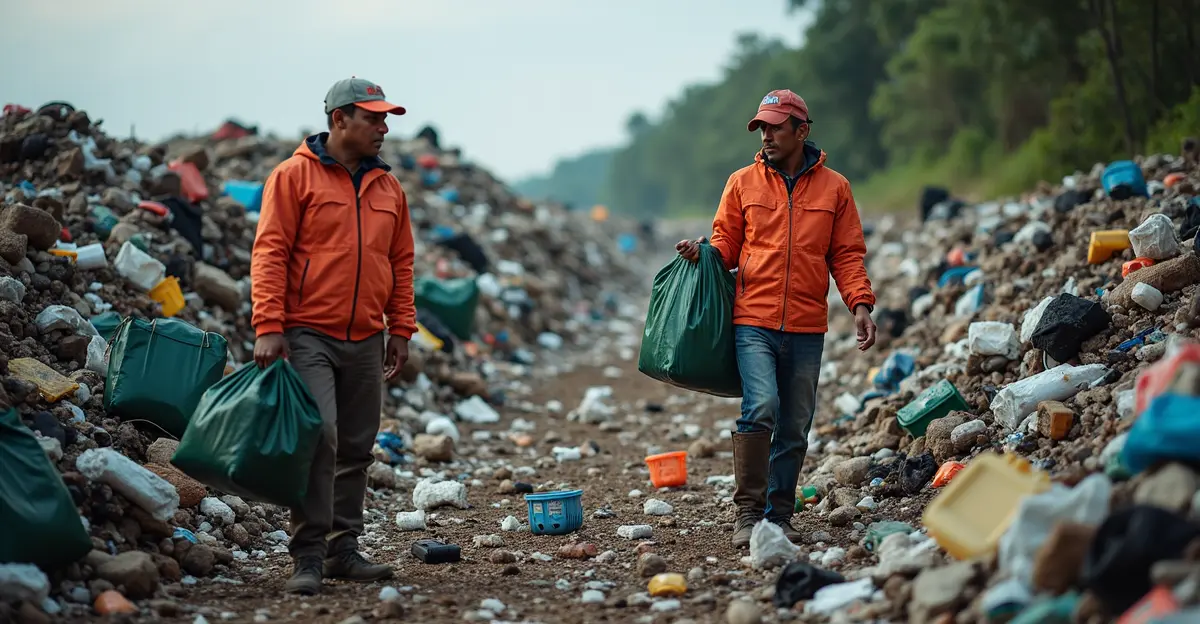
Processing facilities face significant challenges in handling the complex mix of materials found in electronic devices. 'Modern electronics contain over 60 different elements, many of which require specialized separation techniques,' notes recycling engineer James Thompson. The capacity gap is particularly pronounced in developing countries, where informal recycling operations often employ dangerous methods like open burning to extract valuable metals. The EWCRA report emphasizes that international support through technology transfer and financial assistance is crucial for building sustainable processing infrastructure in these regions.
Funding Models: Financing the Circular Economy
Extended Producer Responsibility (EPR) has emerged as a leading funding mechanism globally. 'EPR shifts the financial burden from taxpayers to producers, creating economic incentives for designing more recyclable products,' states sustainability consultant Lisa Chen. 2025 has been a landmark year for EPR policy development in the United States, with Maryland and Washington becoming the sixth and seventh states to establish EPR programs for packaging according to ACTA Group analysis. Other funding approaches include advanced recycling fees, public-private partnerships, and circular economy bonds that attract private investment to recycling infrastructure projects.
Export Controls: Closing Loopholes in Global Trade
New international requirements under the Basel Convention took effect on January 1, 2025, significantly tightening controls on e-waste exports. 'For the first time, both hazardous and non-hazardous e-waste will be controlled internationally, requiring prior written consent from importing countries,' explains trade compliance specialist Robert Williams from the Environmental Protection Agency. These amendments aim to prevent the illegal dumping of e-waste in developing countries, where inadequate facilities often lead to environmental contamination and health hazards for local communities.
The Path Forward: Integrated Solutions
Success in addressing the e-waste challenge requires coordinated action across all fronts. 'We need integrated systems that combine effective collection, advanced processing technology, sustainable funding, and robust regulatory frameworks,' emphasizes Victoria Gonzalez, environmental policy analyst. The global policy review highlights innovative approaches including incentivized recycling programs, device repair frameworks, and public awareness campaigns that collectively contribute to reducing e-waste generation and improving recycling rates. As technology continues to advance at an unprecedented pace, the development of comprehensive e-waste management systems becomes increasingly critical for environmental protection and resource conservation.




Follow Discussion