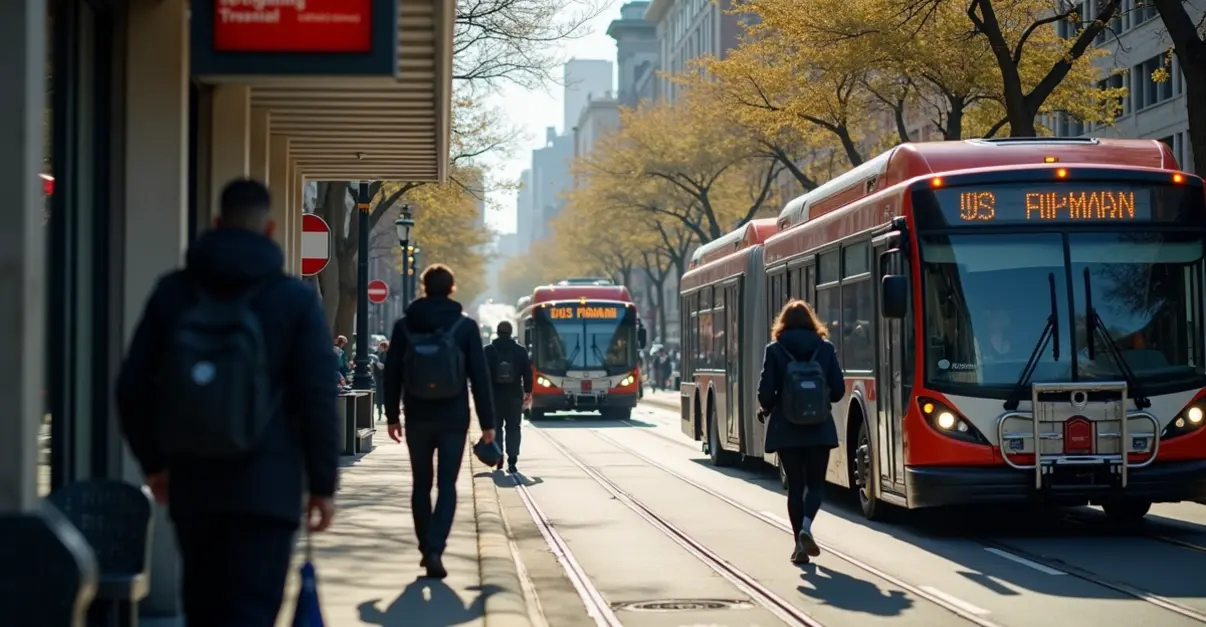
Public Transport Boom Follows Fuel Tax Increases Nationwide

U.S. public transport usage surged 15-22% after 2025 fuel tax hikes, causing transit systems to expand service while facing infrastructure challenges. Environmental benefits include reduced emissions and traffic.

Public Transport Boom Follows Fuel Tax Increases Nationwide
Facebook X LinkedIn Bluesky WhatsApp
de flag en flag es flag fr flag nl flag pt flag

Commuter Shift After Tax Hikes

Major cities across the U.S. are seeing unprecedented surges in public transportation usage following recent fuel tax increases. Data from transit authorities shows ridership jumped 15-22% in Q1 2025 after states like New Jersey and Washington implemented gas tax hikes.

The Tax Domino Effect

New Jersey's 2.6¢ per gallon increase (effective Jan 2025) brings total gas taxes to 44.9¢/gallon. Washington state is debating even steeper hikes. "When gas prices jump $0.50 weekly, people reevaluate their commute," explains urban planner Dr. Marcus Chen. "We're seeing the biggest shift since the 2008 oil crisis."

Transit Systems Strain to Adapt

Transit agencies report:

  • Bus ridership up 18% in metro areas
  • Subway/train usage climbing 22% peak hours
  • Park-and-ride facilities at 90% capacity
New York's MTA has added 300 extra weekly trips while Chicago's CTA extended service hours. "We're scrambling to meet demand," admits transit director Elena Rodriguez. "Some lines are seeing standing-room-only conditions."

Environmental Silver Lining

The shift brings unexpected benefits:

  • Traffic congestion down 12% in monitored cities
  • Estimated 8% reduction in transport emissions
  • Increased funding for transit upgrades via tax revenues
Transportation Secretary Arlo Jensen notes: "This demonstrates how fiscal policy can drive sustainable choices. We're accelerating electric bus procurement."

Challenges Ahead

Despite the boom, transit systems face aging infrastructure and staffing shortages. The American Public Transit Association warns sustained growth requires $50B in federal investment. "Ridership gains could reverse if service quality declines," cautions economist Fatima Nouri.

As fuel taxes continue rising through 2029, analysts predict public transport may become America's new commuting normal.

Related

Big Tech Faces Global Tax Overhaul as OECD Plans to Regulate Corporate Tax Avoidance
Geopolitics
AI relevance 88.9%

Big Tech Faces Global Tax Overhaul as OECD Plans to Regulate Corporate Tax Avoidance

The OECD has introduced a global tax reform to curb corporate tax avoidance, targeting multinational tech firms with...

Zero-Fare Public Transport Models Gaining Momentum Worldwide
Environment
AI relevance 83.3%

Zero-Fare Public Transport Models Gaining Momentum Worldwide

Zero-fare public transport is gaining popularity worldwide, with cities like Tallinn and Luxembourg leading the way....

Global Minimum Tax 2026: Complete Guide to Implementation Timelines & Country Stances
International
AI relevance 77.8%

Global Minimum Tax 2026: Complete Guide to Implementation Timelines & Country Stances

Global minimum tax implementation reaches critical phase in 2026 with 140+ countries adopting OECD's 15% rate for...

Global Digital Tax Talks: Complete Guide to OECD Framework & 2026 Implications
Economy
AI relevance 72.2%

Global Digital Tax Talks: Complete Guide to OECD Framework & 2026 Implications

Global digital tax talks advance OECD's two-pillar framework with 15% minimum tax affecting 7,000+ multinationals....