Nederlands
 English
 Deutsch
 Français
 Español
 Português
Global electric ferry expansion accelerates with international funding, offering 40-60% operational savings, improved air quality, and noise reduction. Norway leads with 80 electric ferries, while Washington State invests $6 billion in fleet electrification.
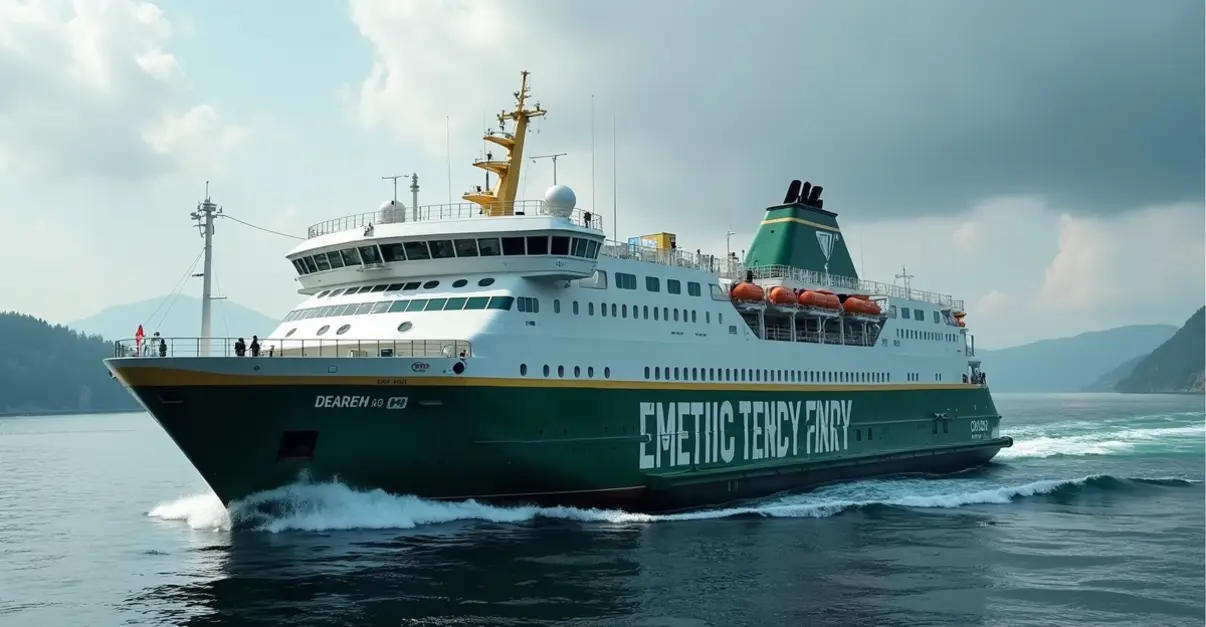
Global Electric Ferry Revolution Accelerates With Major Funding
The global transition to electric ferry networks is gaining unprecedented momentum as international funding and strategic investments pour into sustainable maritime transport. With the electric ferry market valued at $6.4 billion in 2025 and projected to reach approximately $15.76 billion by 2033, countries worldwide are racing to electrify their waterborne transit systems.
Route Economics and Charging Logistics
The economic case for electric ferries has become increasingly compelling. According to market research, electric ferries can reduce operational costs by 40-60% compared to traditional diesel vessels, with some operators reporting savings of up to 85-90% on fuel expenses. 'The MF Ampere, the world's first fully electric ferry, has saved nearly USD 15 million in operational costs over its 10-year history,' notes a report from BW Group.
Charging infrastructure remains a critical challenge, but innovations are emerging. Fast-charging systems that can replenish batteries during short turnaround times are becoming more sophisticated, with some systems capable of delivering up to 4 MW of power. The Federal Transit Administration's Electric or Low-Emitting Ferry Pilot Program is specifically addressing these infrastructure challenges through targeted funding.
International Funding Landscape
Norway continues to lead the global charge, with about 80 electric commuter ferries already in operation and ambitious plans to achieve zero emissions in UNESCO World Heritage fjords by 2026. The country's success stems from strong public-private partnerships and European collaboration through projects like the EU-funded TrAM initiative.
In North America, Washington State Ferries is undertaking a massive $6 billion electrification program to transition the nation's largest ferry fleet to hybrid-electric power by 2040. 'We've secured $1.68 billion in funding so far, including $1.03 billion from Move Ahead Washington and $599 million from the Climate Commitment Act,' explains the Washington State Department of Transportation.
The Asia-Pacific region is emerging as the fastest-growing market, with a 29.6% share of the global electric ferry market. China, Japan, and South Korea are making significant investments, leveraging their shipbuilding capacity and low-cost battery production capabilities.
Community and Environmental Benefits
The shift to electric ferries delivers substantial community benefits beyond economic savings. Electric vessels eliminate tailpipe emissions, significantly improving air quality in coastal communities and reducing health impacts from diesel particulates. 'Traditional ferries emit greenhouse gases, nitrogen oxides, and particulate matter that harm air quality, aquatic life, and public health in coastal areas,' notes Hyke Electric Ferries.
Noise reduction is another major benefit, with electric ferries operating at significantly lower decibel levels than their diesel counterparts. This reduces noise pollution in waterfront communities and minimizes disruption to marine ecosystems. The transition also prevents water contamination from oil spills and heavy metal runoff associated with traditional vessels.
Washington State's electrification program alone aims to reduce greenhouse gas emissions by 70% by 2040 and achieve net zero by 2050. Norway's electric ferries have demonstrated even more dramatic results, with individual vessels like the MS Medstraum reducing emissions by 1,500 metric tons annually.
Future Outlook and Challenges
Despite the rapid progress, challenges remain. High initial capital expenditure (20-40% higher than diesel ferries) and battery lifecycle concerns continue to be barriers for some operators. Limited fast-charging infrastructure in remote ports also presents logistical challenges.
However, the trend is clear: 70% of new ferry orders worldwide now feature electric drivetrains, representing a dramatic shift from just a decade ago. As battery costs continue to decline and charging infrastructure expands, the economic and environmental case for electric ferries will only strengthen.
The global maritime industry is at a tipping point, with electric ferries transitioning from niche demonstrations to mainstream transportation solutions. With continued international funding and technological innovation, electric ferry networks are poised to become the standard for sustainable waterborne transit worldwide.