
 Deutsch
 English
 Español
 Français
 Nederlands
 Português






World's First Commercial Hydrogen Ferry Begins Service in San Francisco Bay
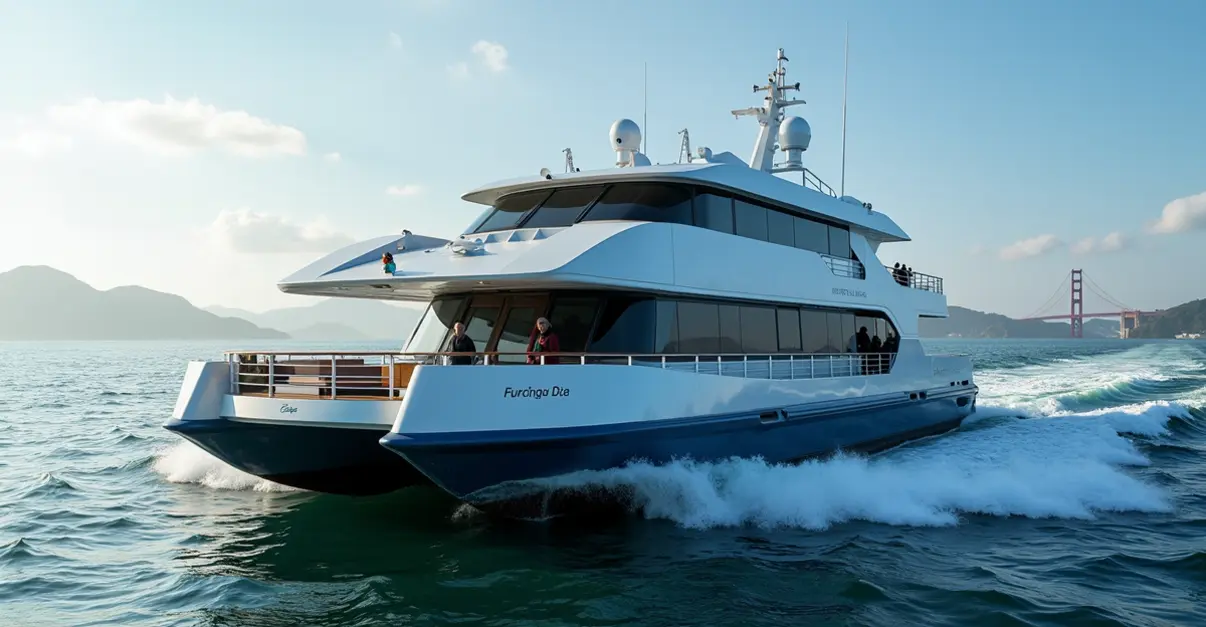
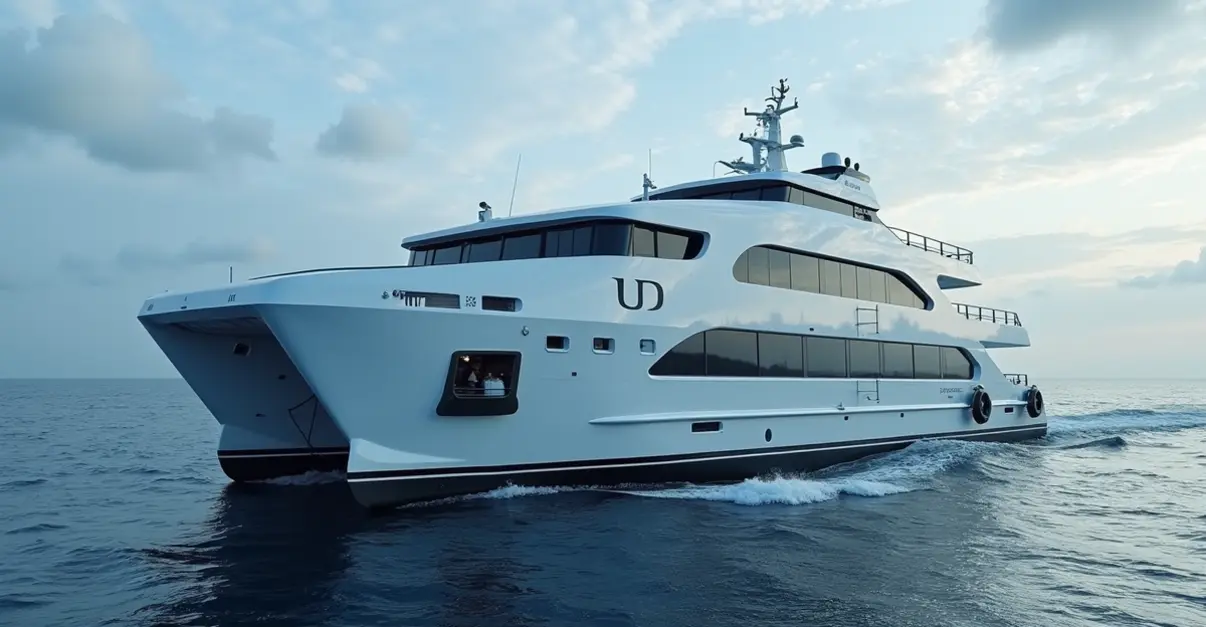
The maritime industry is witnessing a historic shift as the MV Sea Change, the world's first commercial passenger ferry powered entirely by hydrogen fuel cells, began public service on July 19, 2024, in San Francisco Bay. This 70-foot, 75-passenger catamaran represents a major milestone in decarbonizing maritime transportation and offers a glimpse into the future of zero-emission water transport.
Route Economics and Operational Details
The Sea Change operates on a six-month demonstration period offering free transportation between Pier 41 and the Downtown San Francisco Ferry Terminal. The vessel features a 360-kW proton exchange membrane (PEM) fuel cell system, 100 kWh of lithium-ion battery storage, and 600 kW of electric motor propulsion, reaching speeds of 8-12 knots. According to the San Francisco Bay Ferry announcement, this pilot service aims to demonstrate the economic viability of hydrogen-powered ferries while collecting crucial operational data.
'This isn't just about technology demonstration—it's about proving that hydrogen ferries can operate economically on real-world routes,' says a spokesperson from SWITCH Maritime, the company behind the project. 'We're analyzing everything from fuel consumption to maintenance costs to passenger capacity utilization.'
Refueling Logistics and Infrastructure Challenges
One of the most significant challenges for hydrogen maritime transport has been developing efficient refueling logistics. The Sea Change carries 246 kg of hydrogen stored at 250-bar pressure, requiring specialized refueling infrastructure that's still being developed. The vessel's hydrogen is currently supplied through a partnership with local hydrogen producers, but scaling this model presents logistical hurdles.
A recent Hydrogen Council report from March 2025 highlights that infrastructure development remains a key barrier to hydrogen adoption in maritime transport. The report notes that retrofitting existing pipelines could reduce transport costs by 50-70%, but significant investment is still needed.
Emissions Reduction Estimates and Environmental Impact
The environmental benefits of hydrogen ferries are substantial. Unlike conventional diesel ferries that emit greenhouse gases and air pollutants, hydrogen fuel cells produce only water vapor as a byproduct. The Sea Change's emissions reduction is particularly significant given that maritime transport accounts for approximately 3% of global greenhouse gas emissions.
'We estimate that each hydrogen ferry like the Sea Change can eliminate thousands of metric tons of CO2 emissions annually compared to diesel-powered equivalents,' explains an environmental analyst from the California Air Resources Board, which supported the project. 'When you consider that some water vapor is even remineralized for onboard drinking water, you're looking at a truly circular system.'
According to the SWITCH Maritime final report from July 2024, the demonstration project shows that hydrogen ferries can achieve near-zero emissions while maintaining operational efficiency. The report details how the technology eliminates not just CO2 but also nitrogen oxides (NOx), sulfur oxides (SOx), and particulate matter—all significant concerns in port cities.
Cost Analysis and Future Projections
The economics of hydrogen ferries involve complex calculations. Current hydrogen production costs vary significantly: gray hydrogen (from natural gas) costs $1.50–$2.50/kg, blue hydrogen (with carbon capture) costs $2.00–$3.50/kg, and green hydrogen (from renewable electricity) costs $3.50–$6.00/kg. However, government incentives like the Inflation Reduction Act's $3.00/kg tax credits for clean hydrogen are helping bridge the cost gap.
A techno-economic analysis published in 2025 suggests that renewable electricity below $20–$30/MWh is essential for green hydrogen cost parity with conventional fuels. The study also indicates that carbon pricing above $100/ton CO2 will likely make gray hydrogen uncompetitive by 2030, accelerating the shift to low-carbon alternatives.
Broader Implications for Maritime Industry
The success of the Sea Change pilot has implications far beyond San Francisco Bay. Similar projects are already underway globally, including Norway's MF Hydra—the world's first liquid hydrogen-powered ferry that has been operating since 2023 and reduces CO2 emissions by approximately 4,000 metric tons annually.
'What we're seeing is the beginning of a maritime energy transition,' notes a maritime technology expert. 'Ferries are ideal early adopters because they operate on fixed routes with predictable refueling needs, but the technology will eventually scale to larger vessels.'
The U.S. Department of Energy featured the Sea Change in its December 2024 H2IQ Hour webinar, highlighting it as a model for clean maritime transportation. As regulatory pressure increases and technology costs decrease, hydrogen ferries are poised to become increasingly common in coastal and inland waterways worldwide.

Follow Discussion