


 Deutsch
 English
 Español
 Français
 Nederlands
 Português


 Share
Share




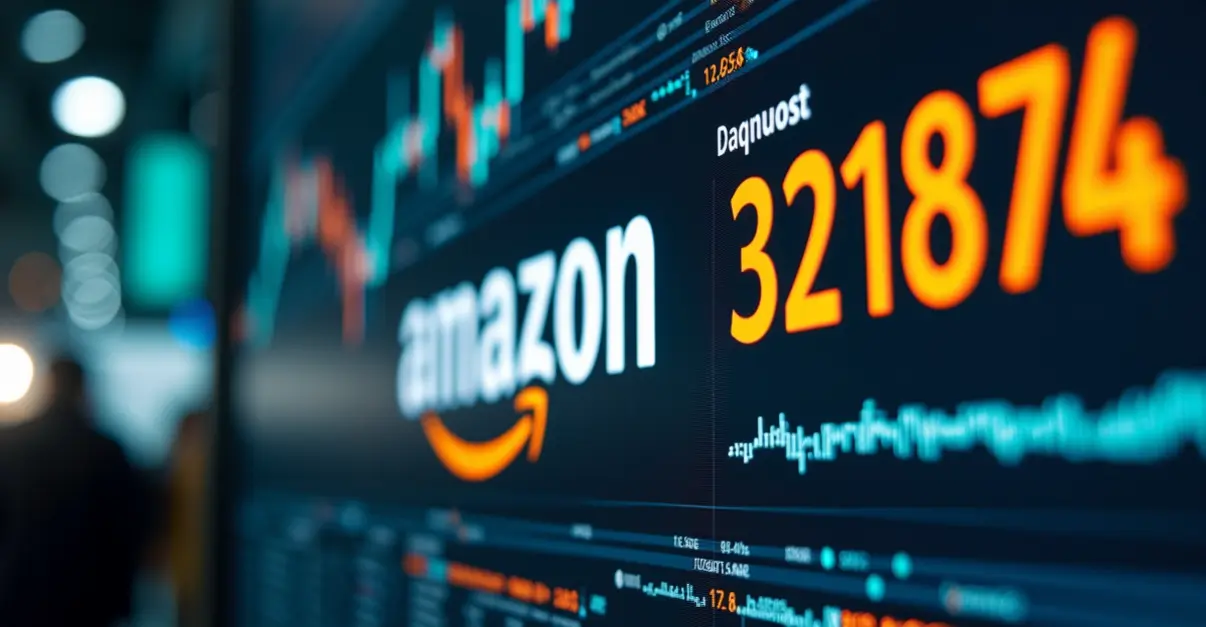
Amazon, the e-commerce and cloud computing behemoth founded by Jeff Bezos, has surpassed a market capitalization of $3 trillion for the first time, becoming only the fifth publicly traded company in history to reach the milestone. The stock surged more than 5% on Monday, August 3, 2026, following a blockbuster quarterly earnings report that reignited investor confidence in the company's artificial intelligence strategy.
The rally pushed Amazon's valuation to approximately $3.06 trillion, joining an elite group of tech titans — Nvidia, Alphabet (Google's parent), Apple, and Microsoft — that have previously crossed the $3 trillion threshold. The achievement underscores the growing dominance of AI-driven cloud computing and marks a dramatic turnaround for a stock that had struggled earlier in the year amid spending concerns.
What Drove Amazon to the $3 Trillion Mark?
The milestone was triggered by a stellar second-quarter earnings report released on July 30, 2026. Amazon posted net sales of $200.6 billion, a 20% increase year-over-year, while operating income surged 43% to $27.5 billion. The results handily beat Wall Street expectations and sent shares soaring nearly 15% in a single day — the company's best trading session in years. By Monday, the stock had climbed an additional 4.58% to close at $284.02, pushing the market capitalization above the symbolic $3 trillion threshold.
Earlier in 2026, Amazon's stock had faced headwinds as investors fretted over the company's aggressive capital expenditure plans. But the latest results appear to have silenced the skeptics. The cloud computing market has entered a new phase of hypergrowth, and Amazon Web Services is firmly at its center.
AWS: The Engine Behind the Surge
Amazon Web Services, the company's cloud division, reported revenue of $42.2 billion for the quarter, representing 37% growth — its fastest pace in four years. AWS is now running at an annualized revenue rate of $169 billion. The unit's operating margin also expanded, signaling that the massive investments in data centers are beginning to pay off.
Crucially, AWS announced major cloud deals with Meta and OpenAI during the quarter, while its custom AI chips — Trainium and Graviton — each surpassed $25 billion in annualized revenue. AWS chief Matt Garman described the potential AI business as "just massive," while CEO Andy Jassy noted that demand for AI computing capacity continues to outstrip supply.
Amazon has raised its capital expenditure forecast to approximately $220 billion for the full year, up from a previous estimate of $200 billion. The bulk of that spending is directed toward AI data centers and proprietary chip development, positioning the company to compete with the specialized AI chip manufacturing capabilities of rivals like Nvidia.
The Exclusive $3 Trillion Club
Amazon's ascent places it in rarefied company. The first company to reach a $3 trillion valuation was Apple in 2022, followed by Microsoft and then Alphabet. Nvidia, the AI chip powerhouse, became the fourth member earlier in 2025 and has since surged past $4.7 trillion to become the world's most valuable company. Amazon now sits alongside these trillion-dollar tech companies as a member of one of the most exclusive clubs in corporate history.
| Company | Market Cap (Approx.) | Key Revenue Driver |
|---|---|---|
| Nvidia | $4.74 trillion | AI chips & data center GPUs |
| Alphabet | $4.34 trillion | Digital advertising & cloud |
| Apple | $4.30 trillion | iPhone & services ecosystem |
| Microsoft | $2.83 trillion | Azure cloud & enterprise software |
| Amazon | $3.06 trillion | AWS cloud & e-commerce |
What This Means for Investors and the Tech Landscape
Amazon's milestone sends a powerful signal to the market: aggressive AI investment can pay off. While other tech giants like Meta and Alphabet have faced investor skepticism over their capital expenditure plans, Amazon's results provide a compelling counter-narrative. The company's ability to convert AI spending into tangible revenue growth has reinforced its position as a leader in the tech stock valuations landscape.
Analysts at Morgan Stanley and JPMorgan have raised their price targets on Amazon, citing accelerating AWS momentum and the monetization of AI services. The rally also propelled Jeff Bezos, Amazon's founder and executive chairman, further up the list of the world's wealthiest individuals.
However, risks remain. The company is burning through cash on infrastructure — free cash flow swung to a $7.6 billion outflow in the trailing twelve months due to $66.1 billion in AI-related capital investments. And with CEO Andy Jassy warning that capacity still won't meet demand through 2027, the spending spree is far from over.
Frequently Asked Questions
How many companies have reached a $3 trillion market cap?
Five companies have reached the $3 trillion market cap milestone: Nvidia, Alphabet, Apple, Microsoft, and now Amazon. All five are U.S.-based technology giants.
What drove Amazon's stock surge in August 2026?
Amazon's stock surged after its Q2 2026 earnings report showed net sales of $200.6 billion (up 20% YoY) and AWS revenue growth of 37%. The results eased investor concerns about the company's massive AI spending.
How much is Amazon investing in AI?
Amazon has raised its 2026 capital expenditure forecast to $220 billion, primarily directed at AI data centers and custom chip development. Its Trainium and Graviton chip businesses have each exceeded $25 billion in annualized revenue.
Is Amazon bigger than Apple now?
As of August 3, 2026, Amazon's market cap of $3.06 trillion is below Apple's approximately $4.30 trillion. Nvidia remains the world's most valuable company at $4.74 trillion.
What is AWS's annual revenue run rate?
Amazon Web Services is now operating at an annualized revenue run rate of $169 billion, following 37% growth in the second quarter of 2026 — its fastest expansion in four years.





Follow Discussion