Deutsch
 English
 Español
 Français
 Nederlands
 Português






Federal Reserve Faces Critical Decision Amid Economic Uncertainty
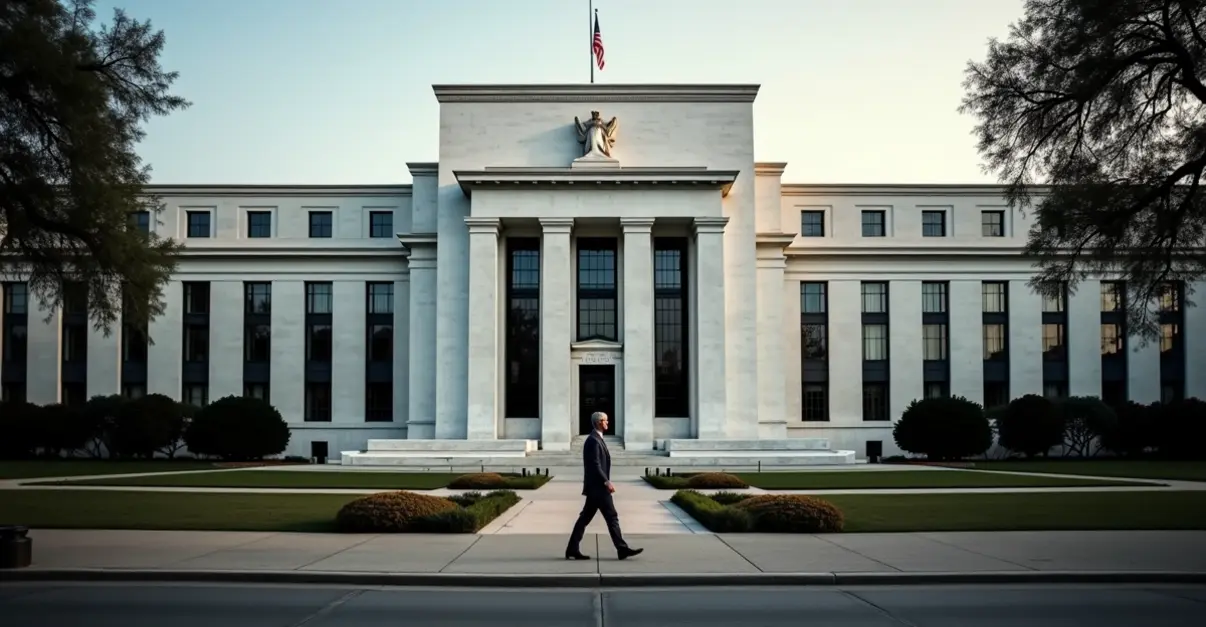
As the Federal Reserve prepares for its December 9-10 policy meeting, financial markets are pricing in an 87% probability of a quarter-point interest rate cut, according to the CME FedWatch Tool. However, analysts warn that unusually deep divisions among Fed officials could make this one of the most contentious meetings in recent memory.
Between Conflicting Economic Signals
The Fed finds itself navigating a particularly murky economic landscape. On one hand, the labor market shows signs of cooling, with September's unemployment rate rising to 4.4%. On the other hand, inflation remains stubbornly above the Fed's 2% target, creating what economists call a 'policy dilemma.'
'Fed officials will be able to pinpoint certain data points that fit their narrative,' says Ryan Sweet, chief US economist at Oxford Economics. 'The committee is clearly divided.'
Complicating matters further is the lingering impact of the October government shutdown, which has left policymakers working with incomplete and outdated data. 'Much like a sink that hasn't worked in a long time, it's old water—data from months ago,' explains Lindsay Rosner, head of multi-sector fixed-income investing at Goldman Sachs Asset Management. 'They're making a call based on a dataset that is smaller than and inferior to what they typically have.'
Growing Divisions Within the FOMC
The Federal Open Market Committee appears more fractured than at any point in recent years. Dovish members, led by New York Fed President John Williams, argue that further rate cuts are necessary to support the cooling labor market and provide insurance against economic slowdown. Williams recently indicated that further easing could be warranted, a signal that Wall Street interpreted as dovish.
Meanwhile, hawkish members like Boston Fed President Susan Collins urge caution, warning that premature rate cuts could reignite inflationary pressures. The October meeting saw two dissents in opposite directions—one member favored a larger cut while another preferred no change at all.
'We anticipate that there will be more dissents in each direction in the December meeting,' says Goldman Sachs' Rosner.
The Powell Factor: Building Consensus
All eyes are on Fed Chair Jerome Powell, who must navigate these deep divisions. While Powell has been unusually clear that a December cut is not a 'foregone conclusion,' many analysts believe he will attempt to build consensus for one more 'insurance cut' before year-end.
In a research note, Samuel Tombs of Pantheon Macroeconomics wrote that while Powell 'might feel anxious about the market's certainty,' he expects the chair to persuade some hawkish members by signaling that the bar for future cuts is very high—what Wall Street calls a 'hawkish cut.'
Bank of America economists also expect a December cut, citing four key factors: the recent uptick in unemployment, dovish comments from Williams, weakness in private measures of job growth, and the lack of pushback from Powell on current market expectations.
Market Implications and Future Outlook
The decision carries significant implications for financial markets. The VIX volatility index has reached its highest level since April, reflecting investor uncertainty. A cut would bring the target federal funds rate to a range of 3.50%-3.75%, down from the peak of 5.25%-5.50% reached in 2023.
Looking ahead to 2026, many analysts expect the Fed to take a breather. 'If it's more [cuts] now, it's fewer later,' says Sweet of Oxford Economics. Rates are now within what economists consider a neutral range—neither accommodative nor restrictive—which signals a likely pause ahead.
Bank of America economists expect just two more rate cuts in 2026, both in the summer, emphasizing that their forecast is based more on the upcoming change in Fed leadership than current economic conditions.
As the Fed prepares to release its official 'dot plot' of interest rate projections, the December meeting represents not just a policy decision but a test of Powell's leadership during one of the most challenging periods for monetary policy in recent years.