Nederlands
 English
 Deutsch
 Français
 Español
 Português






The Dawn of Institutional Blockchain Era
As we enter 2026, the digital economy stands at a critical inflection point that experts predict will transform how financial systems operate globally. According to the World Economic Forum, this year marks a defining moment for digital assets, driven by three powerful trends that are reshaping the financial landscape.
Regulatory Clarity Unlocks Institutional Adoption
After years of regulatory uncertainty, 2026 is witnessing unprecedented clarity in digital asset regulations across major jurisdictions. Singapore, the UAE, Hong Kong, Europe, and the United States are advancing comprehensive frameworks, with the proposed U.S. Clarity Act expected to become law this year. 'We're seeing a fundamental shift where regulators are moving from reactive enforcement to proactive framework building,' says Charlotte Garcia, a financial technology analyst. This regulatory maturation is removing the biggest barrier to institutional adoption, allowing traditional financial giants to confidently integrate blockchain solutions.
Stablecoins: The Bridge Between Worlds
Stablecoins are evolving from speculative trading instruments to essential financial infrastructure. With $24 trillion in transaction value recorded in 2024 alone, these digital assets are becoming the primary bridge between traditional fiat systems and decentralized networks. 'Stablecoins are fading into the background of everyday finance, much like credit cards did decades ago,' notes a report from Forbes. They're powering everything from cross-border remittances to corporate treasury operations, with the regulated USD stablecoin market projected to reach $1 trillion by year's end.
Asset Tokenization: Revolutionizing Ownership
The most transformative trend of 2026 is the rise of asset tokenization, which enables fractional, programmable digital representations of real-world assets. From real estate and corporate bonds to carbon credits and fine art, entire asset classes are moving on-chain. 'Tokenization isn't just about creating new assets—it's about reimagining how we represent ownership in the digital age,' explains Garcia. This technology allows for 24/7 trading, reduced settlement times from days to minutes, and opens investment opportunities to a broader range of investors.
Traditional Finance Meets Decentralized Systems
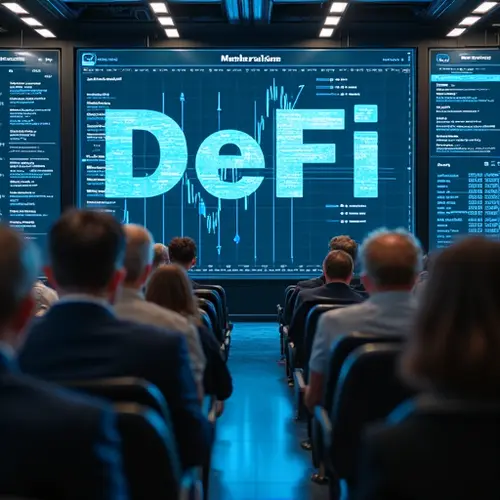
Perhaps the most significant development is the convergence of traditional finance (TradFi) and decentralized finance (DeFi). Major institutions like JP Morgan and Citi are actively integrating blockchain solutions, while Grayscale's 2026 Digital Asset Outlook reports that 59% of institutions plan to allocate over 5% of their portfolios to cryptocurrencies. Institutional engagement with DeFi is expected to triple from 24% to 74% within two years, marking a seismic shift in how financial services are structured and delivered.
Infrastructure Maturation and Challenges Ahead
The technical infrastructure supporting this transformation is maturing rapidly. Layer-2 solutions and zero-knowledge rollups are enabling production deployments by major financial institutions, addressing previous concerns about scalability and privacy. However, challenges remain, particularly around interoperability between different blockchain networks and the need for global coordination. '2026 represents the year where blockchain transitions from experimental technology to enterprise-grade financial infrastructure,' concludes Garcia. 'The focus now must be on building efficient, inclusive systems that serve everyone, not just the technologically elite.'